Ranked #1

SimpleTexting
Unlimited contacts, one inbox
$29500 credits, per month
- Best for
- Small teams wanting one tool for campaigns and replies
- Free plan
- No, free trial only
- Rubric
- 8.2 / 10
The best SMS marketing software for small businesses, ranked by fit: nine tools scored on cost, consent handling, ease of use, features and support, with prices checked on November 25, 2026.
 Prices checked November 25, 2026
SimpleTexting is the best overall pick for small teams that need campaigns and replies in one place, at $29 per month for 500 credits (prices checked November 25, 2026). EZ Texting is the budget choice at $20 per month billed annually for a first campaign, and SlickText fits promotion-heavy or regulated businesses that need detailed opt-in tools, from $29 per month for 500 credits. Fees and add-ons vary by vendor, so compare the full monthly bill before you commit.
Unlimited contacts, one inbox
$29500 credits, per month

Lowest paid entry
$20Launch, per month billed annually

Consent and opt-in tools
$29500 credits, per month
Disclosure for this page: All 9 tools here are unpaid editorial picks. The position of a paid listing can be part of what the vendor pays for. How we handle paid listings.
| Tool | Best for | Free plan | Actions | |||
|---|---|---|---|---|---|---|
| 1 | SimpleTexting | Small teams wanting one tool for campaigns and replies | $29500 credits, per month | No | ||
| 2 | EZ Texting | Budget-conscious first campaigns | $20Launch, per month billed annually | No | ||
| 3 | SlickText | Teams in promotion-heavy or regulated markets | $29500 credits, per month | Yes | ||
| 4 |  Textedly | Large lists that send in high volume, infrequently | $29Basic, per month | Yes | ||
| 5 |  TextMagic | Occasional senders who do not want a subscription | $0.049Pay as you go, per SMS | No | ||
| 6 |  Salesmsg | Sales and support teams texting from a shared inbox | See website | No | ||
| 7 |  Podium | Local businesses combining reviews, texting and payments | See website | No | ||
| 8 |  Attentive | High-volume ecommerce brands combining SMS with email | See website | No | ||
| 9 |  Klaviyo | Ecommerce brands wanting email and SMS in one platform | $20Email plan, per month | Yes |
We scored nine tools against five criteria, weighted for a small business buyer rather than an enterprise marketing department. Cost clarity carries 25 percent: whether the full monthly bill, including number fees, carrier registration and overage, can be worked out before signing up. Consent tools carry 20 percent, covering opt-in management, keywords and carrier registration handling. Ease of use carries 20 percent, judged on how fast a small team can build, schedule and answer without training. Feature breadth carries 20 percent, looking at MMS, automation, segmentation, integrations and reporting at a realistic small-business price. Value and support carries the last 15 percent: whether the plan price matches what a small sender actually gets.
Every price, plan name, free plan and trial detail in this list comes from the vendor's own pricing page, checked on November 25, 2026. Where a page returned nothing, or the vendor sells only by quote, the entry says pricing is on the vendor site and no figure is guessed. Nothing is inferred from a third-party listing or a sales deck.
The order is editorial. Each position reflects how well a tool fits the buyer described in its entry, not a calculated total, and a Featured label marks a paid placement that is scored with the same rubric and carries the same kind of cons as every other entry.
We did not test the tools hands-on for this piece, so the reviews rest on published features, published pricing and the limits vendors state themselves, including regional coverage, gated features and separately billed add-ons. Where a vendor does not publish a number, we say so rather than estimate.
The full process, including how we handle corrections, is on the methodology page. Paid listings follow our advertising disclosure.
| Criterion | Weight | What we check |
|---|---|---|
| Cost clarity | 25% | Whether the full monthly bill, including number fees, carrier registration and overage, is easy to work out before signing up. |
| Consent tools | 20% | How well the tool handles opt-in, keywords and carrier registration rules that govern who you can text. |
| Ease of use | 20% | How quickly a small team can build a campaign, schedule it and answer replies without training. |
| Feature breadth | 20% | The mix of MMS, automation, segmentation, integrations and reporting offered at a realistic small-business price. |
| Value and support | 15% | Whether the plan price matches what a small sender actually gets, including onboarding and account help. |
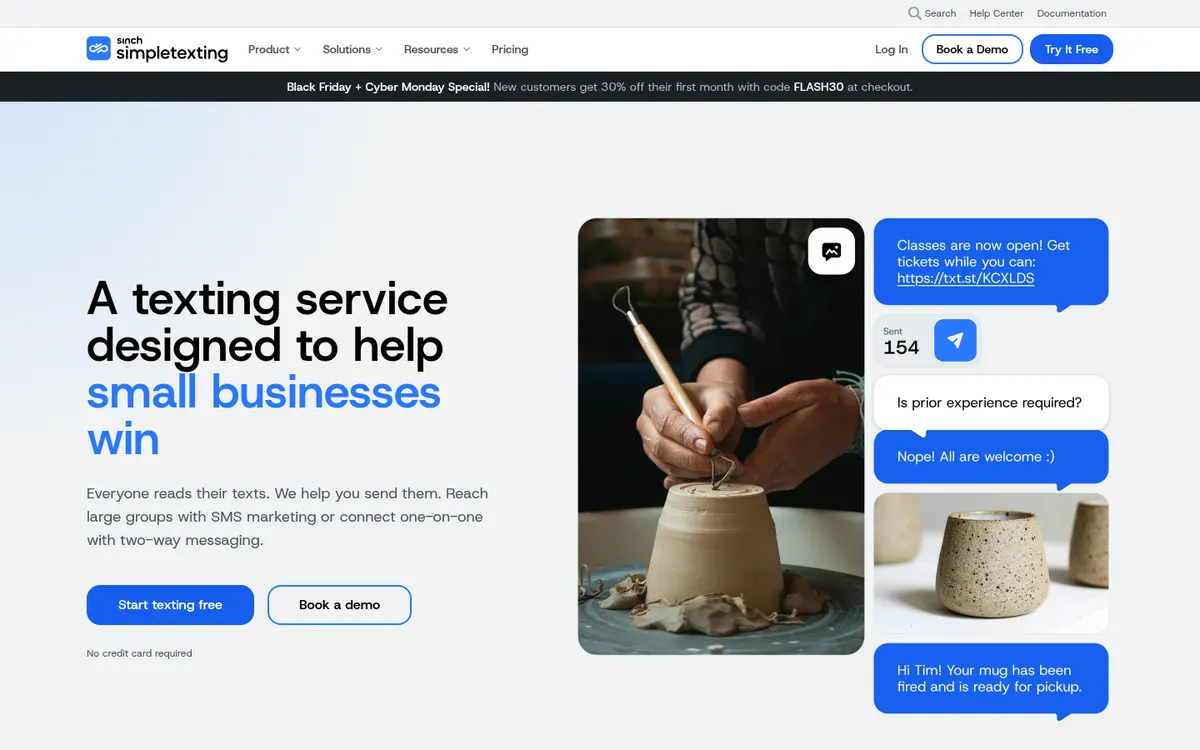
The most complete pick for a small team that wants campaigns and one-to-one replies sharing a single number and inbox.
SimpleTexting bundles broadcast campaigns and one-to-one replies into a single number and inbox, which is the main reason it tops this list for small teams. A five-person shop can schedule a promotion, watch replies land in the same thread and answer without switching tools. The entry price is $29 per month for 500 credits, and contacts are unlimited on every plan, so growing the list never forces an upgrade on its own.
The feature set covers the basics well: bulk SMS from one number, autoresponders and drip sequences, MMS with images, and poll or survey messages. Inbound texts cost nothing, which matters if you run a keyword that invites replies. Integrations include HubSpot, Mailchimp and Zapier, so a contact added in a CRM or a form can trigger a text without custom work. The vendor also handles carrier registration on your behalf, which removes a step that trips up first-time senders.
Pricing is where the headline needs reading twice. The advertised $29 covers 500 credits, but a recurring number fee and a one-time carrier registration charge sit outside that figure, and extra credits are billed per message once the allowance runs out. A busy month with a large list will cost more than the entry price suggests. Work out your monthly send volume first, then add both fees before comparing against rivals.
Coverage is the other limit: service is limited to the United States and Canada, so businesses with international customers need a different tool. For a US or Canadian small business that wants campaigns and conversations in one place, with unlimited contacts and free inbound messages, it is the most straightforward fit on this list. Teams that only send occasional one-way blasts may find a pay-as-you-go tool cheaper.
You are a US or Canadian small team that wants campaigns and one-to-one replies in a single inbox with unlimited contacts.
You text customers outside North America or send only occasional one-way blasts.
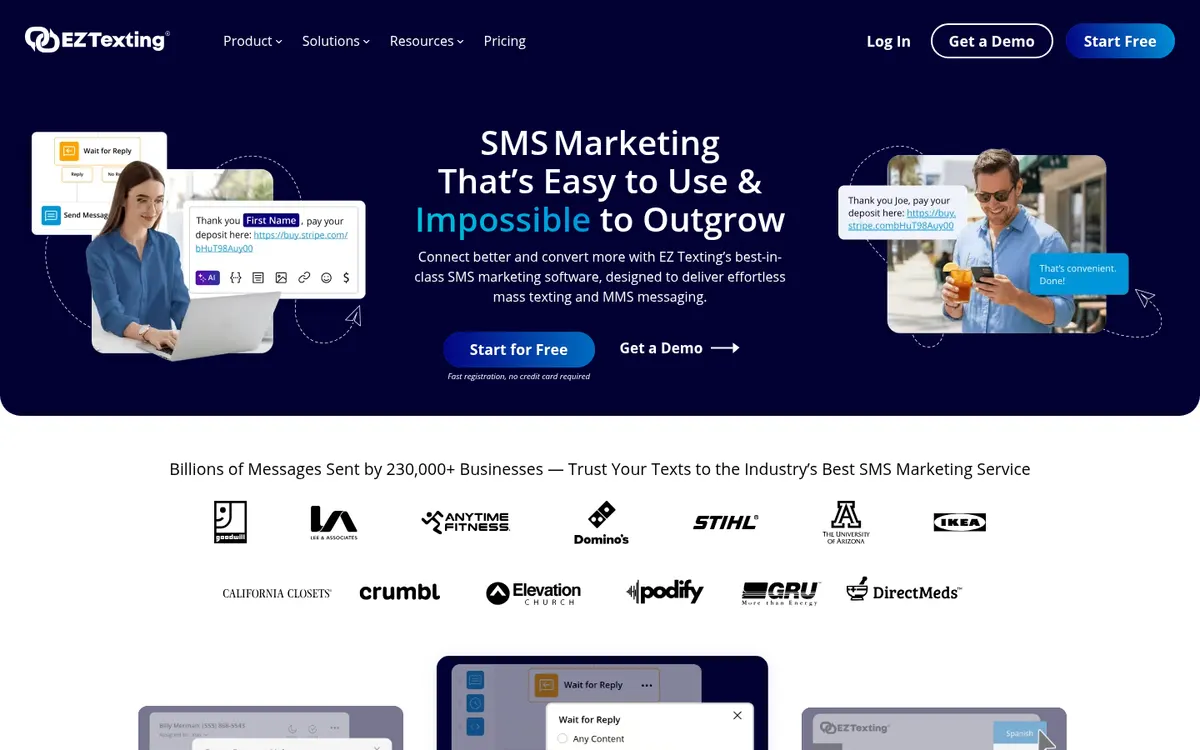
The cheapest paid entry here, with an AI composer and included MMS, if your monthly volume stays modest.
EZ Texting is the cheapest way onto this list and still covers the core jobs a small business needs. At $20 per month on annual billing for the Launch tier, it gives 500 credits, an AI-assisted composer, keyword opt-in tools, scheduled and recurring campaigns, MMS with stock imagery, and two-way texting. For a shop running its first campaign with a few hundred contacts, that is enough to test what works.
The composer is the standout for newcomers: it drafts message copy so a first-time sender does not start from a blank box. Images ship inside the plan rather than as a paid add-on, which is unusual at this price and useful for product shots or seasonal offers. Keyword opt-in and list building cover the consent basics, and scheduling lets you queue a promotion for a set date without logging in that morning.
Budget the extras before you commit. A monthly telecom fee is added to the plan price, and credits run out at 500, after which overage charges apply per message. Frequent senders will cross that allowance quickly, so the $20 figure is a starting point rather than a ceiling. The vendor now quotes $20 per month on annual billing instead of the $25 monthly rate, so paying for a year upfront lowers the headline number but also locks in the entry allowance.
The service suits a small list, a steady but modest send volume, and a team that wants help writing messages. It is less suited to anyone sending thousands of texts a month, where overage charges and the telecom fee make a higher tier or a message-based plan from another vendor cheaper in practice. Treat the $20 as the floor of your bill, not the whole of it.
You want the lowest paid entry point and your monthly send volume is small enough to stay inside 500 credits.
You send thousands of texts a month, where overage and the telecom fee erode the price advantage.
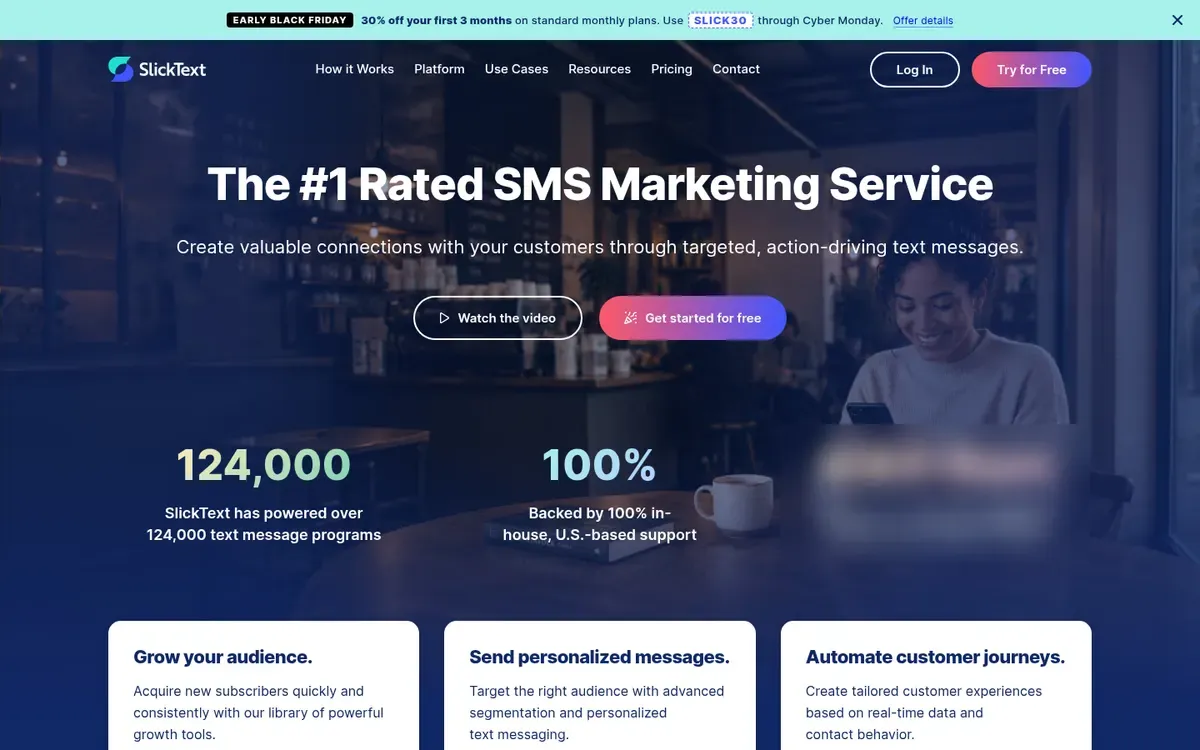
Best for businesses that collect opt-ins in public and need consent records, contests and click-level reporting in one tool.
SlickText is the safest choice on this list for businesses that collect opt-ins in public and could be challenged on them. It handles keyword opt-in management, list segmentation, text-to-win contests and loyalty messaging, and it reports on clicks and conversions rather than stopping at delivery counts. Retailers, gyms, venues and clinics in regulated markets get the consent paperwork and the reporting in one place.
The contest and loyalty features are the practical draw. A text-to-win entry builds a list from people who actively asked to be contacted, which is cleaner consent than a purchased list, and loyalty messages give an existing list a reason to stay subscribed. Segmentation lets you split by behavior or list source, and analytics trace a message from send to click to conversion, so a promotion can be judged on bookings rather than opens.
Pricing starts at $29 per month for 500 credits, and the vendor also lists a free plan that needs no credit card. Two features sit outside the entry tier: the most useful automation is gated behind higher plans, and RCS rich messaging carries a setup fee plus an annual cost. If your plan depends on either, price them before you commit, because they change the monthly total.
The trade-off is cost for a very small sender. A shop with 200 contacts sending once a month pays for compliance tooling it may never need, and a simpler sender would be cheaper. Where a business runs frequent promotions, collects entries at events, or operates in a category where consent records matter, the consent tooling and click-level reporting justify the entry price. It is a fit for promotion-heavy operations rather than quiet, low-volume senders.
You run frequent promotions or collect opt-ins at events and need consent records plus conversion reporting.
You have a small list you message rarely and do not need the compliance tooling.
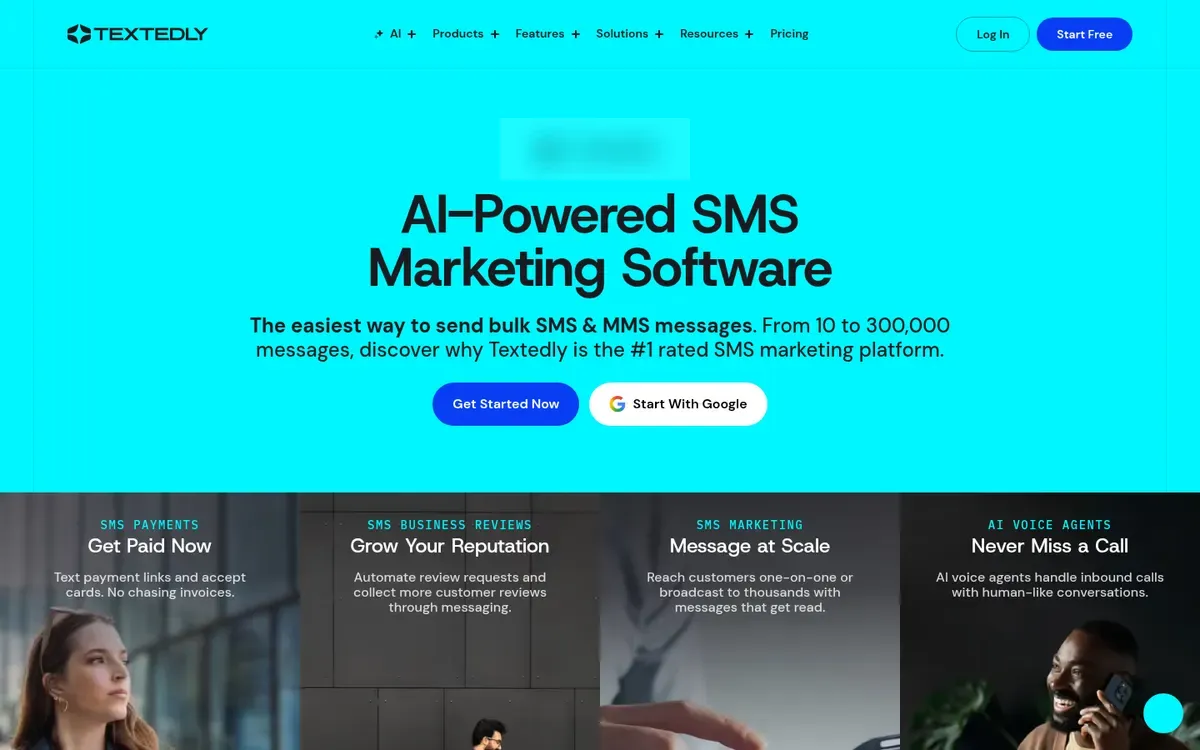
Message-based pricing that suits a large, rarely-messaged list, with a plain interface and few deep integrations.
Textedly prices by message volume rather than list size, which is the detail that matters most here. A business holding a large, rarely-messaged list can store all of those contacts and pay for the texts it actually sends, with a Basic plan at $29 per month. There is also a free account with 50 messages, and the trial gives 50 free messages, so a first test costs nothing.
The feature set is practical rather than polished: custom keywords, MMS, voice message sending, simple campaign scheduling and quick account setup. Voice messages are unusual at this price and suit a business that wants a recorded announcement, such as a schedule change or a late-opening notice. Keywords handle opt-in, and scheduling covers the standard case of queueing a promotion in advance.
Setup speed is a real advantage. Accounts are usable quickly, which helps an owner who wants to send a first campaign this week rather than run a two-week implementation. Annual billing adds 20% more messages at the same monthly rate, a straightforward way to cut the effective cost per text if you know your annual volume.
The compromises show in daily use. The interface is plainer than the leading rivals, native integrations are fewer, and CRM depth is limited, so a business that wants texts to flow automatically out of a sales pipeline will hit the edges quickly. Message-based pricing also punishes frequent senders: a small list contacted weekly can end up paying more than a contact-based plan would charge. It fits a large list, an infrequent schedule and a team that does not need deep software connections.
You hold a large list you message a few times a year and want to pay for messages rather than stored contacts.
You message weekly, need deep CRM connections, or expect polished automation.
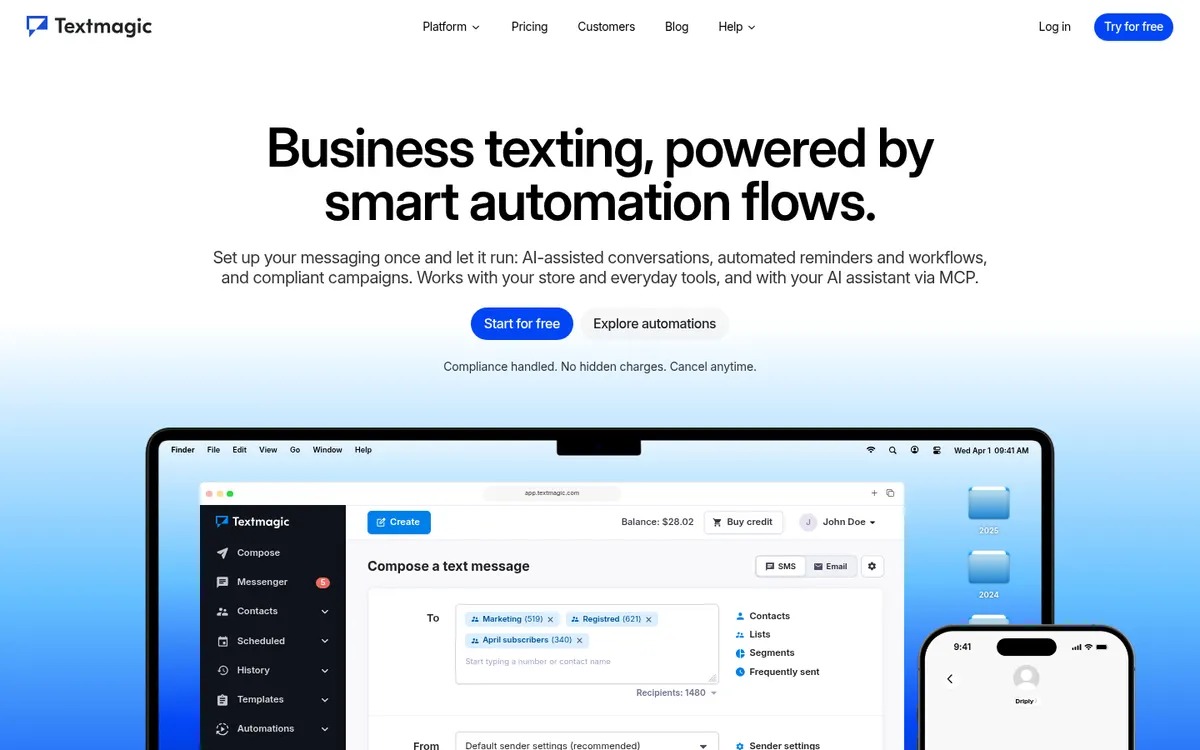
Prepaid credits at about 4.9 cents per SMS with no subscription, ideal for seasonal or international senders.
TextMagic sells prepaid credits at roughly 4.9 cents per SMS, with no monthly subscription, so a business that texts twice a quarter pays only for those messages. Coverage spans more than 190 countries, which makes it the only tool on this list that suits a small business with customers outside North America. Sending runs from an online account, and you can rent a number if you want a recognizable sender.
The model is simple to reason about. You buy credits, you send, you top up. Nothing accrues in a quiet month, which matters for seasonal businesses such as landscapers, event photographers or repair shops that broadcast in bursts. Bulk sending from the account covers the standard jobs: a list of customers, a message, a send time.
Two costs sit outside the per-text rate. Renting a number adds a recurring monthly charge, and carrier registration requirements carry their own monthly cost. Work those in before comparing the 4.9 cent figure with a subscription rival, because a light sender can find that the fixed fees dominate the bill while the messages themselves cost very little.
The tool is thinner on campaign building than the subscription products here: fewer automation paths, fewer list-growth features and fewer marketing templates. That is the right trade for an occasional sender and the wrong one for a business running weekly promotions, drip sequences or contests. Choose it when volume is unpredictable, the audience is international, or you want to avoid a recurring commitment, and choose a subscription tool when texting is a routine channel rather than an occasional one.
You send in unpredictable bursts, text customers abroad, or want to avoid a monthly subscription.
Texting is a routine weekly channel or you need built-in drip automation and templates.
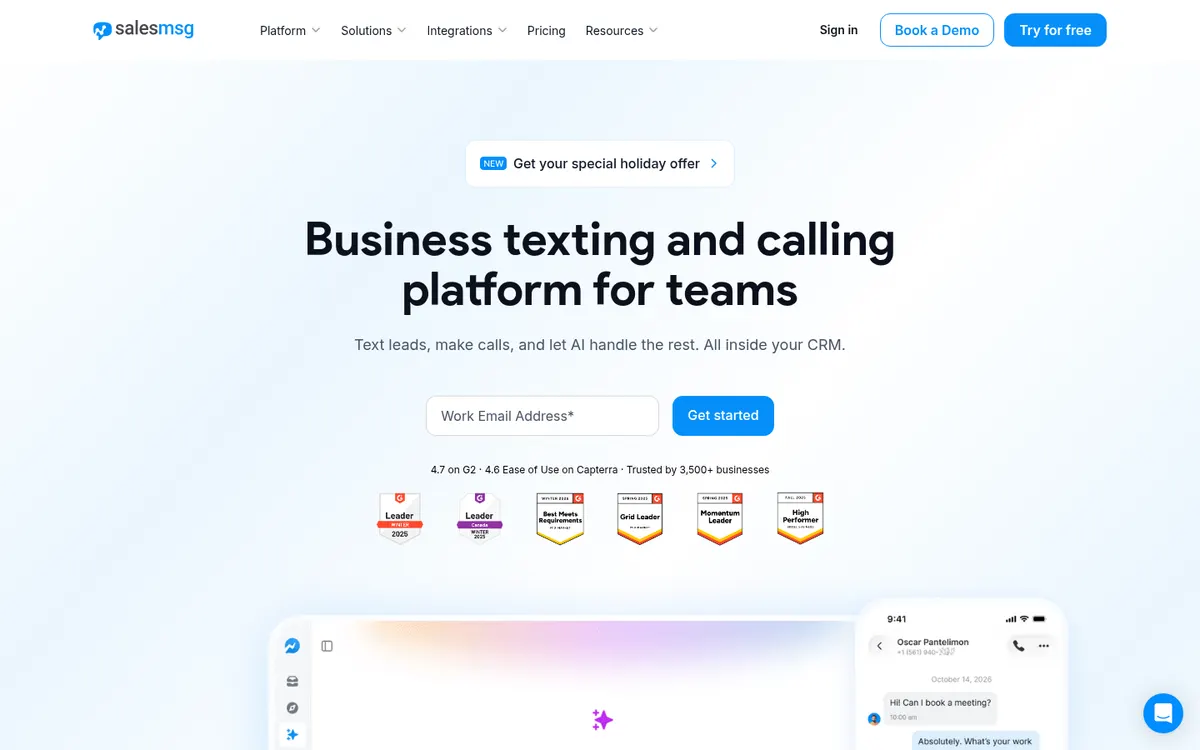
A shared inbox with calling and CRM sync for teams where reply speed decides whether a deal closes.
Salesmsg is built around conversations rather than broadcasts, with a shared team inbox where several people answer texts from the same number. A sales or support team that loses track of replies on individual phones gets one queue, visible to everyone, with built-in calling alongside messaging. Native HubSpot and Salesforce sync means a text thread attaches to the right record without copy and paste.
The practical effect is reply speed. Texts get answered by whoever is free, and the customer does not get handed around. Conversation-based campaign workflows handle follow-up sequences, and higher tiers add AI agents that qualify leads outside working hours, which suits a firm whose enquiries arrive in the evening. Calling inside the same tool saves a separate phone system for teams that already work from a screen.
Pricing is partly quote-based, and the vendor pricing page returned nothing on the date we checked, so cost cannot be compared directly with the flat-rate tools here. Assume you will need a sales conversation before you have a number. That is normal for shared-inbox platforms and inconvenient for an owner who wants a price today.
The tool is more capability than a broadcast-only sender needs. If your plan is a monthly promotion to a list, the shared inbox and CRM sync are overhead you pay for and do not use. It fits teams where a reply within minutes changes whether a deal closes: home services, clinics, real estate and any business fielding inbound enquiries by text. Compare it against the flat-rate tools on total monthly cost once you have a quote.
Several people answer inbound texts and a fast reply affects whether you win the job.
You only broadcast promotions and want a published flat monthly price.
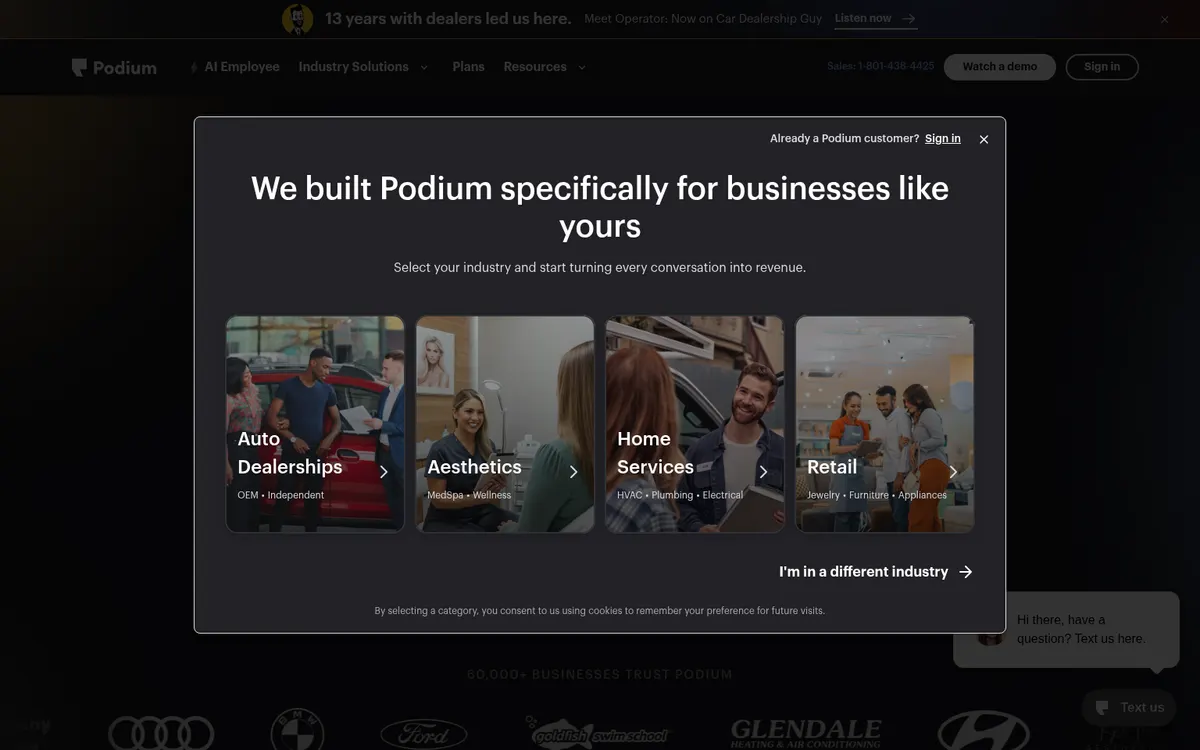
Combines review requests, texting and in-thread payments, and only makes financial sense if you use all three.
Podium puts review requests, texting and payment collection into one local-business platform. A garage, dental practice or home services firm can text a customer after a job, ask for a review, answer the reply in a shared inbox, and take a deposit in the same thread. That combination is the reason to look at it, and the reason a pure SMS tool often wins on price.
Review invitations sent by text are the anchor feature. They arrive when the visit is fresh, and the unified inbox catches the response, so a complaint lands with someone who can act on it rather than sitting on a public page. Multi-location management suits a small chain that wants one account and consistent messaging across sites, and payment collection inside the thread removes a step for businesses that take deposits or balances.
Pricing is quote-based only, and there is no free plan. A demo is the only route in, so an owner cannot see a number without a sales call. That makes direct comparison with a $29 flat-rate plan difficult, and it means the honest answer on cost is that you have to ask.
The economics only work if you use more than texting. A business that already pays for a review tool, a messaging service and a payment link generator may consolidate and come out ahead. A business that just wants to send promotions pays for a suite it does not need. It fits reputation-driven local services with several staff answering customers, and it is a poor fit for a one-person operation that only broadcasts offers.
Reviews, customer texts and payments are all part of your daily operation across one or more locations.
You only need to send promotions and want a published per-month price.
Behavior-based segmentation and cart triggers for online stores with enough order volume to justify custom pricing.
Attentive is for online stores with steady order volume, and it assumes you have a catalogue, a customer history and events to trigger from. Segmentation runs on browsing and purchase behavior, campaigns fire from cart and checkout events, and SMS and email are managed in one system. A small brand selling through Shopify can text the people who abandoned a cart this morning rather than the whole list.
The triggers are the practical core. A cart event, a checkout event or a browse session becomes the audience, so a message goes to the few hundred people it is relevant to instead of the few thousand on the list. Shopify and other ecommerce integrations supply the data. Managed onboarding and deliverability support come with the service, which matters for a brand that has never run a text program and does not want to learn carrier rules alone.
Pricing is custom and usage-based, and a demo is required before signup, so there is no published number to compare. That is the pattern for platforms aimed at brands with meaningful order volume, and it means a very small store should expect to justify the spend with a forecast rather than a price list.
The feature set has little to offer a business without online orders. A plumber, a gym or a restaurant with no ecommerce checkout gets none of the segmentation value and pays for a platform built around store data. It fits a small ecommerce brand doing enough orders that cart recovery and repeat purchase messages move revenue, and it is the wrong tool for a local service business that mainly wants to send promotions and reminders.
You run an online store with steady order volume and want cart recovery and repeat purchase texts.
You have no ecommerce checkout or you need a published price before a sales call.
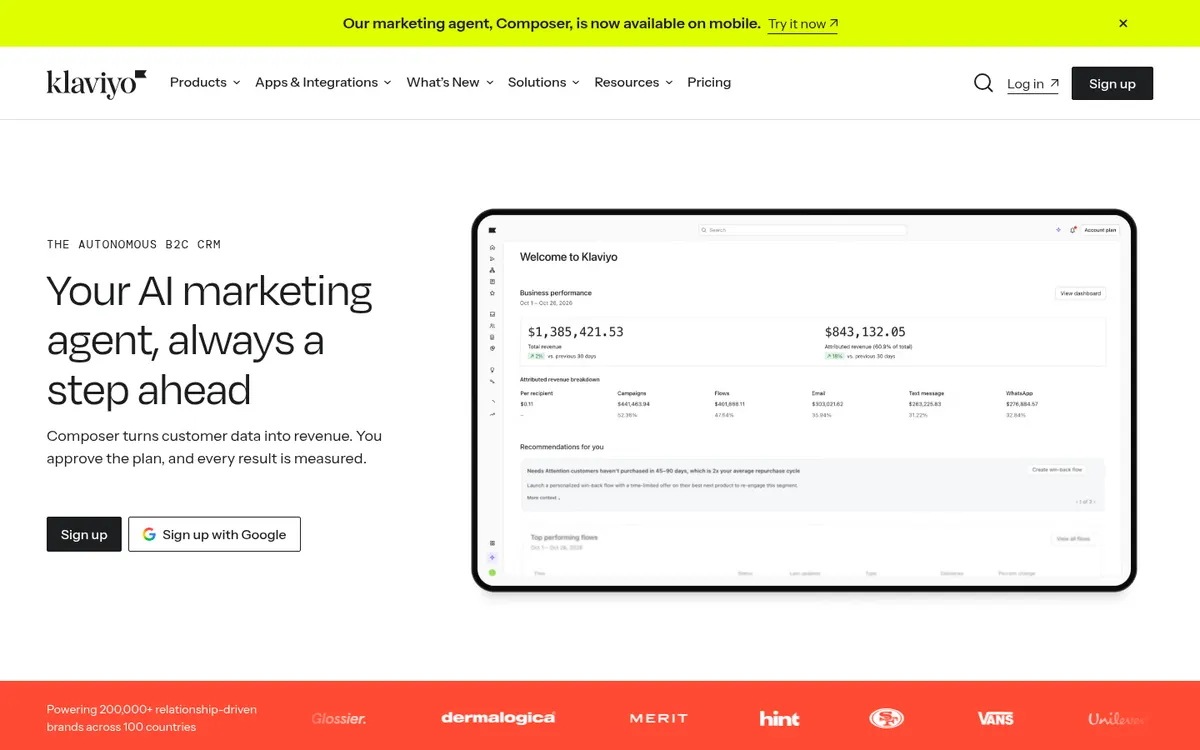
Adds SMS to an established email platform, with a free tier to 250 profiles and text credits billed separately.
Klaviyo is an email platform with SMS attached, and that origin shapes both the strengths and the bill. Email and SMS sit in one account, flows cover abandoned carts, post-purchase and win-back sequences, and the automation builder mixes email and text steps in a single path. A store already using Klaviyo for email can add a text step to an existing flow without a second vendor. The free tier covers up to 250 active profiles. Entry paid pricing is $20 per month for the email plan. Store data from Shopify and similar platforms feeds targeting, so a flow can address people by what they bought rather than by a single list membership. One flow builder across both channels saves the duplicate setup that two tools require. The cost model is the catch. The monthly plan covers email contacts while SMS credits are billed separately, so a text-heavy program costs more than the headline figure. Costs also climb quickly as the contact list grows, because the email tier is priced by profiles. A brand that sends mostly texts is paying for an email platform plus text credits, which is the wrong shape for that business. Value depends on having store data to work with. A local service business with no product catalogue gets less from the flows than an online store does, and a small list on the free tier will outgrow it fast. It fits an ecommerce brand that already treats email as a revenue channel and wants to add text to the same flows, and it is a poor fit for a business that only wants to send occasional promotions to a flat list.
You already run email through Klaviyo or a similar store platform and want text added to the same flows.
You mainly send texts, or you have no online store data to target from.
SMS marketing software is the tool that lets a small business send text messages to a list of customers who agreed to hear from them, and handle the replies that come back. It handles the parts that a phone cannot: storing opt-in records, scheduling sends, splitting a list into segments, and reporting what happened. Messages travel through carriers, so the software also deals with the registration and consent rules those carriers enforce.
The work splits into three jobs. Broadcast sending pushes one message to a list, usually a promotion, an announcement or an alert. Automated sequences send on a trigger, such as a welcome text after signup or a reminder the day before an appointment. Two-way conversations route replies into an inbox where a person answers, which is where most of the value sits for service businesses, because a text with a fast reply converts far better than a one-way blast.
Small businesses use texting for a narrow set of jobs:
Billing usually follows one of two patterns. Credit-based plans sell a bundle of messages per month and charge overage beyond it, while contact-based plans price by how many people you store. Pay-as-you-go credit packs sit outside both and suit occasional senders. Almost every price quoted in marketing omits at least one fee, commonly a monthly number charge, a carrier registration charge, or per-message overage, so the honest comparison is the full monthly bill at your real send volume.
The category is not the same as a CRM or a helpdesk. Some tools here overlap with both, adding shared inboxes and CRM sync, but the core function is getting a compliant text to a phone and catching the answer.
This comparison sits on the Marketing desk. Readers comparing neighbouring stacks often check our guides to AI tools for sales prospecting and manufacturing software next.
An entry price is rarely the bill. Three charges recur on top of the plan: a recurring monthly number fee, a one-time carrier registration charge, and per-message overage once an allowance runs out. A headline of $29 can cost more in a busy month without any change of tier, so price the fee stack before you compare tools.
| Model | How it bills | Typical fit | Example from this list |
|---|---|---|---|
| Credit subscription | Monthly plan with a set message allowance, overage per message | Steady volume you can predict | $29 per month for 500 credits (SimpleTexting, SlickText) |
| Message-volume plan | Priced by messages sent rather than contacts stored | Large lists messaged infrequently | Textedly Basic at $29 per month |
| Pay as you go | Prepaid credits at about $0.049 per SMS | Occasional or seasonal sending | TextMagic |
| Contact-based platform | Price rises with stored profiles, SMS credits billed separately | Online stores running email and SMS together | Klaviyo, free to 250 profiles |
| Quote-based | Custom price agreed through sales | Multi-location or high-volume brands | Podium, Attentive, Salesmsg |
Every price above was checked on the vendor's own pricing page on November 25, 2026. Where a vendor does not publish a figure we write "See website" instead of guessing. To compare annual and monthly billing quickly, try the free percentage calculator.
Entry plans on this list start between $20 and $29 per month. EZ Texting is $20 per month billed annually, and SimpleTexting, SlickText and Textedly sit at $29 per month for their entry tiers. On top of that, expect a recurring monthly number fee, a one-time carrier registration charge, and per-message overage once your credit allowance runs out. Ask for the all-in monthly total at your real send volume.
Yes. Carriers require businesses to register before sending application-to-person texts, and tools that serve the US market typically handle or require that registration. Consent rules are separate: you need a record of how each person agreed to receive texts, usually through a keyword opt-in, a web form or a written agreement. SlickText builds its pitch around consent and opt-in tooling, and SimpleTexting registers numbers on the customer's behalf.
Credit-based billing sells an allowance of messages per month and charges overage per message beyond it. Contact-based billing prices by how many profiles you store, so a large list costs more each month whether you text it or not. SimpleTexting uses credits with unlimited contacts, and SlickText uses a credit allowance. Klaviyo prices email by active profiles and bills SMS credits separately. Pick credits for predictable volume and contact pricing when stored profiles drive email revenue too.
Several tools on this list support MMS. SimpleTexting includes MMS and poll or survey messages, EZ Texting includes MMS with stock imagery inside its plan rather than as an add-on, SlickText offers RCS rich messaging as a paid add-on with a setup fee and annual cost, and Textedly supports MMS. How image messages count against your allowance varies, so ask the vendor before you plan an image campaign.
Texts arrive on the phone the customer is already carrying, which makes them a fit for anything with a deadline: an appointment tomorrow, a delivery window, a discount that ends tonight. Short messages also avoid the inbox competition that email faces. The format rewards brevity, so a reminder or a one-line offer reads better than a long announcement, and a keyword reply gives the customer an easy way to respond.
Choose pay-as-you-go if you text in bursts and want nothing accruing in quiet months. TextMagic charges about 4.9 cents per SMS with no subscription, though number rental and carrier registration still add monthly charges. Choose a subscription when texting is a routine channel, because credit allowances and included features cost less per message at steady volume. If volume is unpredictable, start on a trial and measure a real month before committing to an annual plan.
Browse every comparison on the Marketing desk, with the same rubric and dated prices.