Ranked #1

Samsara
All-in-one platform
See websiteCustom quote, hardware billed separately
- Best for
- Mid-size to large fleets wanting connected safety and operations
- Free plan
- No
- Rubric
- 6.2 / 10
Eight fleet tracking platforms compared on published prices, contract terms, hardware, ELD compliance and video safety for November 2026 buyers.
 Prices checked November 25, 2026
The best fleet tracking software in November 2026 depends on what you are tracking. Samsara leads for mid-size to large fleets that want tracking, AI dashcams and maintenance in one platform. Verizon Connect suits large fleets with complex compliance reporting. Motive fits trucking and delivery fleets where ELD and safety scoring matter most. Only two of the eight tools publish per-vehicle prices, so most of this list starts with a sales call.
All-in-one platform
See websiteCustom quote, hardware billed separately

Compliance reporting depth
See websiteCustom quote via enterprise sales

ELD plus video safety
See websiteCustom quote, tiered plans priced by sales
Disclosure for this page: All 8 tools here are unpaid editorial picks. The position of a paid listing can be part of what the vendor pays for. How we handle paid listings.
| Tool | Best for | Free plan | Actions | |||
|---|---|---|---|---|---|---|
| 1 | Samsara | Mid-size to large fleets wanting connected safety and operations | See websiteCustom quote, hardware billed separately | No | ||
| 2 | Verizon Connect | Large fleets with complex compliance requirements | See websiteCustom quote via enterprise sales | No | ||
| 3 | Motive | Trucking and delivery fleets prioritizing safety and ELD | See websiteCustom quote, tiered plans priced by sales | No | ||
| 4 | Geotab | Technical fleets wanting open data and custom integrations | See websitePriced through authorised resellers | No | ||
| 5 |  Azuga | Small fleets that want published, transparent pricing | $25BasicFleet, per vehicle per month | No | ||
| 6 | Fleetio | Fleets whose main cost problem is maintenance | See websiteEssential, per vehicle per month, billed annually | No | ||
| 7 | One Step GPS | Small fleets wanting cheap tracking without contracts | $13.95Per vehicle per month, no contracts | No | ||
| 8 |  Lytx | Fleets running video safety programs to cut accidents | See websiteCustom quote, no published plans | No |
We ranked these eight tools by how well each one fits the buyer it names, not by a single overall total. Every entry was scored on five criteria: price transparency, core tracking depth, safety and compliance, contract flexibility, and fit and rollout. Each criterion carries a weight, shown above, and the scores appear on every entry so you can re-weight them for your own fleet.
Prices, plan names and trial terms come from vendor pricing pages checked on 2026-11-25. Where a vendor publishes nothing, we say so and do not estimate a figure. Several pricing pages could not be reloaded on the check date, which we note on those entries; in those cases the plan details were carried forward from the same vendor source rather than guessed. Azuga's $25 and One Step GPS's $13.95 are the only per-vehicle starting prices confirmed on a public page in this set.
Contract terms, hardware costs and support quality are reported from vendor documentation and buyer accounts described in our research notes, not from our own negotiations. We flag multi-year terms and separate hardware charges where vendors disclose them or where buyers consistently describe them.
One entry, Samsara, appears in a Featured position at the top of the page. That placement is paid. It was scored with the same five criteria as every other tool, and its cons are listed in full: no published pricing, multi-year terms and hardware billed on top. Placement did not change its scores, and the remaining seven entries are ordered by fit for the buyer each one describes.
We did not test these products on a live fleet. Treat the scores as a starting shortlist, then run the demo with the dispatchers who will use it daily.
The full process, including how we handle corrections, is on the methodology page. Paid listings follow our advertising disclosure.
| Criterion | Weight | What we check |
|---|---|---|
| Price transparency | 25% | How easy it is to learn the real per-vehicle cost before a sales call, and whether a plan name and figure are published. |
| Core tracking | 20% | Depth of live location, trip history, geofencing and reporting that a dispatcher uses every day. |
| Safety and compliance | 20% | Video safety, driver coaching and ELD or hours-of-service coverage for regulated operations. |
| Contract flexibility | 20% | Term length, early exit exposure, trial or guarantee options and whether hardware is locked to the vendor. |
| Fit and rollout | 15% | How closely the product matches a stated fleet type and how much configuration or program work launch demands. |
The broadest platform here, but you will not learn the price until a sales rep configures your quote.
Samsara is the closest thing on this list to a single system for the whole operation. You get live GPS tracking, AI dashcams that flag hard braking and other events, driver safety scoring with coaching workflows, maintenance scheduling that reads fault codes, and optional site and cargo cameras. The integration marketplace and API mean dispatch, payroll and back-office tools can pull fleet data rather than re-key it.
The trade-off is that everything is quote-based. Samsara's pricing page runs a vehicle-count wizard and returns no figures, and there is no published plan name to anchor a budget. Hardware for dashcams and gateways is billed on top of the per-vehicle subscription, so two fleets with identical vehicle counts can pay very different totals depending on camera count and configuration. Buyer accounts frequently describe 36-month agreements as the standard offer, which matters if your fleet size will change.
Fit is mid-size to large fleets that intend to run a safety program, not just watch dots on a map. If you want cameras, coaching and maintenance in one login, the breadth justifies the sales process. If you only need to know where trucks are, the platform is more than you will use, and the hardware line adds cost for capability you will not switch on.
Before signing, ask for the full three-year total including hardware, the per-vehicle rate at your current count and at 20 percent fewer vehicles, and what happens to the cameras if you leave. The demo is the only trial offered, so run it with the people who will use it daily.
You want cameras, coaching and maintenance managed in one platform and can absorb a multi-year term.
You need a published per-vehicle price before you will take a call.

Deep telematics and compliance reporting for large fleets, delivered through a slow enterprise sales process.
Verizon Connect is built for fleets where reporting depth and regulatory compliance carry more weight than a clean interface. The platform covers GPS tracking, route optimization and dispatch, ELD and hours-of-service compliance, driver behavior monitoring, custom dashboards and international coverage. For a fleet crossing borders or answering to auditors, that combination is the reason to shortlist it.
Pricing is entirely enterprise and quote-based, with no public figures or plan tiers. Expect a traditional sales cycle: discovery, demo, proposal, negotiation. Contract commitments are typically long, which is normal at this scale but worth pricing out before you commit. The interface is often described as less modern than newer rivals, so judge it yourself rather than taking a datasheet's word for it.
One caveat on this entry: the pricing page did not load on our check date, so the custom-quote status stands as previously recorded rather than freshly confirmed. Nothing in the public material contradicts it.
The practical advice is to run the demo with the dispatchers who will live in the tool, not with procurement. A platform this deep can still be the wrong fit if daily users find the screens slow. Ask specifically which compliance reports your auditor will want, and have the vendor show those exact reports rather than a generic dashboard tour. Fit is large fleets with complex compliance requirements and the patience for an enterprise purchase.
Compliance reporting depth matters more than a modern interface and you can run an enterprise purchase.
You need to be live in two weeks on a published budget.
Video safety and ELD compliance from an ELD-first vendor, with fuel cards that can offset part of the bill.
Motive began life as KeepTruckin in ELD compliance and expanded into AI dashcams, driver safety scoring, fuel card and spend management, maintenance alerts and GPS tracking with dispatch. That history shows in the compliance side, which is mature and familiar to drivers who have used ELD hardware before.
The combination is the point. A trucking or delivery fleet can run in-cab alerts, coaching workflows and hours-of-service from one system rather than stitching a compliance vendor to a camera vendor. Fuel card integration is the commercial sweetener: spend management can offset part of the subscription cost, though the amount depends on fuel volume and how much of your spend runs through the card.
Pricing is not published. Plans exist in tiers, but every figure comes from a sales conversation, and contract terms deserve a close read because the tiers and terms quoted shift with fleet size and add-ons.
This is more product than a simple location tracker needs, and that is deliberate. If your operation runs regulated hours and you want cameras in the cab, Motive is a serious contender. If you run light vehicles and only need to see where they are, you are paying for compliance and video you will not use. Ask the rep for the per-vehicle figure at your exact count, with and without dashcams, and get the term in writing before the demo ends.
You run regulated hours and want cameras, coaching and fuel spend in one place.
You run light vehicles and only need location history.
The most flexible data platform here, with pricing and support quality set by whichever reseller you choose.
Geotab is a data platform more than a dashboard product. The GO plug-in devices feed a marketplace of third-party apps, open data access for custom workflows, cold-chain temperature monitoring, maintenance and utilization reporting, and fleet analytics with benchmarking. If your operation has unusual reporting needs or already has a data warehouse, that openness is the whole argument.
The catch is distribution. Geotab sells through authorized resellers, so the price, onboarding and support experience are set by the partner rather than the platform owner. Two fleets with identical vehicles can get different quotes and very different implementation quality. Ask which reseller, what their response times are, and who handles escalation.
Setup takes more work than a plug-and-play tracker. The hardware range is flexible, which is good for mixed fleets with light vehicles and heavy equipment, but configuration is on you or your partner. Expect a build phase rather than an afternoon.
Pricing on this entry was not reconfirmed: the page did not load on our check date, so the reseller pricing route is carried forward from the vendor's documented model rather than a live figure. Nothing suggests it has changed, but confirm it in the first call. Fit is technical fleets with an in-house analyst or a strong partner, not a small operator who wants a box in the port and an app on the phone.
You have technical staff or a strong reseller and want open data and custom reporting.
You want a fixed price and a same-day install.
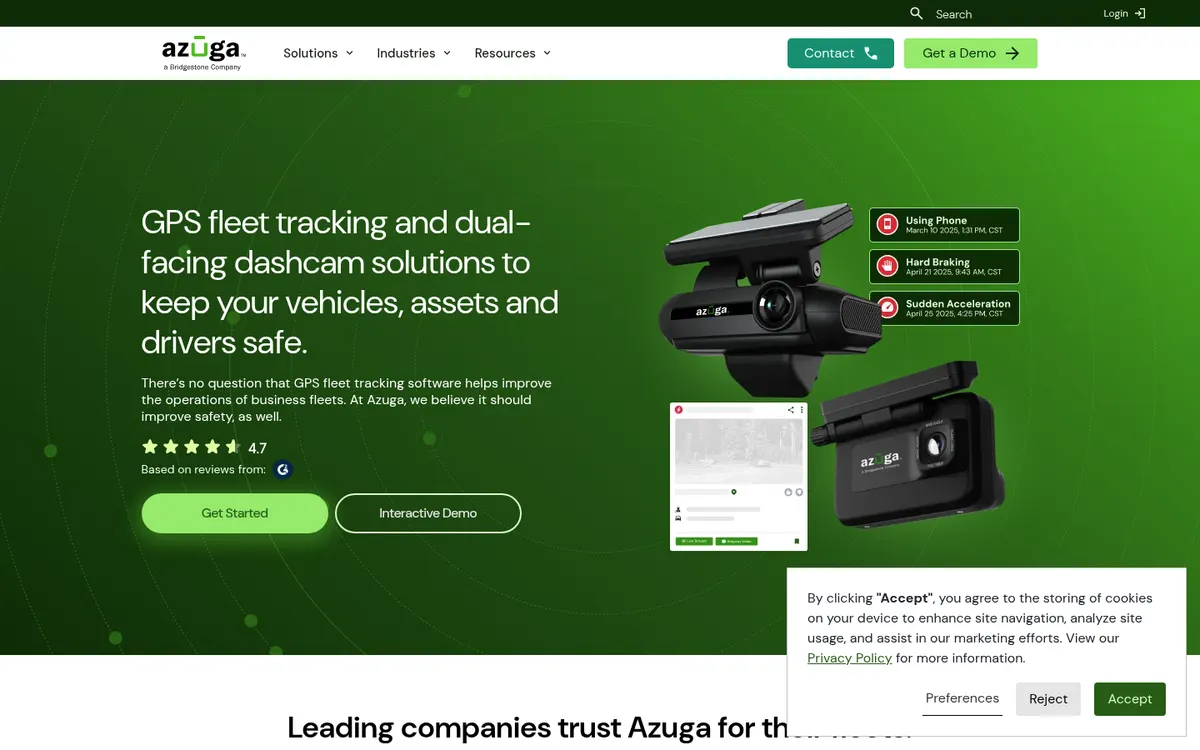
The best-priced full stack on paper, because the tiers are published, but add-ons and contract terms change the math.
Azuga does something most of this list will not: it publishes its prices. BasicFleet starts at $25 per vehicle per month, with SafeFleet at $30 and CompleteFleet at $35, and unlimited phone, email and web support is bundled into the listed tiers. Plug-and-play OBD-II trackers keep setup costs low because there is no installer visit.
The published number is a starting point, not a total. The AI dashcam is a separate product at roughly $49.99 per month on top of the base plan, which more than doubles the cost of a camera-equipped vehicle, and ELD is a distinct product again. A fleet that wants tracking plus video plus compliance can end up near all-in-one platform pricing without the integration benefits.
Contract length is the second thing to check. Buyers commonly report long terms, so ask for the term in writing alongside the quote and price out what early exit would cost. The driver safety scoring and rewards program is a genuine differentiator for safety culture, and it is included rather than sold separately.
Fit is small fleets that want to see a number before they commit, and that value self-install. If you need dashcams on every unit, model the add-on cost for the full term first, then compare it against a quote-based platform where cameras are bundled.
You want a published per-vehicle price and will self-install on light vehicles.
You need cameras on every unit and want one bundled price.
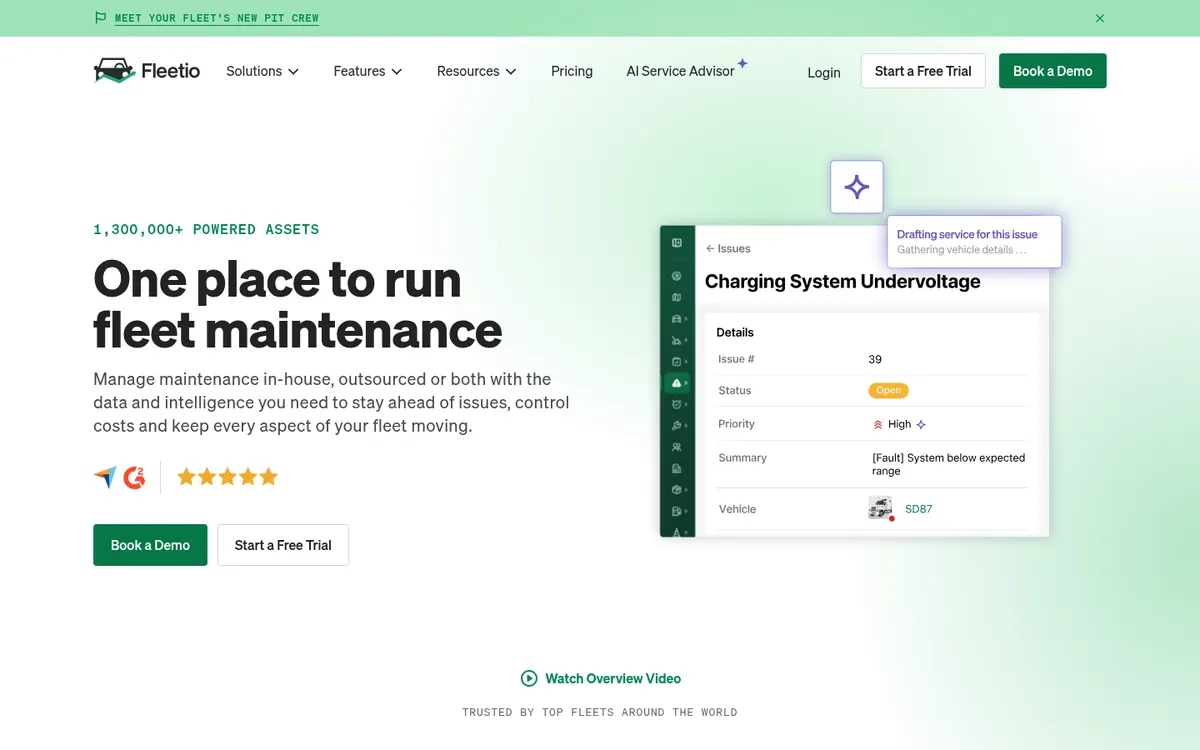
Maintenance software first and tracking second, with unlimited user seats and a real free trial.
Fleetio solves a different problem from the rest of this list. It is built around asset records, inspections with custom checklists, preventive maintenance scheduling, work order management, parts inventory, and fuel and cost tracking. Unlimited users sit on every plan, which matters for shops where several people need to open and close work orders. GPS tracking is present but lighter than the dedicated telematics tools here. If live location and route history are the core need, Fleetio is the wrong first purchase. If downtime and repair spend are the core problem, it is the strongest fit on this list, and it needs no proprietary hardware at all. The plan structure has a catch. Work orders and parts inventory, the features that make the maintenance workflows pay off, sit in the higher Professional tier at around $7 per vehicle per month. The entry price is lower but covers a narrower set of functions. There is also a five-vehicle minimum, so a three-van operation cannot start small. Fleetio is the only tool here offering a 14-day free trial with no credit card, which is the lowest-risk way to test this category. The pricing page did not load on our check date, so confirm the per-vehicle rate on the vendor site before you budget. Billing is annual for the annual rate.
Maintenance and repair spend, not location, is the problem you are trying to fix.
You run fewer than five vehicles or need deep live tracking.
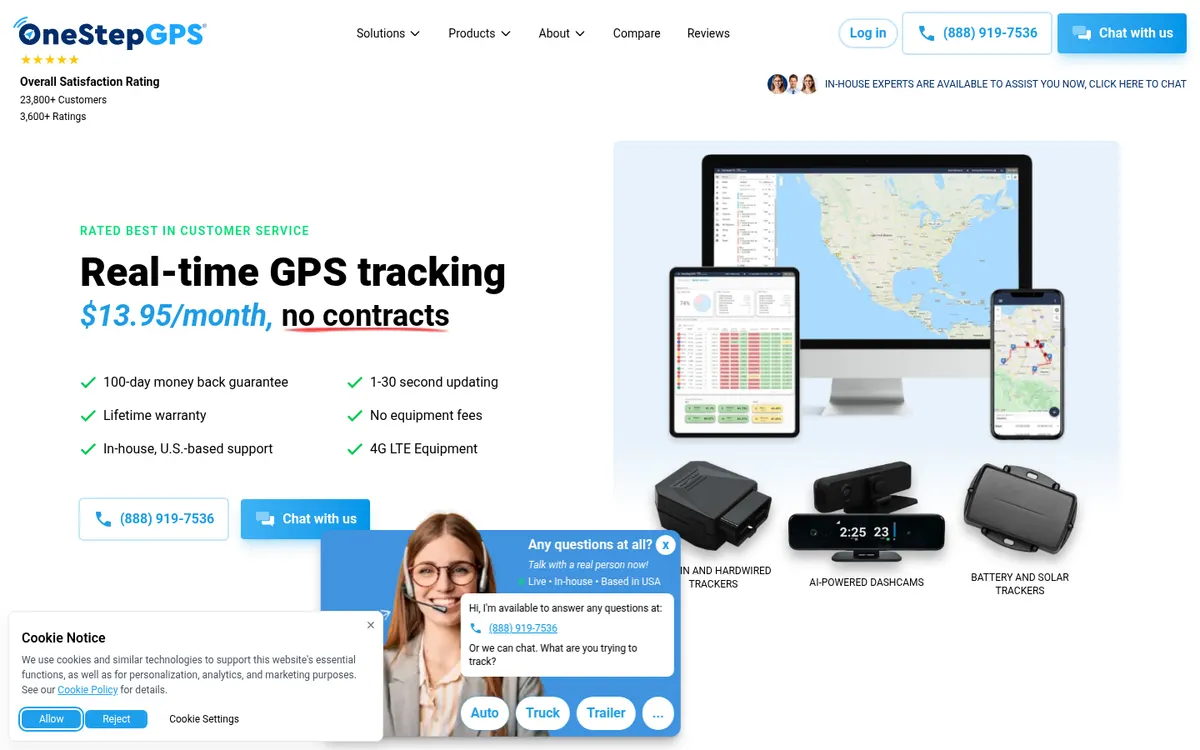
The cheapest and simplest way on this list to see where vehicles are, with no contract at all.
One Step GPS is a deliberately narrow product: real-time GPS vehicle tracking, location history and reporting, at a flat $13.95 per vehicle per month with no contract. The homepage confirms the price, the no-contract position and a free device. Self-service deployment means you install and go without a sales call.
That simplicity is the entire value. There are no AI dashcams, no video safety, no ELD or compliance modules, and limited coaching workflows. If a regulator asks for hours of service or an insurer asks for camera footage after an incident, this tool will not help. If you need to know where the vans are and what routes they ran, it does the job at the lowest published rate in this comparison.
The replacement for a free trial is a 100-day money-back guarantee. That is a longer window than any trial on this list, and it lowers the risk of committing a small fleet. Read the guarantee terms before you buy, and test the reporting against the questions you actually ask.
Fit is small fleets, service businesses and mixed light vehicle operations that are cost-sensitive and contract-averse. It is also a reasonable first step: run it for a season, learn what your dispatchers actually need, then move up to a platform with cameras or compliance if the requirement appears.
You want cheap, contract-free location tracking and nothing more.
You need cameras, ELD or a driver coaching program.
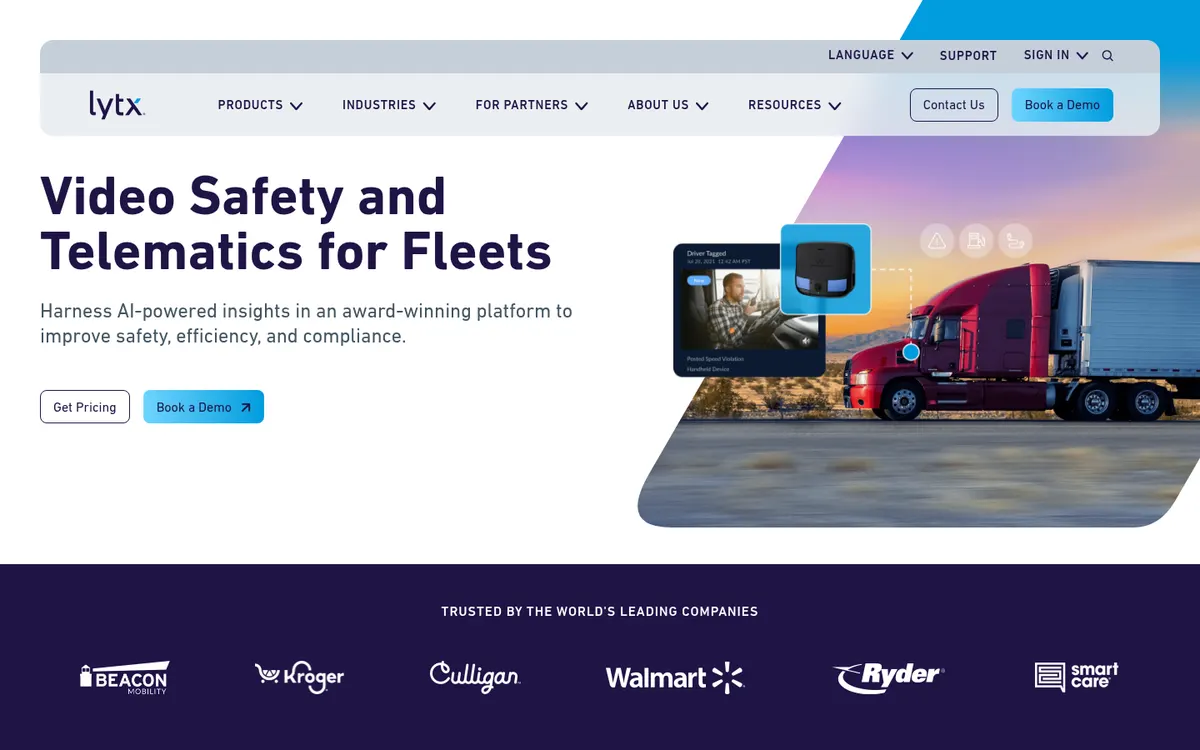
A video safety program rather than a tracking install, quoted per deal and priced for enterprise buyers.
Lytx is the most safety-focused product here. Event-triggered dashcams capture incidents, and human analysts review clips so coaches receive a short, relevant video rather than a queue of raw footage. Driver coaching workflows, risk and claims documentation and safety program reporting are built around the goal of fewer collisions, with optional extended video and telematics modules.
That human review is the differentiator and also part of why pricing is quote-only. There are no published plan tiers, and implementation is treated as a safety program rather than a hardware rollout: policy, coach training and review cadence all form part of the launch. Budget time for that, not just for installing cameras.
The platform is weaker on pure maintenance workflows than Fleetio or Samsara, so it is usually bought alongside or instead of a tracking tool rather than as a replacement for a maintenance system. If your insurance carrier or claims history is the pressure point, that trade is sensible. If you need fault codes and preventive schedules, look elsewhere or plan to integrate.
No pricing page exists or was retrieved on our check date, so the custom-quote status is recorded as unconfirmed rather than verified. Ask for the per-vehicle rate, the review service level and what happens to the cameras at the end of term. Fit is fleets running a video safety program with a manager who will own coaching.
Reducing collisions is the goal and you have someone to own a coaching program.
You need published pricing or a maintenance-first system.
Fleet tracking software records where vehicles are, what they did and, increasingly, how they were driven. The location layer is the oldest part: a device in the vehicle reports position, speed and ignition state, and the software turns that into a live map, trip history, geofence alerts and utilization reports. That alone answers most dispatch questions.
Above the location layer sit three other functions that buyers often bundle without realizing they are separate products.
A tool that does all four is a platform. A tool that does one is a specialist. Both are legitimate purchases, and the mistake is buying a platform for a single-vehicle-type fleet that only needs location, or buying a location tracker for a regulated fleet that will fail an audit.
Hardware matters too. Plug-in OBD-II devices install in minutes and suit light vehicles. Wired gateways and dashcams need an installer but survive driver swaps and support more sensors. Some vendors bundle hardware into the subscription, others bill it separately, and some lock it to their platform, which changes the real cost of switching later.
Finally, the software is only as good as the workflow around it. A dashcam without coaching is a recording device. A maintenance module without someone closing work orders is a database. Judge each tool by whether it makes an existing process faster, not by the length of its feature list.
This comparison sits on the Software desk. Readers comparing neighbouring stacks often check our guides to demand forecasting software and glp 1 companies next.
Fleet tracking pricing is quoted per vehicle per month, with hardware, add-ons and contract length deciding the real figure. Most vendors in this comparison publish nothing, which pushes buyers into a sales process before they can budget.
| Model | How it bills | Typical fit | Example from this list |
|---|---|---|---|
| Published per-vehicle tiers | Fixed monthly rate per vehicle, features by tier | Small fleets that want a number up front | Azuga BasicFleet at $25, SafeFleet $30, CompleteFleet $35 |
| Flat rate, no contract | One monthly rate per vehicle, cancel anytime | Cost-sensitive light vehicle fleets | One Step GPS at $13.95 per vehicle per month |
| Per-vehicle with annual billing | Tiered rate, billed annually, minimum fleet size | Maintenance-led operations | Fleetio Essential, billed annually, five-vehicle minimum |
| Custom enterprise quote | Negotiated per deal, hardware on top | Large or regulated fleets | Samsara, Verizon Connect, Motive, Lytx |
| Reseller pricing | Set by the partner, varies by region and volume | Technical fleets with integration needs | Geotab, priced through authorized resellers |
Hardware is the second variable. Samsara bills cameras and gateways on top of the subscription. Azuga sells the AI dashcam separately at roughly $49.99 per month, and ELD as a distinct product. One Step GPS advertises a free device. Geotab's plug-in units come through the reseller. Always ask whether hardware is included, financed or charged at install.
Contract length is the third. Multi-year terms are commonly quoted by Samsara, and buyers report long terms at Azuga. Early termination usually means paying out the remaining term or returning hardware, so get the exit clause in writing.
Add-on stacking is where budgets break. A $25 base plan plus a $49.99 camera plus ELD is close to what an all-in platform charges, without the integration. Model your full configuration for the full term, not the headline rate.
Every price above was checked on the vendor's own pricing page on November 25, 2026. Where a vendor does not publish a figure we write "See website" instead of guessing. To compare annual and monthly billing quickly, try the free percentage calculator.
Define the job first. Write down the one problem you are buying for: locating vehicles, cutting collisions, passing compliance audits, or controlling repair spend. That single answer eliminates half this list before you take a demo.
Count vehicles and check minimums. Note your current count and your count in twelve months. Fleetio requires five vehicles minimum, and per-vehicle rates change with volume at every quote-based vendor, so ask for pricing at both numbers.
Confirm the legal requirement. If your drivers are regulated commercial drivers, you need an ELD, which removes One Step GPS and pushes you toward Motive, Verizon Connect or Azuga. Confirm the rule with your own compliance advisor rather than a vendor.
Model the full term cost. Add the per-vehicle rate, hardware, each add-on you actually need, and any installation charge, then multiply by the term. Compare that total, not the monthly headline, against the next shortlist entry.
Test with the daily users. The demo should be run by dispatchers and safety managers, not procurement. Give them a real task, such as finding last Tuesday's route or closing a work order, and watch how long it takes.
Read the exit clause before signing. Ask what happens to the hardware, whether the term auto-renews and what early termination costs. If you cannot get a clear written answer, treat that as the answer.
Only two of the eight tools here publish a starting per-vehicle rate. Azuga lists BasicFleet at $25 per vehicle per month, with SafeFleet at $30 and CompleteFleet at $35, plus a dashcam add-on at roughly $49.99. One Step GPS lists $13.95 per vehicle per month with no contract. The other six quote privately, and Geotab's price is set by its reseller.
GPS tracking records position, speed, trips and idle time, which answers where vehicles are and what routes they ran. A dashcam safety program records video, detects hard braking or collisions and routes clips to a coach. Tracking tells you what happened on the map; video tells you why, and supports claims and driver coaching. Some platforms, including Samsara, Motive and Lytx, bundle both.
An ELD is required where regulations mandate electronic hours-of-service records for commercial drivers, which in the United States generally covers interstate commercial vehicles above a weight threshold. Rules vary by country and by operation type, and exemptions exist. Confirm your status with your own compliance advisor before buying, then choose a vendor with certified ELD hardware such as Motive, Verizon Connect or Azuga.
Terms vary widely. Samsara buyers frequently describe 36-month agreements as the standard offer, and Azuga buyers commonly report long terms. One Step GPS sells with no contract at all, and Fleetio bills annually. Before signing, ask whether the term auto-renews, what early termination costs and whether hardware must be returned, then get the answer in writing.
Usually not without checking. Cameras and gateways are typically tied to the vendor's platform and stop reporting when the subscription ends, and some must be returned. Geotab's plug-in devices come through a reseller, so portability depends on the partner. Ask in writing before you sign whether the hardware becomes yours and whether any other platform can read it.
Fleetio is the only tool here with a genuine free trial: 14 days, no credit card. One Step GPS replaces a trial with a 100-day money-back guarantee, which is the longest risk-free window in this comparison. Samsara, Verizon Connect, Motive, Geotab, Azuga and Lytx offer a demo rather than a trial, so you cannot test them on live vehicles before committing.
Browse every comparison on the Software desk, with the same rubric and dated prices.