Ranked #1

Anaqua
AI-assisted docketing
See websiteQuote-based pricing, no public price
- Best for
- Large corporate and law firm IP portfolios
- Free plan
- No
- Rubric
- 7.6 / 10
Seven IP management platforms compared on docketing, analytics, jurisdiction coverage and pricing, with the fit each one suits and the facts buyers need before a sales call.
 Prices checked November 25, 2026

Anaqua is the best fit for large corporate and law firm portfolios, Clarivate suits corporate teams that want IP data alongside workflow, and Dennemeyer covers teams that want software plus managed renewals and filings. The order reflects editorial fit for the buyer each entry describes, and prices and plan details were checked on 25 November 2026. The other four serve narrower needs: AppColl for small firm docketing, Alt Legal for trademark prosecution, PatSnap for patent analytics, and Triangle IP for lean in-house patent pipelines. All seven are quote-based, so ask for a written quote.
AI-assisted docketing
See websiteQuote-based pricing, no public price
IP data assets
See websiteQuote-based pricing, no public price
Renewals plus software
See websiteQuote-based pricing, limited free tier for small portfolios
Disclosure for this page: All 7 tools here are unpaid editorial picks. The position of a paid listing can be part of what the vendor pays for. How we handle paid listings.
| Tool | Best for | Free plan | Actions | |||
|---|---|---|---|---|---|---|
| 1 | Anaqua | Large corporate and law firm IP portfolios | See websiteQuote-based pricing, no public price | No | ||
| 2 | Clarivate | Data-driven IP lifecycle management for corporate teams | See websiteQuote-based pricing, no public price | No | ||
| 3 | Dennemeyer | Software plus managed IP renewal and filing services | See websiteQuote-based pricing, limited free tier for small portfolios | No | ||
| 4 |  AppColl | Affordable docketing for small and mid-size firms | See websiteQuote-based pricing, no public price | No | ||
| 5 |  Alt Legal | Trademark docketing and prosecution teams | See websiteQuote-based pricing, free trial available | No | ||
| 6 |  PatSnap | Patent analytics and innovation intelligence teams | See websiteQuote-based pricing, no public price | No | ||
| 7 |  Triangle IP | Patent pipeline analytics for lean in-house teams | See websiteQuote-based pricing, one-month free trial | No |
We scored every tool on the same five criteria. Docketing depth carries 25 percent, because a missed deadline is the failure that matters most. Portfolio analytics and jurisdiction coverage carry 20 percent each. Cost and implementation carries 20 percent, since a quote-based price and a project-based rollout are the two things that most often sink a purchase. Ease of adoption carries the last 15 percent. The weights describe what the rubric measures; the order of this list is editorial, based on fit for the buyer each entry describes, plus any Featured position. Pricing facts come from vendor pricing pages checked on 25 November 2026. All seven tools publish no number, listing pricing on the vendor site and quoting after a scoping call, so treat every figure here as unconfirmed until you hold a written quote. Several vendor pricing pages returned no readable text on the check date, which means a plan note, a free tier or a trial mention is recorded as the vendor states it, not as something we tested. Featured placements, if any, are labeled. Each review names the buyer the tool fits, then the buyer who should walk away.
The full process, including how we handle corrections, is on the methodology page. Paid listings follow our advertising disclosure.
| Criterion | Weight | What we check |
|---|---|---|
| Docketing depth | 25% | Rules-based deadline calculation, docket clearing, and how much of the deadline work the system does without a person. |
| Portfolio analytics | 20% | Reporting, forecasting, and portfolio-level insight beyond a list of matters and dates. |
| Jurisdiction coverage | 20% | How far deadline and status coverage reaches outside the home market, and whether foreign work is native or partner-fed. |
| Cost and implementation | 20% | How transparent the price is and how much effort sits between signing and a working docket. |
| Ease of adoption | 15% | How fast a small team can be productive without a dedicated administrator or a services project. |
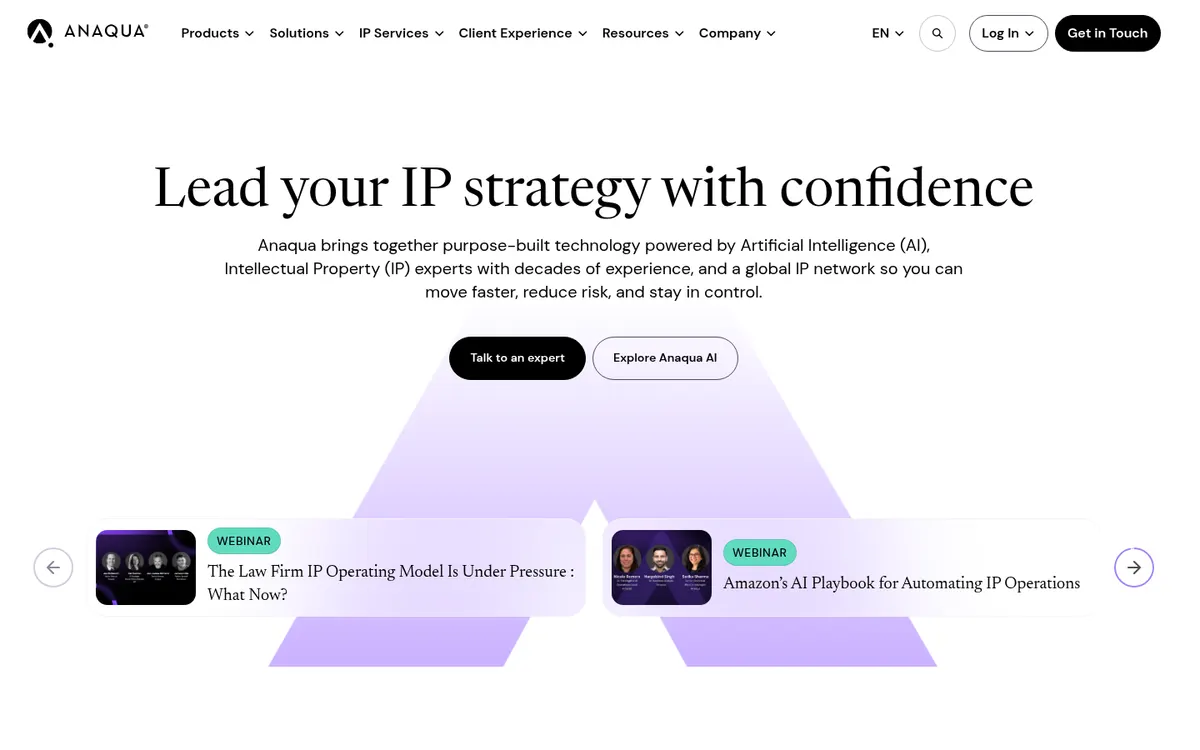
The broadest fit here for large corporate and law firm portfolios, with AI docketing and brand protection, but enterprise pricing and a project-based rollout.
Anaqua sells two platforms rather than one. AQX is built for corporate IP teams that handle invention disclosure, prosecution and portfolio strategy in house. PATTSY WAVE serves law firms that need docketing and deadline management across a client book. The split is the point: a corporate department and an outside counsel firm need different screens for the same patent, and Anaqua does not force one product to serve both.
The feature set leans on AI docketing, which reads patent office correspondence and counsel emails and turns them into docket entries, and on AI brand protection that scans marketplaces and social platforms for trademark misuse. Standard docketing and deadline management sit alongside invention disclosure capture and portfolio analytics. The vendor says nearly half of the top 100 US patent filers use its products, a claim worth testing on a reference call with a team your own size.
Pricing is not published. There is no free plan and no trial, so evaluation runs through a sales process and a project-based implementation. On the corporate side that usually means a phased rollout with your patent operations team involved. On the law firm side it means migrating a live docket, which is the riskiest part of any switch and deserves a parallel run before cutover.
The honest limit is scale. A small practice would pay for portfolio analytics and brand monitoring it never opens, and the implementation effort is sized for an enterprise rollout rather than a four-attorney firm. For a large department with a dedicated IP operations lead, that breadth is the reason to buy. Buyers who want a quick self-serve trial should look at Alt Legal or Triangle IP instead.
You run a large corporate or law firm portfolio and want docketing, invention capture, analytics and brand watch under one vendor.
You are a small practice that needs a working docket within weeks and no implementation project.
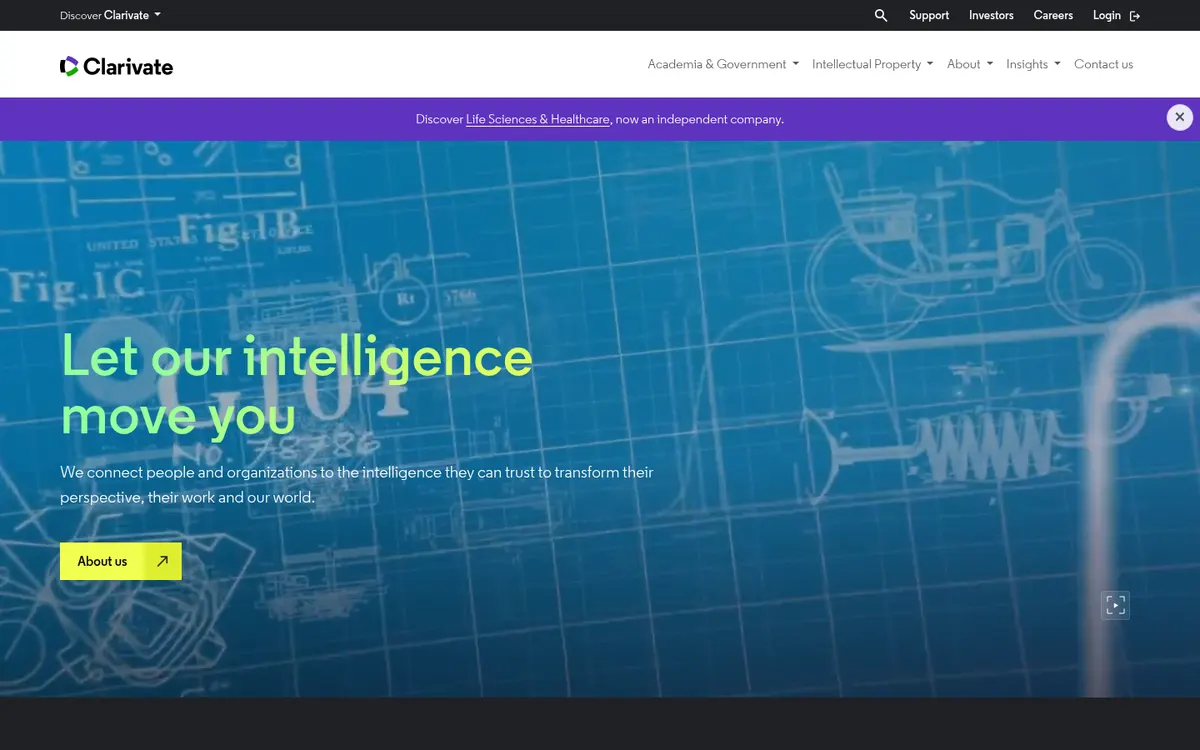
Best for corporate teams that want IP data and workflow in one place, provided you can absorb a quote-based enterprise suite and a slow evaluation.
Clarivate pairs IPfolio, its cloud IP management system, with data assets that many IP teams already recognize: Derwent patent data, CompuMark trademark data and litigation records. The argument for buying them together is that docketing decisions get better when the workflow can see what the patent family, the mark and the litigation history actually look like, rather than guessing from a matter record alone.
Trademark risk assessment runs across more than 170 million records, and portfolio analytics and reporting are the deepest part of the product. Clarivate also pushes into work that used to sit outside an IP management system, with AI-assisted drafting and invention workflow tools aimed at corporate research teams. That breadth is real, and it is also why the suite can feel sprawling when a user only needs a docket and a document folder.
The company serves academia, government and life sciences as well as corporate legal departments, and that shapes its sales model. Expect a longer, sales-led evaluation with procurement involved. There is no free plan and no trial, and pricing is quote-based, so the first useful moment in the process is a written quote scoped to your portfolio size and the modules you would actually open. Until that exists, the total cost is unknown.
Fit is corporate teams with enough volume to justify the data subscriptions and a person who owns analytics and reporting. Law firms that mainly need docketing will find the data side expensive relative to what they use day to day. Ask which datasets are bundled in the base quote and which bill separately, because that answer moves the total more than the seat count. Run a pilot on one business unit before committing the whole portfolio.
Your corporate team wants IP management and patent, trademark and litigation data from a single vendor.
You need a narrow docketing tool and a fast, low-cost start with a published price.
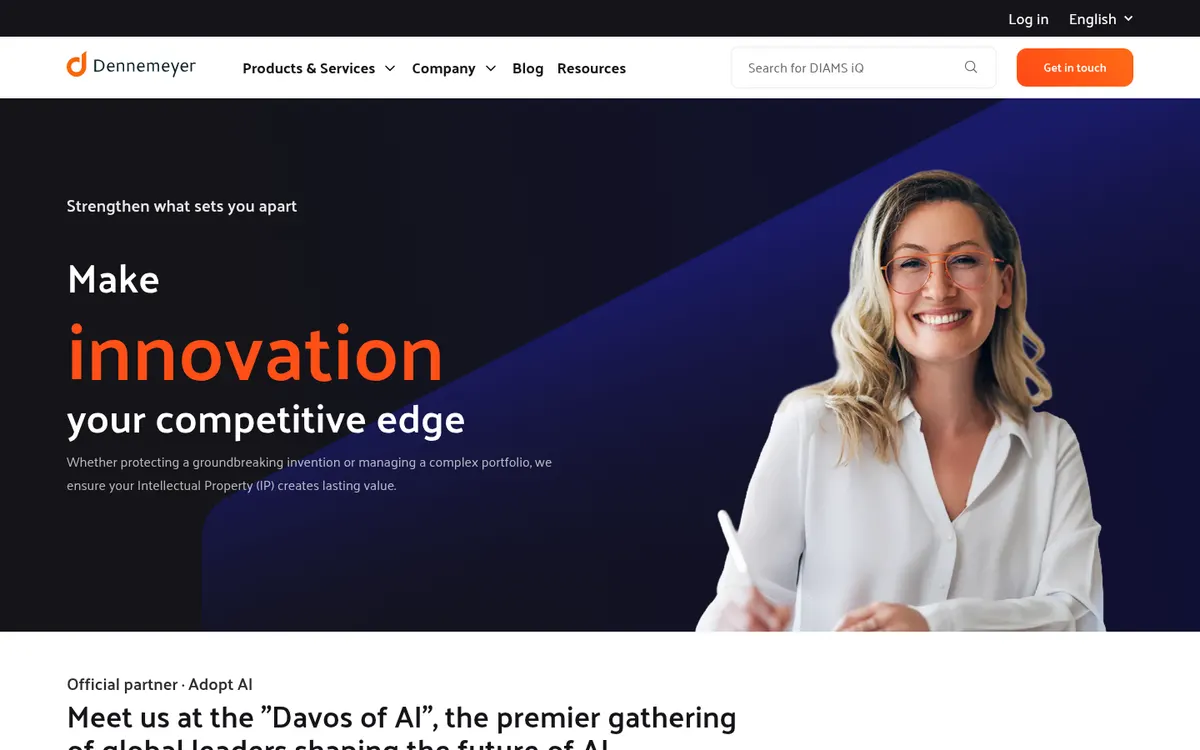
Best when you want software and managed renewals from one vendor, though the services-first model can frustrate teams that only want a license.
Dennemeyer is the entry on this list that sells services as much as software. DIAMS is the IP management system, and behind it sits more than 60 years of IP services, including patent annuity management, trademark renewals, filing and recordal work, run through the company's own offices in more than 20 countries. The company's background is in IP services, including renewals and filing. That combination changes the buying decision. If your team spends more time chasing renewal instructions and coordinating foreign counsel than it does analyzing portfolio strategy, paying one vendor to run both the system and the transactions removes a handoff and a source of error. Deadline management across jurisdictions is built into DIAMS, and the services arm can act on what the system flags. The tradeoff is that it can feel more relationship-driven than a pure software purchase. Buyers who want to license a tool and run it themselves may find the services emphasis distracting, and pricing is quote-based, so comparing it to AppColl or Alt Legal means normalizing what is included in each quote. A free lightweight tier for small portfolios is unusual in this category and worth testing before you take a call. Fit is teams that want software plus managed renewals and filings: mid-size corporate departments with foreign portfolios, and firms that would rather outsource annuity and renewal administration. Services-first cultures can slow a software-only rollout, so be explicit in the contract about which modules you are licensing and which services are optional. Ask for a written scope that separates license, service fees and per-jurisdiction transaction costs.
You want one vendor to run both the IP system and the annuity, renewal and filing work that flows out of it.
You want to buy a license, run it with your own team and never involve a services group.
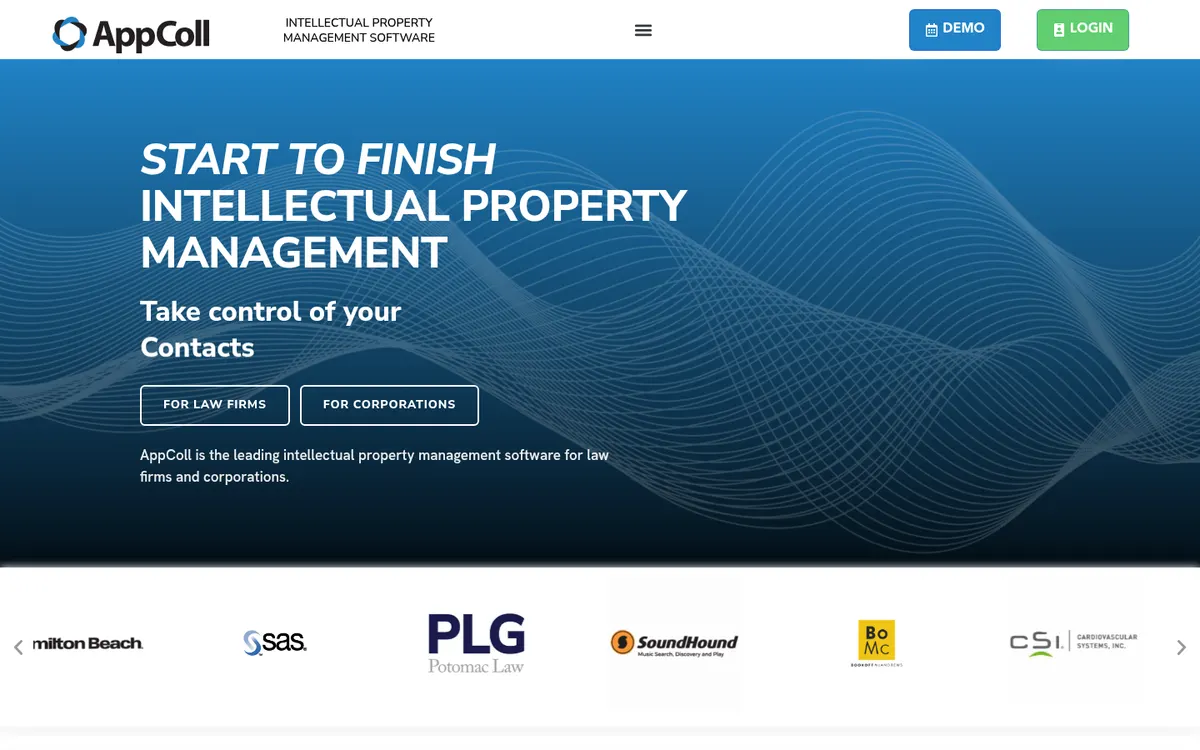
The pragmatic pick for small and mid-size firms that need real docketing, billing and client portals without an enterprise implementation project.
AppColl aims at the firm that needs real docketing but cannot justify enterprise pricing. The product covers end-to-end IP management, with automated docketing and rules-based deadline calculation at the center, then document management, billing, client portals and custom workflows around it. Billing sits in the same system as the docket, so time and charges trace back to matters without a second tool. The customization is the differentiator. Workflows, forms and email templates can be built without developer help, which matters for a practice with its own intake quirks, and every module imports and exports CSV. That last point is underrated: it means you can migrate in, and get your data out, without buying a professional services project. Support has a strong reputation among smaller practices, which is the market it targets. The interface is functional rather than polished, and analytics are lighter than what Anaqua or Clarivate provide. If partners want dashboard storytelling for portfolio reviews, this is not the tool for that. If they want deadlines calculated correctly and invoices that match the work, it is. Pricing is quote-based with no free plan and no trial, so the first step is a scoped quote based on users, modules and docket volume. Fit is small and mid-size firms and small corporate departments that need docketing, billing and client portals in one system without an implementation team. It is less suitable for a large legal department that wants portfolio analytics and competitive intelligence in the same place, and less suitable for trademark-heavy prosecution teams that want automated office capture out of the box.
You are a small or mid-size firm that needs docketing, billing and client portals with workflows you can shape yourself.
Portfolio analytics and executive dashboards are a core requirement for your partners or board.
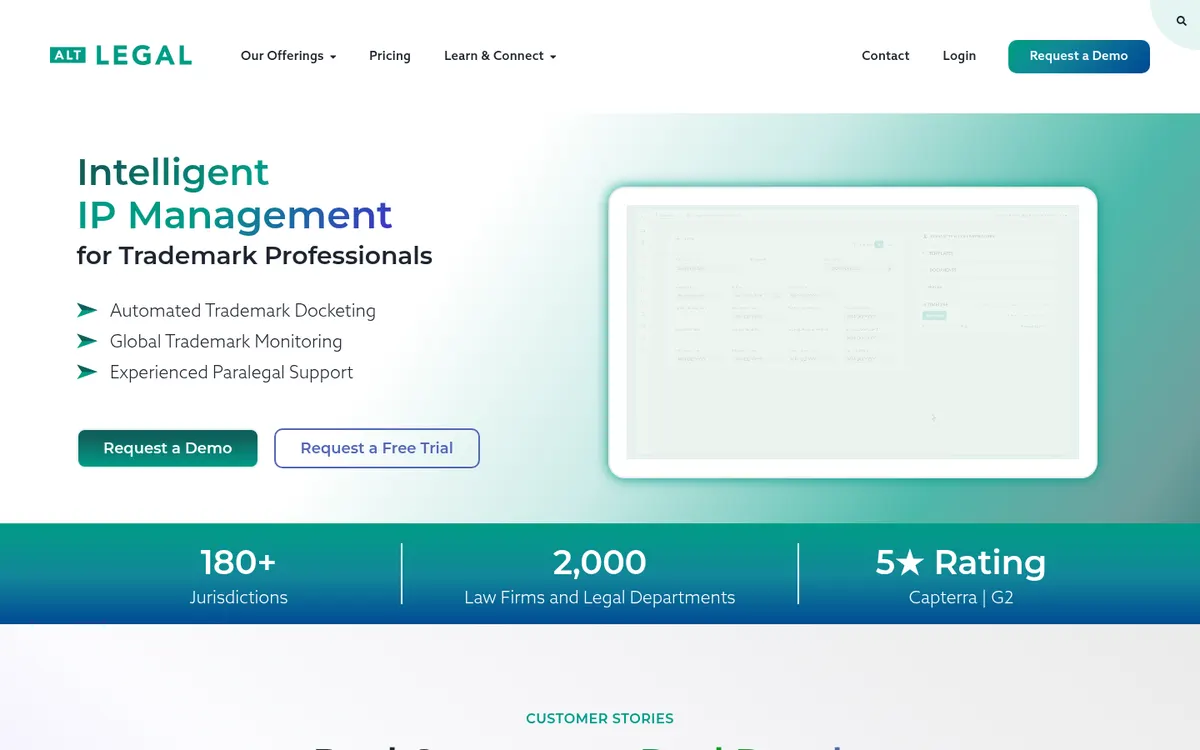
The cleanest trademark docketing here, with automatic USPTO and CIPO capture, watch and paralegal support, but thin patent coverage.
Alt Legal is a trademark system first. It connects directly to USPTO and CIPO, captures filings automatically and updates status without a paralegal retyping the record. Deadline docketing and clearing sit on top of that, with trademark deadline coverage in more than 180 jurisdictions through a data partner. For a prosecution practice, that automated capture is the feature that changes the daily routine.
Around the docket it adds trademark watch for conflict monitoring, one-click reporting, smart email templates and TTAB dispute workflows. Alt Legal Assist adds experienced IP paralegals to the account, which is a real answer for a firm with no dedicated trademark paralegal on staff, or for a brand owner whose legal team is one person and outside counsel. Watch and docketing in one place also removes a monthly research chore.
The limit is scope. Patent features are thinner than dedicated patent docketing systems, so a mixed patent and trademark practice will likely run this beside something else, or choose a broader platform and give up the tidy USPTO automation. Pricing is quote-based and there is no free plan, but a free trial is listed, which is the fastest way to test the office connection against your own pending files before a sales call.
Fit is trademark prosecution teams, from a two-attorney boutique to a brand owner's in-house trademark function, and anyone who wants watch, docketing and reporting in one place. Firms whose work is mostly patents, or that need invention disclosure and annuity management, should look at the broader platforms higher in this list instead.
Your work is trademark prosecution and you want filings, deadlines and watch handled without manual rekeying.
Patents make up most of your docket and you need disclosure, prosecution and annuity tools in one system.
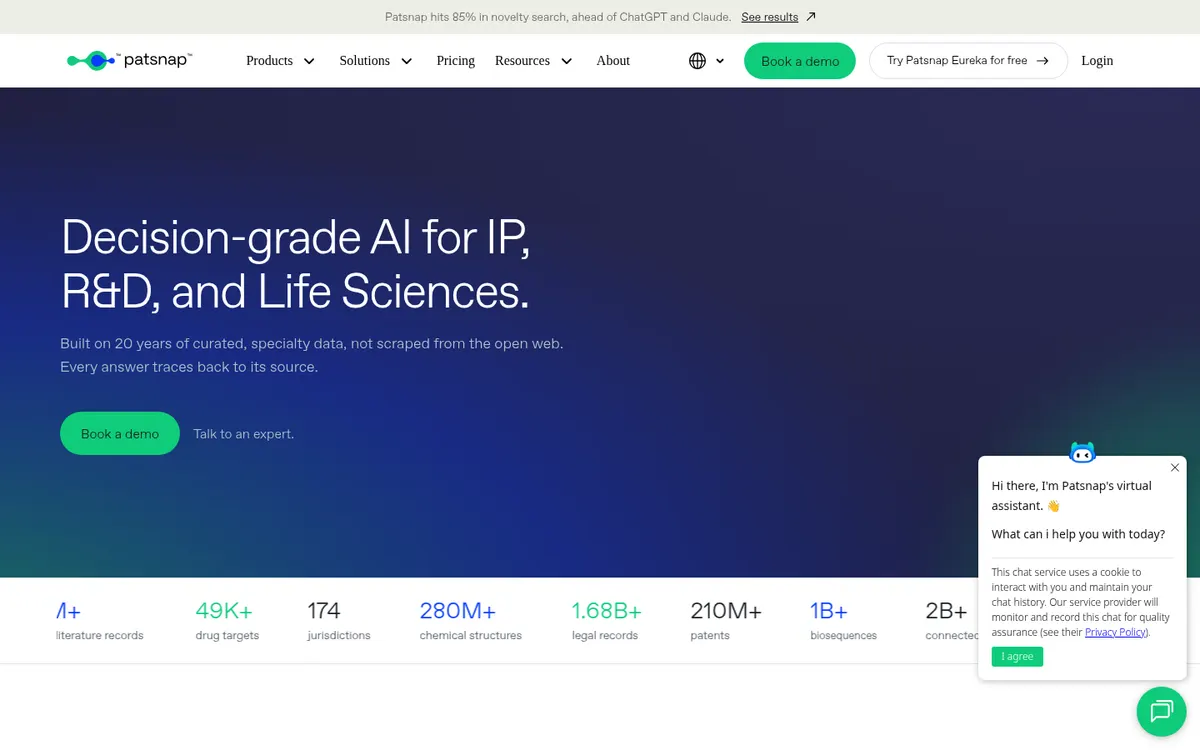
A strong analytics and research platform that answers patent questions well, but it does not replace a docketing system and prices at enterprise level.
PatSnap is not a docketing system, and buying it as one leads to disappointment. It is an AI-native research platform built on patent, scientific literature, drug and legal datasets, used for prior art search, freedom-to-operate analysis, competitive landscaping and innovation intelligence dashboards. The unit of work is a question about technology and ownership, not a deadline on a matter. The platform adds task-specific AI agents for research, drafting support and validation. In practice a patent team uses PatSnap to establish what exists in a space, who owns it and how crowded it is, then records the decision, the deadline and the cost in an IP management system. The two jobs are different, and most teams end up paying for both. The vendor says more than 18,000 teams use the platform. Pricing is quote-based with no public price, no free plan and no trial, so scoping matters: seat count, dataset access and agent usage all move the number. Expect enterprise pricing and a sales-led evaluation, and expect the value to show up in search and analysis time rather than in docket accuracy or deadline coverage. Fit is patent analytics and innovation intelligence teams inside corporations, research institutions and larger firms, especially where freedom-to-operate and landscape work are recurring deliverables that someone has to produce on a schedule. It complements rather than replaces IP management software, so budget for a docketing system as well if deadlines are part of your risk. If your only need is a docket with renewals, skip it and put the budget into one of the platforms above.
Your team runs repeated prior art, freedom-to-operate and landscape work and needs the data and dashboards to do it fast.
You are shopping for deadline docketing, renewal management or client billing in one system.
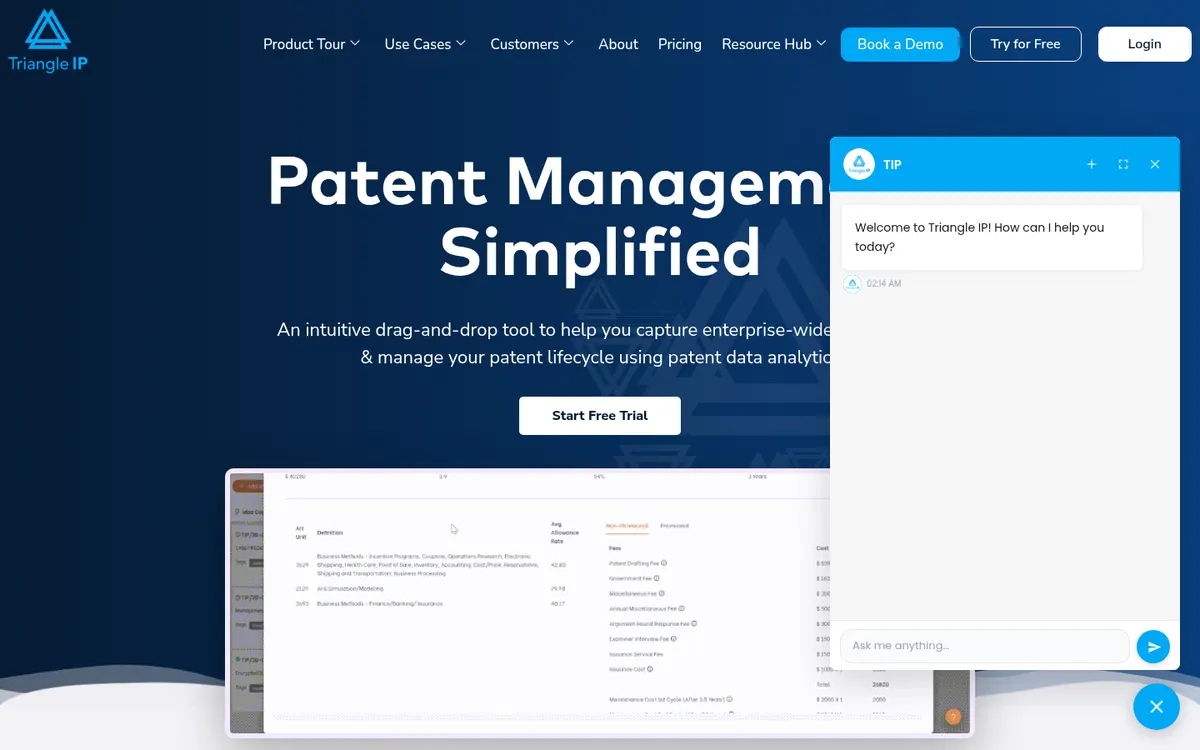
A focused patent pipeline tool with useful filing predictions and a free month, best for lean in-house teams rather than firms.
Triangle IP is newer and narrower than the established platforms, and it is straightforward about that. The TIP Tool starts at invention disclosure capture and runs through prosecution tracking, with automatic USPTO status updates so the record does not depend on someone remembering to check the public site. For a small patent program, that alone removes a weekly chore. The analytics are the reason to look. Patentability scoring, patent success predictions, cost prediction and counsel and examiner statistics all sit on the same disclosure record, which means a decision to file or abandon can be argued with numbers rather than instinct. For a lean in-house team without a patent analyst, that is a meaningful shortcut, and it gives a first-time filer a defensible story for the budget holder. Limits are scope and maturity. It is patent-focused, so trademark-heavy portfolios get nothing from it, and it does not attempt the breadth of Anaqua or Clarivate. It is also newer than the incumbents, so ask for references from teams running a comparable filing volume. Pricing is quote-based, and a full month free with no credit card is enough time to load live disclosures and test the predictions against outcomes you already know. Fit is a lean corporate patent function, or a startup with a growing filing program, that wants disclosure capture plus a reasoned view of what to file next. It is not a fit for a firm that needs client-facing docketing and billing, and not a fit for trademark prosecution teams. Buyers who need both patents and trademarks in one record should start with a broader platform.
You run a lean in-house patent program and want disclosure capture plus predictions on what to file and what it will cost.
Your portfolio is trademark-heavy or you need firm-side docketing, billing and client portals.
IP management software is the system of record for patents, trademarks and the deadlines attached to them. Its core job is a docket: a list of matters, the dates that matter on each one, and the rules that generate those dates. Everything else in the category is built around that spine, including document storage, billing, client reporting, invention disclosure capture, renewal and annuity coordination, and analytics.
Docketing versus the broader suite is the first distinction worth learning. A docketing tool calculates deadlines, clears them when work is done, and keeps an audit trail. A broader IP management platform adds portfolio analytics, brand watch, cost forecasting, billing and portals. Some tools here lean toward one end: AppColl and Alt Legal are docket-centered, while Anaqua and Clarivate are full suites. Others are not IP management systems at all. PatSnap answers research questions about prior art, ownership and technology trends; it does not track your deadlines.
What a typical platform covers:
Jurisdiction coverage is where products differ most in practice. Some capture status directly from a patent or trademark office, as Alt Legal does with USPTO and CIPO. Others rely on foreign associates and local agents to feed updates, with software tracking what comes back. Coverage numbers are worth pinning down for the countries you actually file in, not as a headline figure.
Implementation is the part buyers underestimate. Enterprise deployments involve data migration from spreadsheets or an old system, parallel running, and a period where two systems disagree. A small firm can be live in weeks; a large department with foreign filings and multiple business units should plan for months, and should treat the first portfolio as a pilot rather than a full cutover.
This comparison sits on the Software desk. Readers comparing neighbouring stacks often check our guides to demand forecasting software and glp 1 companies next.
Pricing in this category is quote-based, and every one of the seven tools here lists its starting price as See website rather than a number. The vendor scopes users, modules, portfolio volume and jurisdictions, then quotes. Several vendor pricing pages returned no readable text on our 25 November 2026 check, so treat any figure you hear as provisional until it is in writing.
| Model | How it bills | Typical fit | Example from this list |
|---|---|---|---|
| Quote-based, no public price | Nothing published; the vendor quotes after a scoping call | Mid-size to large teams with a defined portfolio | Anaqua, Clarivate, AppColl, PatSnap |
| Quote-based with a free tier | Quote for the main product, with a lightweight tier free for small portfolios | Small portfolios testing the water | Dennemeyer |
| Quote-based with a free trial | Trial first, then a quote | Teams that want to test the workflow before buying | Alt Legal, Triangle IP |
Three things move a quote more than user count. First, data: bundled patent and trademark datasets are a separate cost center inside a suite like Clarivate. Second, services: Dennemeyer combines software with in-house renewals and filings, so part of the spend is transaction work rather than license. Third, implementation: a project-based rollout with migration support is priced separately from the subscription.
Ask for a written breakdown that separates license, implementation, data subscriptions and any per-filing or per-renewal charges. Compare two-year totals, not first-year discounts. And ask what happens at renewal: a quote that looks competitive in year one can look very different once your docket lives inside the system and switching costs are real.
Every price above was checked on the vendor's own pricing page on November 25, 2026. Where a vendor does not publish a figure we write "See website" instead of guessing. To compare annual and monthly billing quickly, try the free percentage calculator.
Count your deadlines. Pull every live patent and trademark matter and the dates attached to it. If the list fits in one spreadsheet, a docket-centered tool beats a suite. Volume sets the tier you shop in.
Decide docketing or suite. Write down what the system must do beyond deadlines: billing, disclosure capture, renewals, brand watch, analytics. AppColl and Alt Legal cover docketing with extras; Anaqua and Clarivate cover the full suite.
Map your jurisdictions. List the countries where you file and whether foreign associates feed updates. Get written confirmation that those countries are covered, and ask if coverage is native or partner-fed. Alt Legal publishes 180 plus for trademarks.
Price the whole rollout. Request a written quote that separates license, implementation, data and per-filing services, then compare two-year totals. All seven tools here are quote-based, so a verbal number is not a quote.
Test with real data. Alt Legal and Triangle IP list trials; use them on live files. For the others, ask for a sandbox and a reference call with a team of comparable size and portfolio mix.
Plan the parallel run. Keep the old system running until one full deadline cycle clears in the new one. Migration is where dockets break, so the overlap belongs in the scope and the price.
Buying analytics you will not open. A five-person practice rarely needs landscape dashboards. Paying for a full suite when you need a docket and billing wastes budget and slows training. Match modules to work someone actually does each week.
Treating a demo as an implementation plan. Demos show clean data and empty dockets. Ask how migration works, who cleans the legacy spreadsheet, and how long the parallel run lasts. Those answers decide whether you go live in weeks or months.
Skipping the foreign coverage question. Global claims are easy to make and hard to verify. Get a written list of the countries you file in, confirm where status updates come from, and check who is responsible when one arrives late.
Comparing first-year prices. Multi-year totals differ once implementation, data subscriptions and per-renewal charges are included. Ask for the same scope in writing from every vendor, then compare the two-year number rather than the headline discount.
No exit plan for your data. Ask how you get your docket, documents and history out, and in what format. AppColl exports CSV from every module, which is a reasonable benchmark to hold other vendors to in the contract.
Teams use it to hold patents, trademarks and other rights in one system so deadlines, documents, spend and status stay in one place. Typical work includes docketing and deadline calculation, invention disclosure capture, renewal and annuity coordination, document storage, client reporting and portfolio analytics. Larger deployments add brand watch, AI docketing from patent office mail, and forecasting. A small firm may only need the docket and the documents; a corporate department usually wants the analytics too.
By quote, almost always. None of the seven tools here publishes a number, so pricing is set after a scoping call covering users, modules, portfolio size and jurisdictions. That makes comparison harder, because two quotes for the same team can differ when one bundles data or services and the other does not. Ask for a written breakdown that separates license, implementation, data subscriptions and any per-filing or per-renewal fees before you compare totals.
Docketing tracks dates and actions: filing deadlines, office action responses, renewal windows and the rules that generate them. Full IP management adds documents, billing, client portals, invention disclosure, analytics and, in some products, renewals and brand watch. AppColl and Alt Legal sit close to the docketing end with extras attached. Anaqua, Clarivate and Dennemeyer sit at the full-suite end. Buy the scope you will actually use, not the largest demo you see.
When the cost of one missed date exceeds the cost of the software, which for most practices is sooner than they admit. Warning signs include deadlines living in one person's inbox, no audit trail on changed dates, foreign counsel updates retyped by hand, and no cover when the docket clerk is out. A rules-based docket with automated capture removes the retyping step, and that step is where most errors start.
It varies by product and by right. Alt Legal states trademark deadline coverage in more than 180 jurisdictions through a data partner, and Dennemeyer runs its own offices in more than 20 countries for renewals and filings. For Anaqua and Clarivate, ask for a written list of the countries you file in. Ask for a written list of the countries you file in, and confirm whether coverage is native or fed by local agents.
Two. Alt Legal lists a free trial, and Triangle IP offers a full month free with no credit card. Dennemeyer offers a free lightweight tier for small portfolios, which is a plan rather than a trial. Anaqua, Clarivate, AppColl and PatSnap publish no trial and no free plan, so their evaluations run through a sales conversation and a scoped written quote.
Browse every comparison on the Software desk, with the same rubric and dated prices.