Ranked #1

Akeneo
Open-source data core
See website
- Best for
- Technical ecommerce teams wanting open-source-friendly product data management
- Free plan
- Yes, Community Edition is open source
- Rubric
- 7.1 / 10
Nine product information tools compared on data modeling, syndication reach, implementation effort and published pricing, so you can match the platform to your catalog size and team.
 Prices checked November 25, 2026

The best catalog management software for most teams in November 2026 depends on who does the work. Akeneo suits technical ecommerce teams that can run an open-source edition, Plytix suits small brands leaving spreadsheets behind, and Pimcore suits organizations consolidating product data, assets and web content on one platform. All nine tools below were checked on 2026-11-26, with prices taken from vendor pricing pages wherever a number is published.
Open-source data core
See website

One open platform
$9,900Professional, per year, billed annually, unlimited products and users

Fast for beginners
€149Pro, per month, at 100 SKUs, unlimited seats
Disclosure for this page: All 9 tools here are unpaid editorial picks. The position of a paid listing can be part of what the vendor pays for. How we handle paid listings.
| Tool | Best for | Free plan | Actions | |||
|---|---|---|---|---|---|---|
| 1 | Akeneo | Technical ecommerce teams wanting open-source-friendly product data management | See website | Yes | ||
| 2 | Pimcore | Organizations consolidating product data, assets and web content on one platform | $9,900Professional, per year, billed annually, unlimited products and users | Yes | ||
| 3 | Plytix | Small and mid-size brands moving off spreadsheets quickly | €149Pro, per month, at 100 SKUs, unlimited seats | Yes | ||
| 4 | Salsify | Enterprise brands syndicating rich product content to major retailers | See website | No | ||
| 5 |  inRiver | Manufacturers and B2B distributors with technical product data | See websitecustom quote | No | ||
| 6 | Catsy | Mid-market brands and distributors outgrowing spreadsheets | See websitecustom quote | No | ||
| 7 |  Sales Layer | Multi-channel sellers needing results within a quarter | See websitecustom quote | No | ||
| 8 | Pimberly | UK and European mid-market retailers and distributors | $36,000Regular, per year, 50,000 SKUs, 20 users | No | ||
| 9 |  Bluestone PIM | API-first teams building custom commerce stacks | See websitecustom quote | No |
Each tool was scored against five criteria: data modeling depth (25 percent), channel syndication (25 percent), time to value (20 percent), pricing clarity (15 percent), and ecosystem and support (15 percent). Data modeling depth covers how the platform handles attributes, families, variants and technical specifications. Channel syndication covers retailer, marketplace and distributor connectors plus the validation that runs before publishing. Time to value asks how much work lands before the first catalog goes live and whether business users can run the system without developers. Pricing clarity rewards a published starting price and plan limits over a blank quote. Ecosystem and support covers partner networks, integrations and onboarding help.
Prices and plan details come from vendor pricing pages checked on 2026-11-26. Where a page published no figure, the entry says pricing is on the vendor site rather than guessing a number. Where a page published a starting price and plan limits, those appear exactly as shown.
The order is editorial: it reflects fit for the buyer each entry describes. Placement in this list is disclosed. Any Featured position is a paid placement, and a Featured vendor is scored with the same rubric and carries the same honest cons as every other entry.
The full process, including how we handle corrections, is on the methodology page. Paid listings follow our advertising disclosure.
| Criterion | Weight | What we check |
|---|---|---|
| Data modeling depth | 25% | How well the platform structures attributes, families, variants and technical specifications for your assortment. |
| Channel syndication | 25% | Breadth of retailer, marketplace and distributor connectors and how much validation runs before publishing. |
| Time to value | 20% | Implementation effort before the first catalog goes live, including whether business users can run it without developers. |
| Pricing clarity | 15% | Whether a real starting price and plan limits are published, or whether every tier needs a sales conversation. |
| Ecosystem and support | 15% | Partner network, integration options, community size and the onboarding help a buyer can actually rely on. |
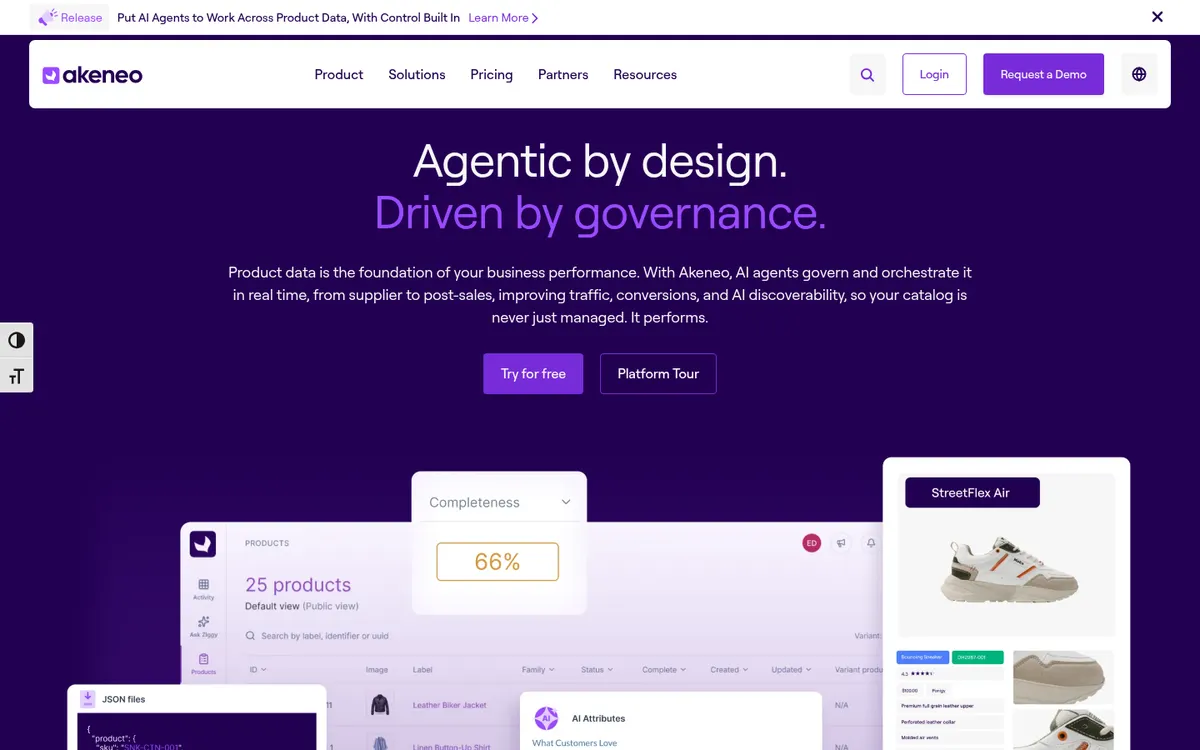
Free open-source core and a strong data model, but the paid editions are quote-only and Community Edition needs developers.
Akeneo is the reference point for teams that treat product data as an engineering problem. The data model is built around attribute and family structures, with reference entities and classifications, so you describe a product once and output it in multiple languages across channels. Product records can carry associated digital assets, and the paid tiers add enrichment and approval workflows plus an app marketplace and connector ecosystem.
The commercial structure is unusual in this list. The Community Edition is open source and free to download, which removes license cost entirely for capable teams. You host it yourself, so the real spend is developer time to deploy, upgrade and maintain it. The hosted Growth and Enterprise editions add vendor support, and both are quoted by sales. Pricing for those editions is on the vendor site and could not be confirmed at the time of checking.
That split is the decision. A team with in-house development skills can run Community Edition cheaply and keep full control of the data model. A team without those skills should price the hosted editions against simpler SaaS tools and expect a demo-led sales process. There is no self-serve trial, so the evaluation happens in a demo environment rather than with your own data.
You have developers who can own a self-hosted open-source PIM.
You need a working catalog in weeks with no technical staff.
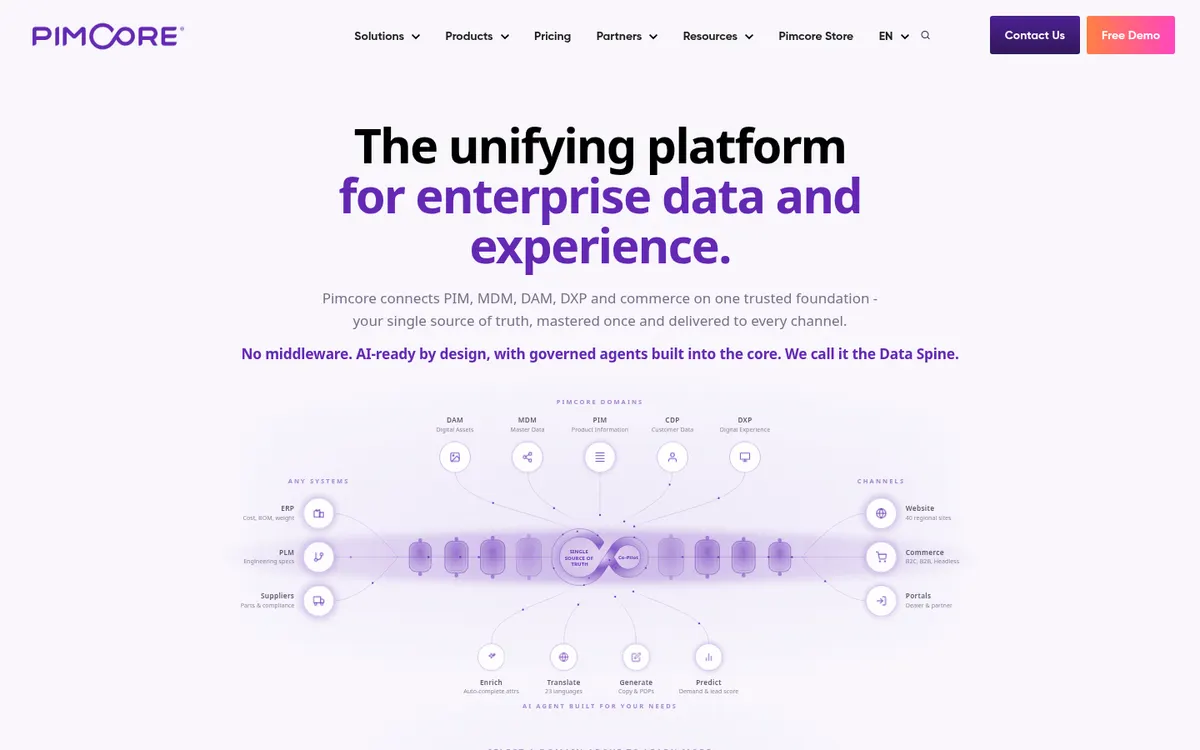
One open platform for product data, assets and content at a published $9,900, but you build on it rather than configure it.
Pimcore is a platform rather than a single application. Product information management sits alongside digital asset management, content management and commerce data handling in one open platform, so a manufacturer can hold product records, images, web pages and transactional data in one place instead of stitching separate systems together. Data modeling is flexible and highly configurable, and APIs are available for connecting to external systems. Pricing is partly public here. The Professional edition is $9,900 per year, billed annually, with unlimited products and users. That gives buyers a concrete entry point. The Community Edition is open source and free, and the Enterprise Edition with vendor support is quoted. The catch is scope. Pimcore is a development platform first and an application second, so serious deployments depend on developer resources and you should budget the build effort before committing rather than after. Buyers who want a ready-to-use PIM with guided setup usually find lighter SaaS tools a better match. Buyers who want one platform for data, assets and content, and who have the engineering capacity to shape it, should weigh the build effort against lighter SaaS tools.
Consolidating product data, media and web content on one open platform is the goal.
You want a packaged PIM that a merchandising team can run alone.
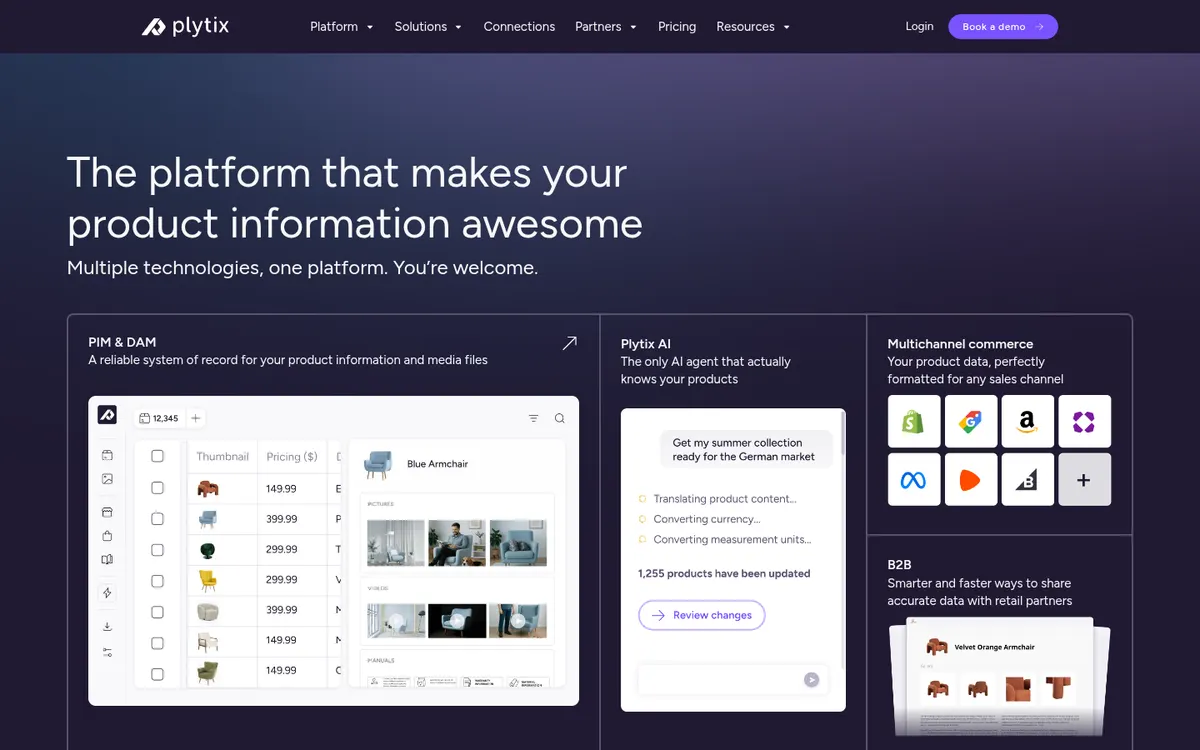
The most approachable entry into PIM, with a free plan and a published €149 Pro tier, but depth fades on large assortments.
Plytix is the on-ramp. It targets small and mid-size brands still running product data through spreadsheets and needs a clean interface that a marketing coordinator can learn without a training program. Attribute templates, bulk editing and data completeness tracking cover the everyday work, digital assets attach to product records, and you can build catalogs and shareable catalog exports or push channel-ready product feeds. Pricing is public here. The Pro plan is €149 per month at 100 SKUs with unlimited seats, and there is a free Standard plan, also with unlimited seats. A free trial lets a team load its own data before deciding, which matters more here than in enterprise tools because the buying decision is usually made by the person who will use the system daily. Full pricing details are on the vendor site. The limits appear as the assortment grows. Very large catalogs and intricate approval chains run out of depth, and complex B2B distribution requirements are where Plytix starts to strain. Fast implementation and guided onboarding are genuine strengths. Treat it as the software for a first serious PIM step rather than the last one, and test with your messiest export during the trial.
You are a small brand leaving spreadsheets and need a live catalog fast.
You run a very large catalog or heavy approval workflows.

Deep retail and marketplace syndication, sold as an annual enterprise contract with services and no free plan.
Salsify is built for the retail shelf. Its strength is syndication: pushing rich product content to retailers, marketplaces and distributors, with retailer-specific content requirements and validation so a listing does not bounce back for a missing attribute. Digital asset management handles the imagery, and analytics plus benchmarking show how a listing's completeness compares with competing products on the same shelf. Collaboration with suppliers and trading partners is part of the package rather than a bolt-on. This is an enterprise sale. There is no free plan and no self-serve trial, only a demo, and onboarding is services-led on annual contracts. That structure buys a vendor team that has handled retailer onboarding many times, which is worth a lot when a large share of revenue depends on how your products appear at major retailers. It is also an expensive way to solve a small problem. A brand with a small catalog selling through its own store does not need retailer validation rules or benchmarking and will pay for both. The honest test is whether your growth comes from listings you do not control. If it does, the depth earns its keep. Pricing is on the vendor site, and no figure could be confirmed at the time of checking.
Retailer and marketplace listings drive most of your revenue.
You sell through one store and want to self-serve.
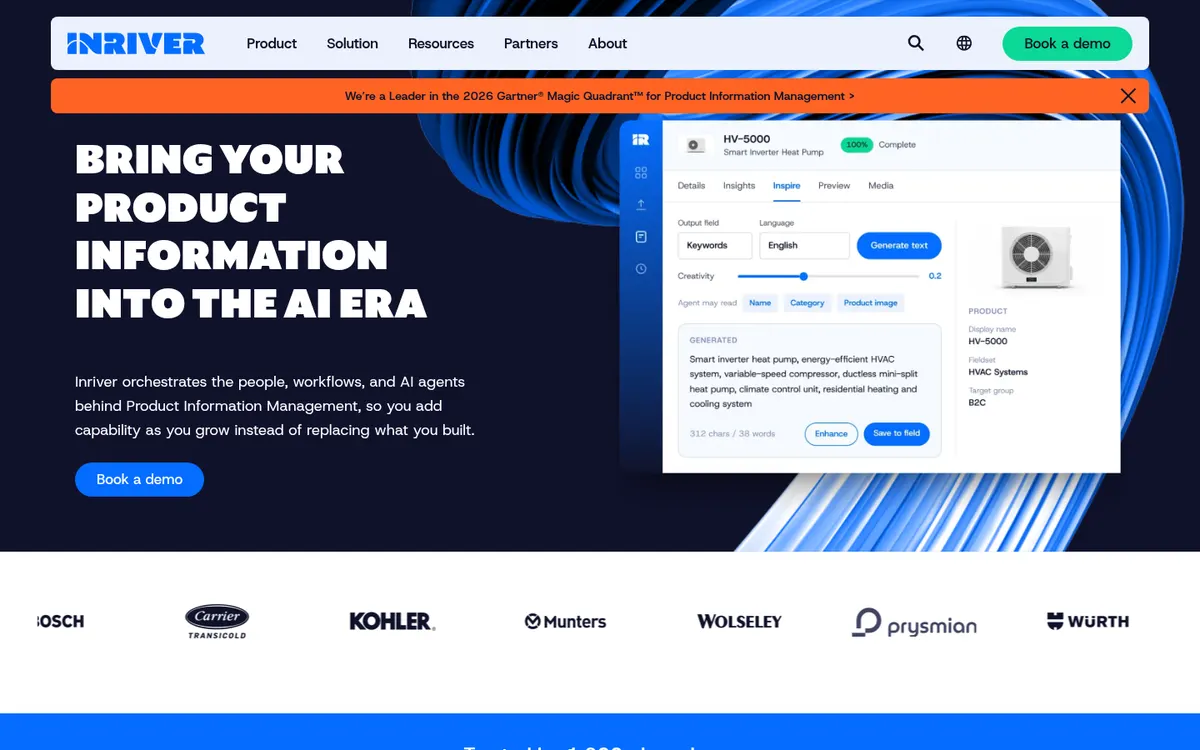
A specialist for specification-heavy B2B catalogs that still produce print, with quote pricing and vendor-led rollout.
inRiver is the specialist for technical and industrial assortments. The data model handles variants, compatibility data and specification-heavy records, which is exactly where generic PIM tools break down: a pump or a spare part carries relationships and constraints that a fashion catalog never has. Channel-specific assortments let you publish different subsets to different buyers, a workflow engine runs multi-step enrichment, and supplier and partner onboarding pulls data in from outside the company. The differentiator is print. inRiver publishes print catalogs alongside digital output, which matters to distributors and manufacturers that still send a physical book to trade buyers every season. Print catalog production is a genuine differentiator for inRiver. Pricing is quoted per enterprise deal, and implementation is vendor-led, so the total commitment is a project rather than a subscription. All tiers on the vendor site direct visitors to contact sales. Ecommerce-native brands used to self-serve onboarding often find the platform unfamiliar and heavier than they need. Ask for the full services scope alongside the license quote before comparing it with SaaS alternatives, because those two numbers together are the real cost.
You sell technical products to trade buyers and still print a catalog.
You sell direct to consumers with a simple product model.
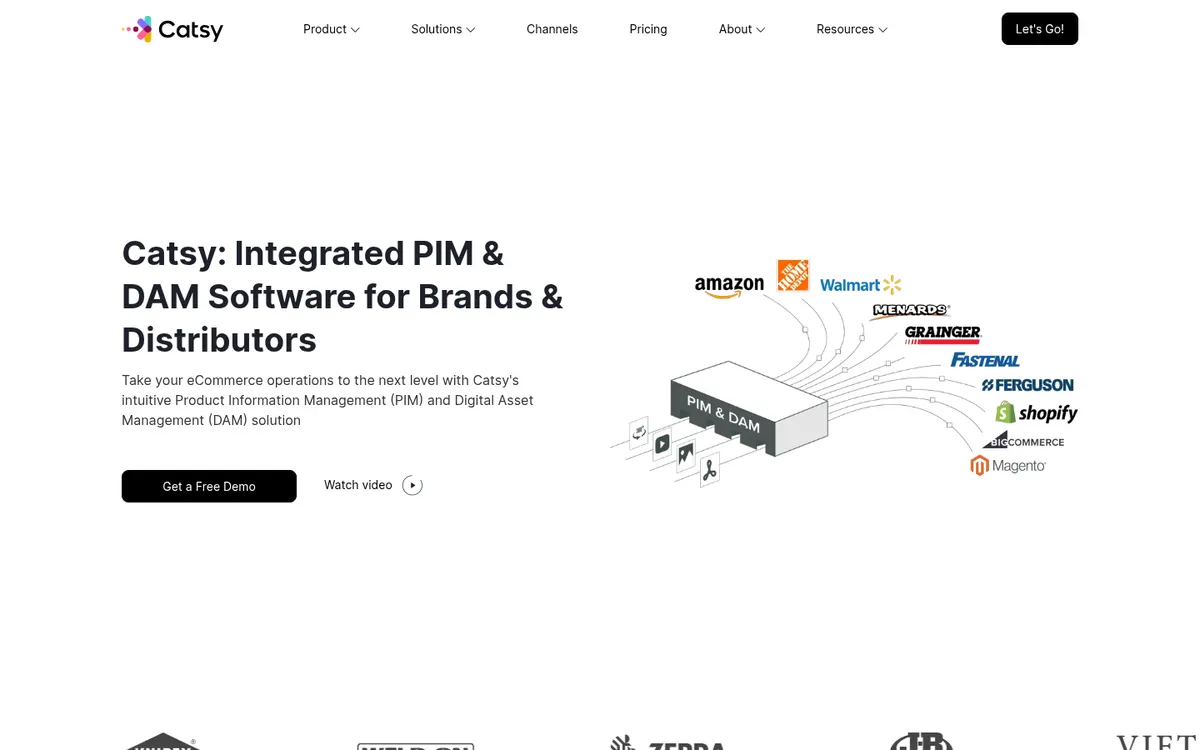
Mid-market PIM with assets included and weeks-long implementations, held back by a smaller vendor and partner footprint.
Catsy aims at the gap between a spreadsheet and an enterprise suite. Product content lives in one repository, digital asset management is included rather than sold as an add-on, and business users get bulk editing plus channel publishing for web and marketplaces. Data validation and completeness checks catch missing attributes before publishing, and support is based in the United States. The pitch is speed. Implementation is measured in weeks rather than quarters, which is the right promise for a mid-market brand or distributor that has outgrown manual processes and wants a faster launch. Bundling DAM into the core product removes a separate purchase and a separate integration, and that saves both money and attention. The trade-off is the scale of the vendor, not the scale of the catalog. Catsy is smaller than the category leaders, with a narrower partner ecosystem and fewer reference customers, so confirm that the specific channels and integrations you need already exist rather than assuming they will arrive. Pricing sits behind a demo, call or trial request on every tier, so the first sales conversation is where the budget question gets answered. Take the free trial, load real data, and scope the integration list before you sign.
You are mid-market, outgrowing spreadsheets and need a fast, supported launch.
You need a large certified partner network in many regions.
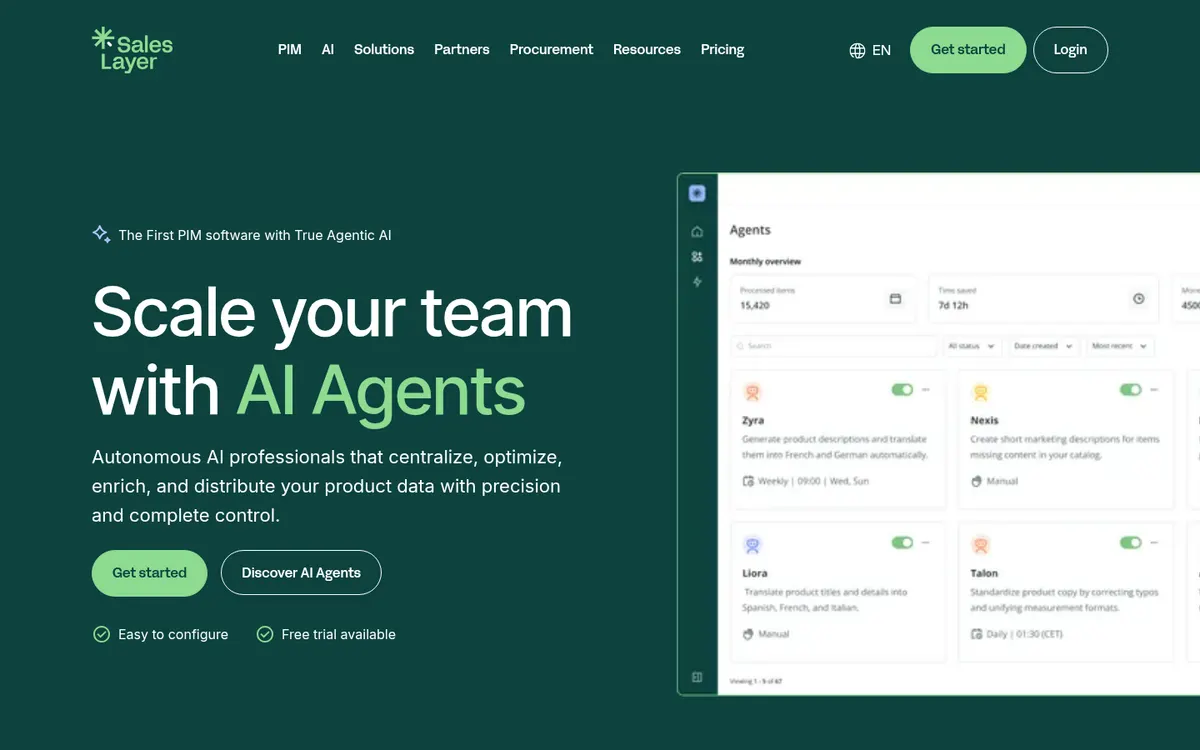
Built for quick multi-channel launches with quality scoring, but governance depth and published pricing are both thin.
Sales Layer is designed for sellers who need results inside a quarter. Catalogs are created and managed in an approachable interface, assortments are assembled per channel, and product data is syndicated across channels through connectors for marketplaces and retailer feeds. Quality scoring flags errors in product data, and team collaboration with permissions keeps a small merchandising group from overwriting each other's work.
The fit is a company running its own store, several marketplaces and a wholesale account at once, where the pain is not a missing data model but the repetitive export, reformat and re-upload cycle. Short go-live cycles are the point of the product, and the interface means business users can handle day-to-day work without waiting on developers.
Governance is where it thins out. Highly complex data models, deep approval chains and strict data governance programs exceed what the platform is built for, and enterprise-scale requirements usually push a buyer toward a heavier suite. Every plan on the vendor site is priced only through a quote request, so the budget answer arrives after a demo. Compare it with Plytix if you are small and leaving spreadsheets, and with inRiver if your data is technical rather than merchandising-led.
You sell across several channels and need results within a quarter.
You need deep approval chains and strict governance.
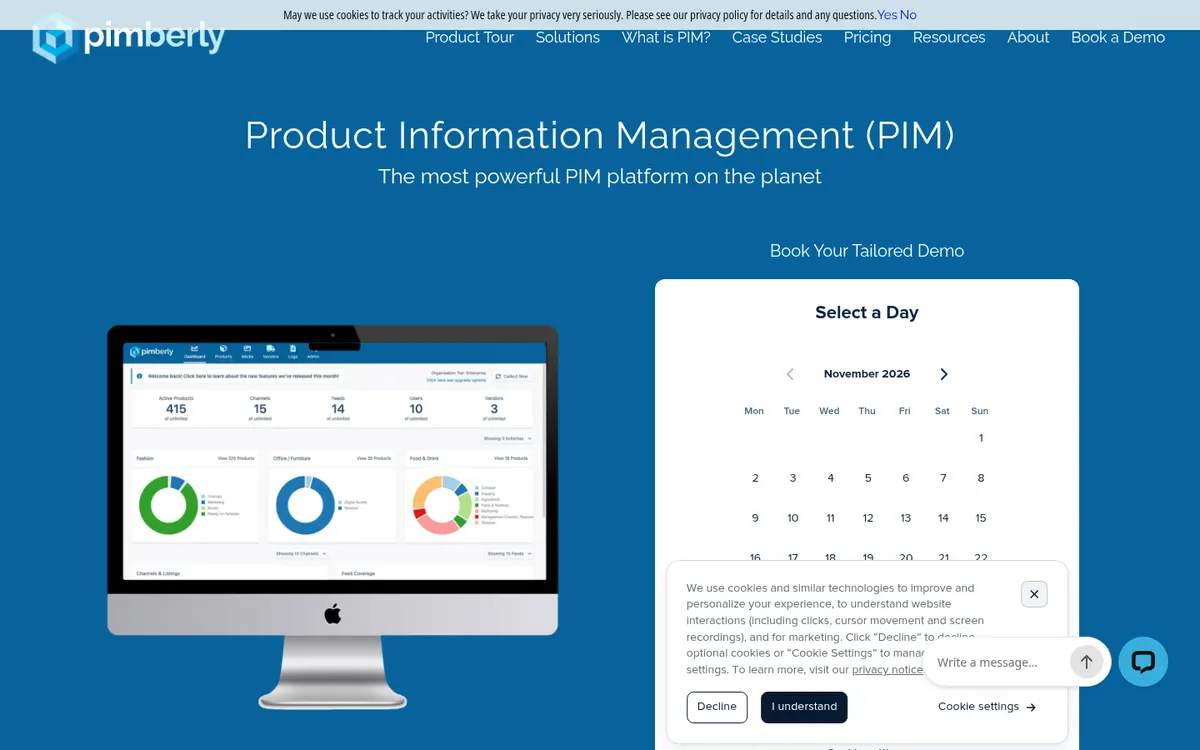
Strong UK and European mid-market fit with a published $36,000 annual price, but a thin North American footprint.
Pimberly comes out of UK retail and distribution, and that shows in the product. Core PIM onboarding workflows handle product setup, enrichment and content editing, digital assets are managed in the same place, and channel and marketplace distribution pushes the result outward. It covers both B2B trade catalogs and B2C assortments in one platform, which is useful for distributors selling to trade accounts and consumers from the same inventory. Onboarding is hands-on with the vendor team, and supplier data collection is built in, so a merchandising team is not left alone to configure a data model. The regional strength is real: for a UK or European mid-market retailer, proximity and support often decide the purchase against a global rival with a bigger name. Pricing is now partly public. The Regular plan is $36,000 per year for 50,000 SKUs and 20 users, which gives buyers a concrete benchmark instead of a blank quote. The limits are geographic. North American presence and the partner network are thin, and the integration ecosystem is smaller than the global leaders, so check local support and connector coverage before signing.
You are a UK or European mid-market retailer or distributor.
Your operations and support needs sit mainly in North America.
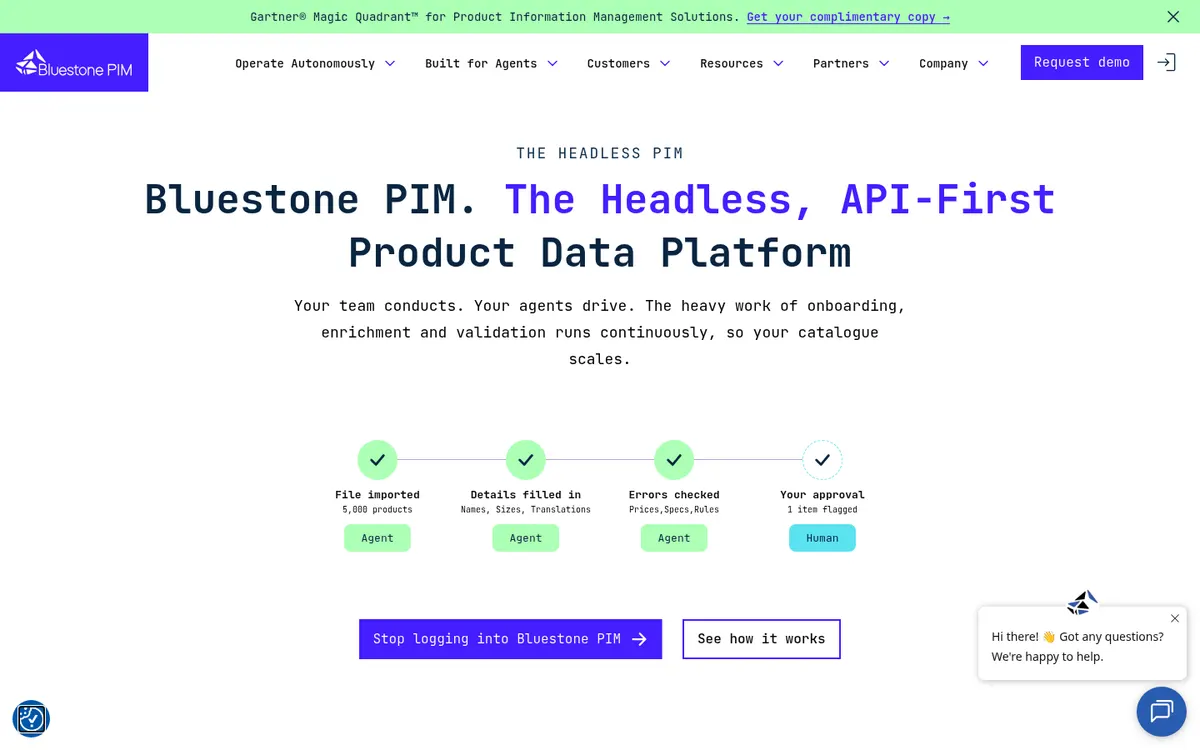
An API-first SaaS PIM for teams that build their own stack, with few prebuilt connectors and quote-only pricing.
Bluestone PIM is built for teams that will integrate rather than click. The SaaS platform has a flexible data model, a clean modern interface and strong REST APIs for custom integrations, so product data can move into your own systems. Enrichment and content workflows, digital asset handling and channel distribution cover the standard ground. The appeal is architectural. Implementations are lightweight and avoid the large services engagements that come with enterprise suites, which suits a technically capable team that already owns its stack and wants PIM to be one service among several rather than the center of the world. The interface is modern enough that business users are not shut out, even though the integration story is aimed at developers. The caution is ecosystem. Bluestone is a smaller vendor with a limited partner network and fewer prebuilt retailer and marketplace connectors than the largest rivals, so map your required channels against the connector list first. If a critical marketplace needs custom work, that changes the calculus. Pricing is usage based and quoted after a request, with no figure published, so the cost conversation happens after the demo and after you describe your volumes.
Your team builds its own commerce stack and wants PIM as an API service.
You need many prebuilt marketplace connectors out of the box.
Catalog management software, often sold as product information management or PIM, is the system of record for everything you say about a product: attributes, variants, specifications, images, documents and the descriptions that go to each channel. Instead of maintaining a spreadsheet per sales channel, you hold one enriched record and publish slices of it where they are needed.
The category splits along the data model. Lightweight tools give you attribute templates, bulk editing and channel feeds, and assume a business user will run the system day to day. Deeper platforms support reference entities, classification hierarchies, workflow and approval chains, supplier onboarding and per-retailer validation rules. A broader open-source platform such as Pimcore adds digital asset management, content management and commerce data on top, which is a different purchase dressed in similar language.
Most tools in this category share a core set of jobs:
What separates them is how much of that you configure yourself, how much integration work lands on your developers, and how the vendor charges for it. A small brand usually needs the first few jobs done quickly. A manufacturer with compatibility data and print catalogs needs the whole list plus a workflow engine and advice on rollout.
This comparison sits on the Software desk. Readers comparing neighbouring stacks often check our guides to demand forecasting software and glp 1 companies next.
Pricing in this category splits into a few models, and only three vendors in this list publish a starting number at all. The rest quote after a demo, which means your first real data point is a sales conversation rather than a page.
| Model | How it bills | Typical fit | Example from this list |
|---|---|---|---|
| Monthly subscription | Per month, tiered by SKU count, seats often unlimited | Small and mid-size brands | Plytix, €149 per month on Pro at 100 SKUs, unlimited seats |
| Published annual license | Per year, with SKU and user bands | Mid-market with a predictable catalog | Pimberly, $36,000 per year for 50,000 SKUs and 20 users |
| Annual platform license | Per year, unlimited products and users | Organizations consolidating systems | Pimcore Professional, $9,900 per year, billed annually |
| Open source, self-hosted | No license fee, you fund hosting and engineering | Teams with developers | Akeneo Community Edition, free and open source |
| Custom enterprise quote | Quoted per deal, usually with services | Large brands, manufacturers, distributors | Salsify, inRiver, Catsy, Sales Layer, Bluestone PIM |
Three things to watch. First, the open source rows are not zero cost: Akeneo Community Edition and Pimcore Community Edition remove license fees but shift spend to engineering time. Second, quoted enterprise deals usually carry implementation services on top of the license, so the license figure alone understates year one. Third, a published price is a floor rather than a quote: Pimberly's $36,000 covers 50,000 SKUs and 20 users, and both bands move as you grow. Prices were checked on 2026-11-26.
Every price above was checked on the vendor's own pricing page on November 25, 2026. Where a vendor does not publish a figure we write "See website" instead of guessing. To compare annual and monthly billing quickly, try the free percentage calculator.
Akeneo is the usual answer, and Pimcore if you also need content and asset management. Akeneo's Community Edition is open source and free to host yourself, so developers can shape the data model without a license fee, while the hosted Growth and Enterprise editions add support and are quoted by sales. Bluestone PIM is the other technical option, with strong REST APIs for custom stacks.
It holds one enriched record per product and publishes slices of it to each channel. That covers attributes, variants, specifications, images and copy, plus channel-specific assortments, syndication to stores and marketplaces, and completeness checks before anything goes live. The difference from a spreadsheet is centralized data, validation rules and an audit trail.
Published starting points in this list run from €149 per month for Plytix Pro at 100 SKUs, to $9,900 per year for Pimcore Professional, to $36,000 per year for Pimberly at 50,000 SKUs and 20 users. Most vendors quote instead, because price depends on SKU volume, user counts, connectors and services, and an enterprise deal bundles all four.
When the same product data is being reformatted for another channel, or when errors reach a live listing. Plytix and Sales Layer are built for that transition, with short implementations and interfaces aimed at business users. If you publish to one channel only, a spreadsheet remains cheaper and simpler.
A focused PIM is configured, while a platform like Pimcore is built on. Pimcore combines product data, digital assets, content management and commerce data in one open platform at $9,900 per year on Professional, but serious deployments depend on developer resources. Choose the platform when consolidating systems matters more than going live quickly.
No, they are free to license. Akeneo Community Edition and Pimcore Community Edition remove the license fee but leave you hosting, upgrading and maintaining the system, which is developer time. The honest comparison is the hosted SaaS price against your engineers' hours, including the upgrade work that recurs every year.
Browse every comparison on the Software desk, with the same rubric and dated prices.