Ranked #1

Gem
Outreach plus analytics
$130Gem Startup Program, 1-10 employees, per month, billed yearly at 10% off, list $270
- Best for
- In-house recruiting teams seeking sourcing, outreach, and analytics
- Free plan
- No
- Rubric
- 7.6 / 10
Eight sourcing and recruiting platforms that cover the gaps LinkedIn Recruiter leaves, ranked by fit for the team each one describes, with checked prices from November 2026.
 Prices checked November 25, 2026

LinkedIn Recruiter alternatives for November 2026 come in three broad shapes: sourcing databases, outreach platforms, and full applicant tracking systems. Gem suits in-house recruiting teams that live in sequencing and pipeline analytics, SeekOut suits teams that need diversity filters and verified contact data across many public sources, and HireEZ suits high-volume outbound teams that want AI matching plus automated campaigns. Published entry prices in this list run from $130 per month to $494 per month, and three of the eight vendors quote custom pricing only.
Outreach plus analytics
$130Gem Startup Program, 1-10 employees, per month, billed yearly at 10% off, list $270

Diversity and skills filters
$149SeekOut Sourcing Core, Recruit Core, per month, paid annually upfront, $1,788 per year

AI matching at scale
$494Solo recruiter plan, per month, 7-day free trial
Disclosure for this page: All 8 tools here are unpaid editorial picks. The position of a paid listing can be part of what the vendor pays for. How we handle paid listings.
| Tool | Best for | Free plan | Actions | |||
|---|---|---|---|---|---|---|
| 1 | Gem | In-house recruiting teams seeking sourcing, outreach, and analytics | $130Gem Startup Program, 1-10 employees, per month, billed yearly at 10% off, list $270 | No | ||
| 2 | SeekOut | Teams needing diversity sourcing, skills search, and verified contact data | $149SeekOut Sourcing Core, Recruit Core, per month, paid annually upfront, $1,788 per year | No | ||
| 3 | HireEZ | High-volume outbound sourcing teams using AI matching and automated outreach | $494Solo recruiter plan, per month, 7-day free trial | No | ||
| 4 |  ZoomInfo Talent | Enterprise teams wanting recruiting data inside the ZoomInfo platform | See websitecustom quote | No | ||
| 5 |  Loxo | Staffing and recruiting agencies wanting sourcing, CRM, and outreach | $149Core, per user per month, billed annually, AI search included | No | ||
| 6 | AmazingHiring | Technical recruiters sourcing engineers and data scientists | See website | No | ||
| 7 |  Fetcher | Small teams wanting sourcing and automated outreach done for them | See websiteFetcher platform retired, customers moved to Juicebox | No | ||
| 8 |  Workable | Teams wanting an ATS with built-in sourcing and talent search add-on | $299Standard, per month, $3,588 per year on annual billing | No |
Every tool here was scored against the same five criteria: sourcing depth, outreach automation, price clarity, ATS fit, and team fit. Sourcing depth asks how much candidate data you can actually reach and how well you can filter it. Outreach automation covers sequences, scheduling, and reply tracking. Price clarity rewards vendors that publish a price over vendors that run a quote-only sales process. ATS fit measures how cleanly the tool plugs into the system that holds your hiring workflow. Team fit asks whether the product and its billing model match the kind of team it claims to serve. Prices come from vendor pricing pages we checked on 2026-11-26. Where a vendor publishes a plan, we use the figure and the plan terms exactly as listed, including billing term, seat count, and credit caps. Where a vendor quotes only, we say so and do not guess a number. The Featured placement at the top of this list is a paid placement. It was scored with the same rubric as every other entry and carries the same kind of honest cons. Position in this list reflects fit for the buyer each entry describes, plus that disclosed Featured placement, not a weighted total.
The full process, including how we handle corrections, is on the methodology page. Paid listings follow our advertising disclosure.
| Criterion | Weight | What we check |
|---|---|---|
| Sourcing depth | 25% | How much candidate data you can reach and how precisely you can filter it. |
| Outreach automation | 20% | Whether the tool runs sequenced email and LinkedIn campaigns with reply tracking. |
| Price clarity | 20% | Whether the vendor publishes a real entry price with its plan terms attached. |
| ATS fit | 20% | How cleanly the tool connects to the system that holds your hiring workflow. |
| Team fit | 15% | Whether the product and its billing model match the team it claims to serve. |

Best fit for in-house teams that want sourcing, sequenced outreach, and pipeline analytics in one place, at a startup-friendly entry price.
Gem is a sourcing and outreach platform rather than a candidate database first. Teams build talent pools from LinkedIn and their own pipeline, then run multi-step email and LinkedIn sequences against those pools. Reporting breaks response and conversion down by source, hiring manager, and recruiter, which is the part in-house teams notice first when they are trying to prove where hires actually come from. Pricing is where Gem gets interesting for small companies. The Startup Program is $130 per month on annual billing for teams of 1 to 10 employees; the plan note lists $270 as the list price with a 10% discount for yearly billing. There is no free plan, but the trial runs 6 months free and then 50% off for companies under 30 employees. Once teams move past the startup tier, expect a step up in price, so plan for that as you grow. The trade-off is feature gating. CRM features and advanced analytics sit on higher tiers, so a team that buys on the startup price may find the reporting depth it needs sits one level up. If your hiring volume is steady and your bottleneck is follow-up, Gem is a strong fit. If you mostly need raw candidate data, a database-first tool covers that ground better.
Your in-house team already knows who to contact and needs better sequencing plus proof of which sources convert.
You need a deep candidate database or you are about to pass 10 employees and cannot absorb a tier change.
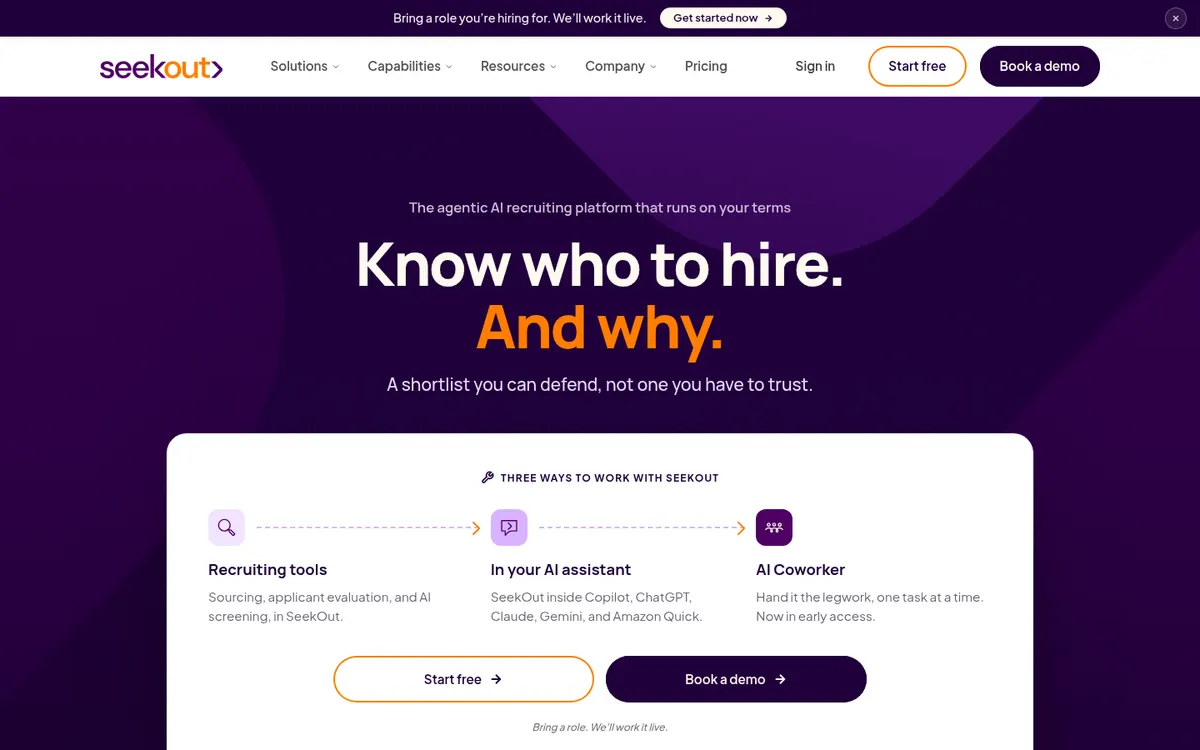
A strong pick when diverse slates and verified contact data matter more than outreach sequencing, with a clearly published entry price.
SeekOut is a sourcing database with a wide net. Search runs across LinkedIn, GitHub, Stack Overflow, publications, and other public sources, and results come back with verified email addresses and phone numbers attached. Diversity sourcing filters let you build a slate by background, skills, and experience, and skills-based search helps when a job title does not map cleanly to what the person actually does all day. The published entry point is Recruit Core at $149 per month paid annually upfront, $1,788 per year, which covers 3 seats. Month to month it runs $179. That is one of the clearest self-serve prices in this list, and a 14-day free trial lets you test search quality before committing. The catch is volume: Core caps at 500 contact credits and 1,000 exports per month, which is workable for a small team on a handful of roles and tight for an agency running dozens at once. Team and enterprise tiers are quote-only, so the price you see is the price for the smallest configuration. Larger deployments are quoted individually, so the self-serve figure is only the starting point. Contact credit and export management are built in, so you can watch usage before it becomes a surprise. If diversity slates and verified contact data are the priority, SeekOut covers both without an add-on.
Building diverse, skills-matched slates with working contact details is the core of your sourcing week.
You source at volume above 500 contacts a month or your main gap is outreach sequencing rather than data.
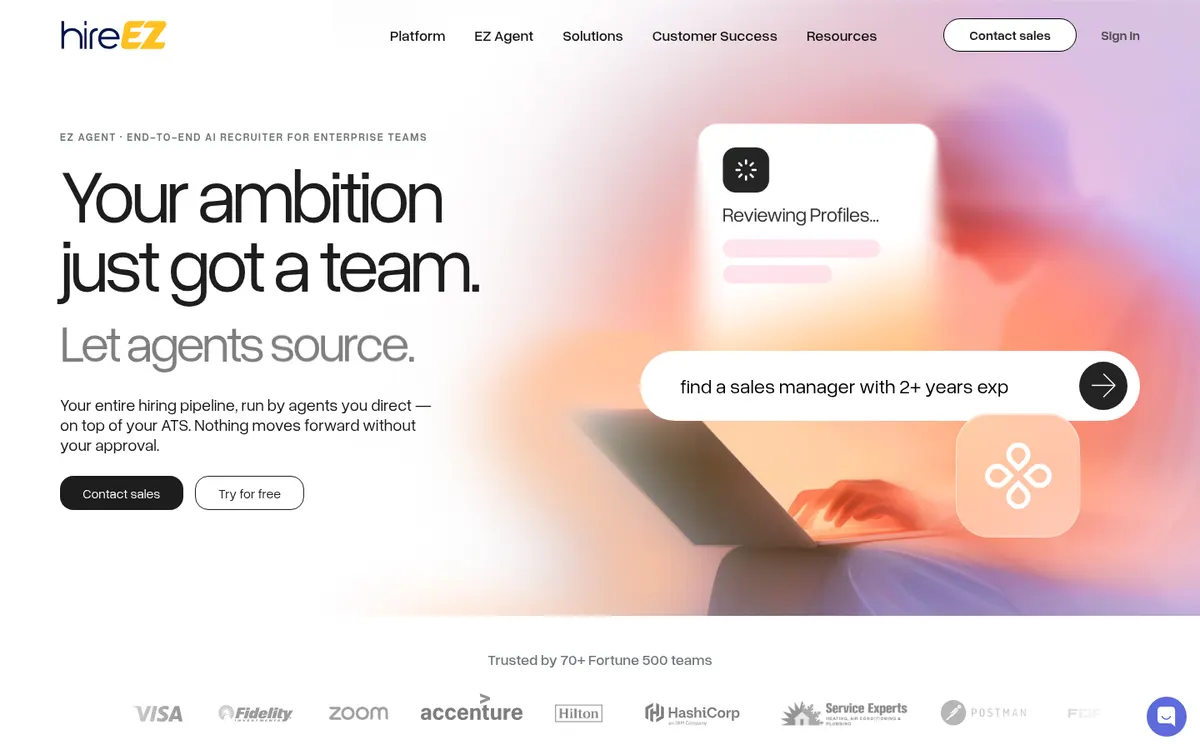
Built for outbound volume: AI matching plus automated campaigns, though the $494 Solo price rules out casual or occasional use.
HireEZ, formerly Hiretual, is built around outbound volume. You describe an ideal candidate and the AI matching engine returns profiles from a large multi-source database with verified contact details attached. From there you build automated email campaigns, schedule sends, and track replies inside the same tool, which keeps a sourcing team from stitching three products together to run one sequence. The price changed. The vendor pricing page now lists Solo at $494 per month with a 7-day free trial. That is the highest published entry price in this list, and it makes HireEZ hard to justify for a solo recruiter working two openings a quarter. Enterprise pricing is configured around the stack you are replacing, which means a larger buyer may not pay the Solo rate at all. The honest read: HireEZ fits high-volume sourcing teams where saved recruiter hours cover a four-figure monthly seat, and it does not fit a small in-house team with light, sporadic hiring. A 7-day trial is short for judging AI match quality across more than one role, so pick your hardest search on day one.
Your team runs constant outbound campaigns and one seat across five open roles has to pay for itself.
You hire in bursts, work a handful of roles, or cannot justify a four-figure monthly seat.
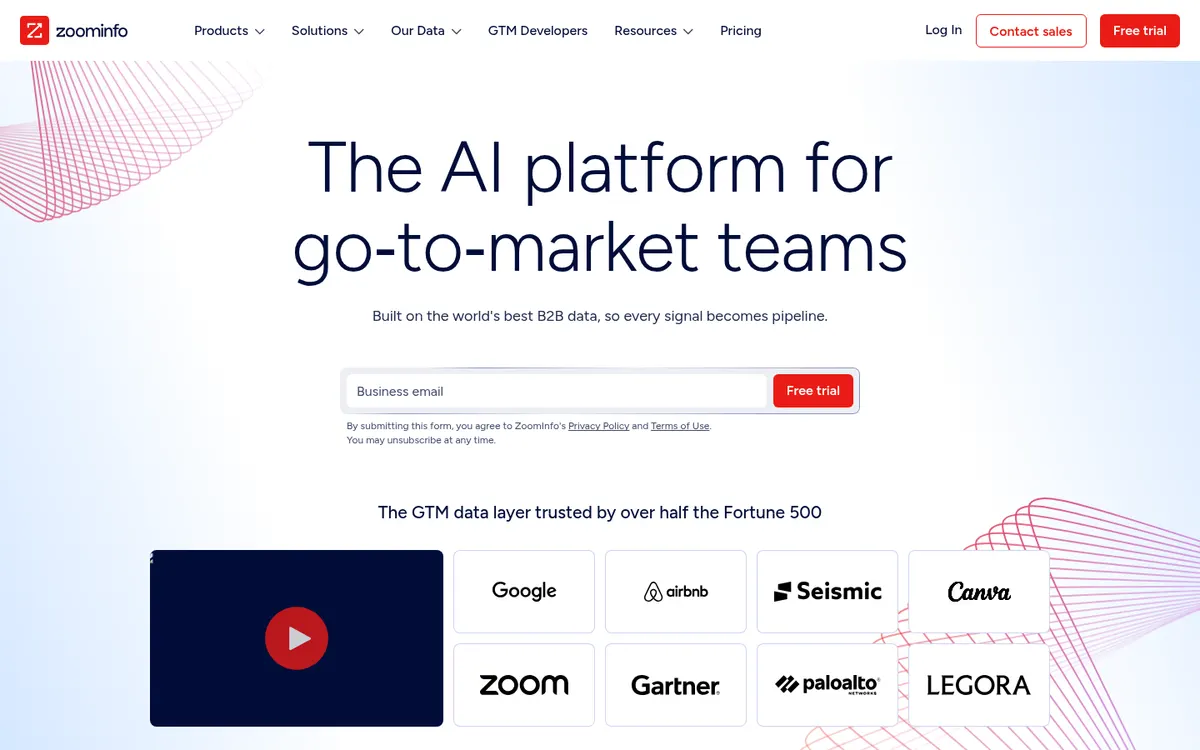
Worth it only if your sales team already runs on ZoomInfo, since talent data rides on a sales-first platform with quote-only pricing.
ZoomInfo Talent puts recruiting search inside a platform most buyers already know from sales. You get talent search on ZoomInfo's contact database, org charts, intent signals, and candidate insights, plus access to the wider go-to-market data platform. For a company already running ZoomInfo for sales, that means one vendor, one data model, and one procurement conversation instead of two. There is no published price. Pricing is set by licenses, features, and credit usage, sold through a sales process on annual contracts. So the only number you can plan on is the one the vendor quotes you. The real question is whether talent sits at the center of your hiring or beside it. Talent is a smaller part of a sales-focused platform, so recruiting workflow depth runs behind dedicated sourcing tools. Enterprise minimums and a sales-led buying process also mean a small team can get priced out before it ever sees the product. It fits existing ZoomInfo customers with enterprise budgets, and it fits few other buyers well.
ZoomInfo is already installed across your sales org and adding recruiting data avoids a second vendor review.
You need a published price, a self-serve start, or sourcing workflows deeper than search plus org charts.
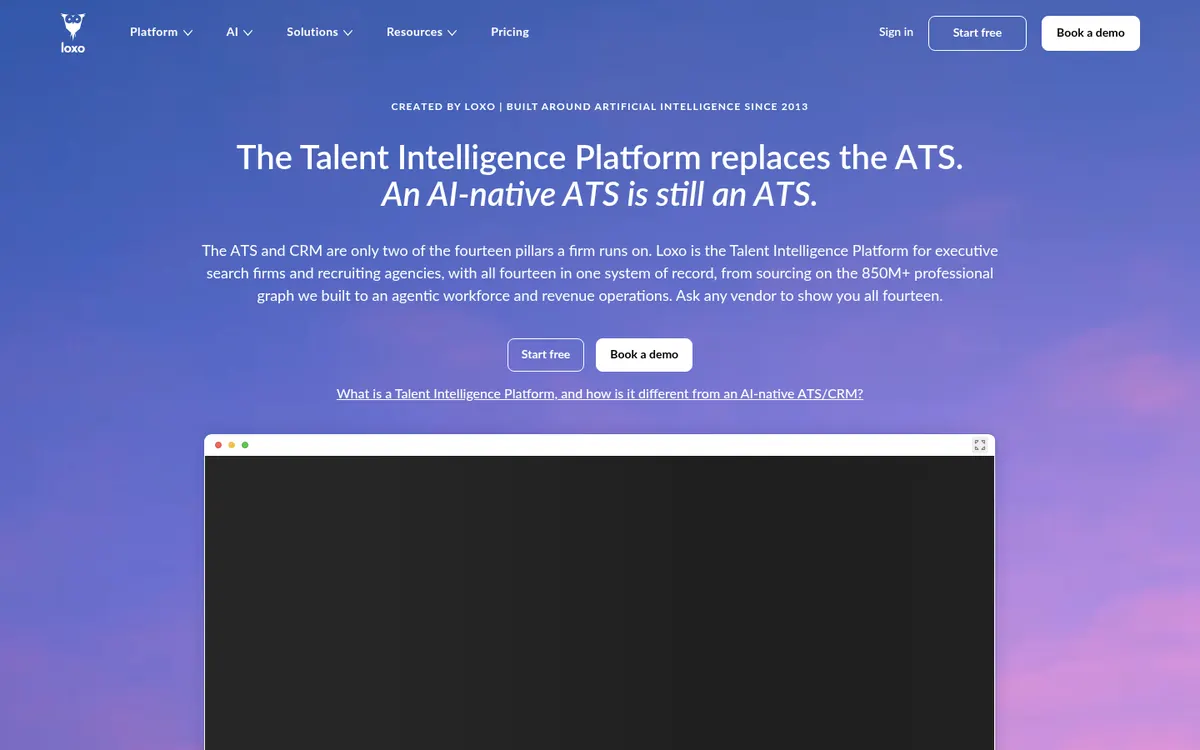
A sensible consolidation play for staffing agencies that want sourcing, CRM, and outreach under one predictable per-user price.
Loxo is a recruiting platform for staffing and agency work, and it bundles the pieces agencies usually buy separately. Sourcing pulls from a large candidate database with AI search included on the Core plan, and the recruiting CRM holds clients, jobs, candidates, and activity in one record. Email and text outreach sequences run from inside the platform with automation behind them, so a recruiter does not have to leave the candidate record to start a conversation.
Core is $149 per user per month billed annually, and AI search is included at that level rather than sold as an upgrade. Professional and Enterprise are demo priced. The trial is 7 days and runs on Professional, so you can test the higher tier before deciding where your team actually sits. Per-user pricing is the model to watch: it stays predictable for a five-person agency and gets expensive fast at fifty.
The agency orientation is the dividing line. If you place candidates for clients, the CRM layer earns its keep and Loxo can replace two or three tools at once. If you hire in-house, that CRM layer is overhead you pay for and do not use, and a sourcing-first tool covers the same ground for less. Job and client management are the features that make it a consolidation purchase rather than a sourcing add-on.
You run a staffing desk and want to retire a sourcing tool and a CRM in the same move.
You hire in-house, bill no clients, or only need candidate search without the pipeline machinery.
Deep technical sourcing across developer sources, with quote-only pricing that keeps small teams guessing until they talk to sales.
AmazingHiring is a technical sourcing tool and does not pretend otherwise. It aggregates profiles from GitHub, Stack Overflow, Kaggle, LinkedIn, and other sources into unified candidate profiles, then lets you search by programming language, framework, and open-source contribution. Boolean search is available and is how most experienced users work, since technical filters only take you so far on their own. Pricing is quote-only and the vendor page did not return a figure we could check, so there is no public number to compare. Budget from a quote rather than from a list price. There is no free plan and no stated trial, so evaluating it means a sales conversation rather than a signup. The focus is both the strength and the limit. For engineering, data science, and roles where a GitHub graph tells you more than a job title, source coverage is hard to match. For sales, marketing, operations, or anything where the work is not public, the index runs thin and the interface has a learning curve that buys you very little. Buy it for a technical recruiting desk, not for a general one that occasionally hires an engineer.
Your open roles are engineering or data science and you want to search GitHub and Stack Overflow in one pass.
You hire across sales, marketing, and operations, or you need a price before you will take a call.
Hands-off sourcing with human review, but the platform is retired, so this entry is context rather than a live purchase.
Fetcher was built to take sourcing off a hiring team's plate. The service combined AI candidate search with human recruiters who reviewed and shortlisted candidates, then sent automated outreach emails on the hiring team's behalf and delivered pre-screened candidates. For a small team without a dedicated sourcer, the appeal was straightforward: less search work, more qualified candidates arriving in the pipeline. The important caveat is status. The Fetcher platform has been retired and customers moved to Juicebox, so no pricing page remains and there is no live product to buy under this name. We keep the entry in this list because buyers still search for the name, and the honest answer is that you should be evaluating Juicebox instead. The model is still worth understanding because it exists elsewhere. Done-for-you sourcing trades search control for time saved, which suits high-volume roles where a broad slate matters more than a precise one. It suits executive search badly, where the shortlist depends on judgment, discretion, and direct contact rather than volume. If you want to run your own searches, a self-serve database is the better shape of tool.
Pick the model, not the brand: choose done-for-you sourcing if you have no sourcer and need shortlists delivered.
Skip it as a live purchase, since the platform is retired and there is no current price to evaluate.
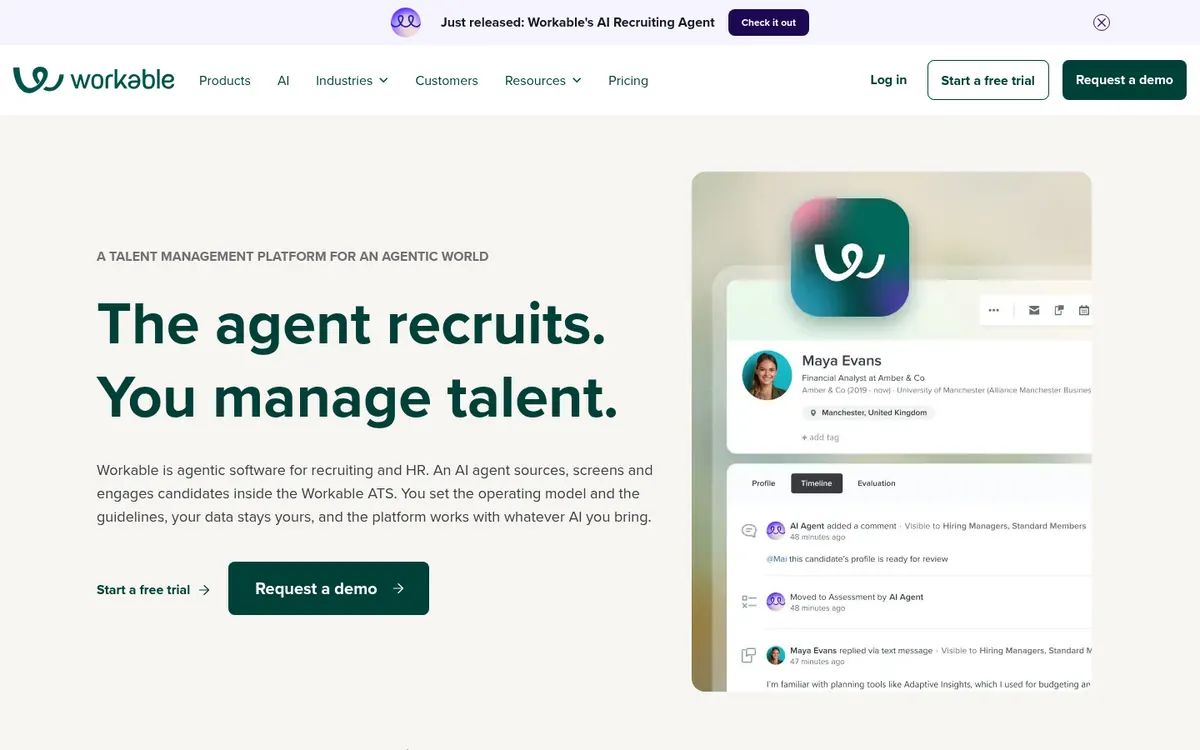
The right call when you need an ATS first and sourcing second, with talent search added on rather than built into the core.
Workable is an applicant tracking system first, and sourcing is a feature inside it rather than the product. The platform covers job posting, candidate screening, interview scheduling, and reporting, then adds a talent search add-on that pulls candidates from multiple sources and AI screening to help sort them. For a team that has been running hiring through email and a spreadsheet, that is the whole workflow in one place. Standard is $299 per month, $3,588 per year on annual billing, with a lower Starter tier and a quoted Premier tier. The 15-day free trial is long enough to push a live role through the pipeline. Confirm the Standard figure with the vendor before signing, since seat counts and add-ons can change the total. The trade-off is depth. Sourcing inside Workable does not match a dedicated database tool on search filters, contact data, or outreach sequencing, so a team that sources hard will still want one of the tools above alongside it. What Workable does better than any of them is hold the hiring process together end to end, which is why it makes sense as the system of record with sourcing attached rather than the other way around.
Your hiring process is messy and you need an ATS with usable sourcing attached, not a sourcing tool with an ATS bolted on.
Sourcing is the main job and you already have an ATS your team is happy with.
LinkedIn Recruiter alternatives are tools that supply candidate data, outreach, or both without requiring a LinkedIn Recruiter seat for every person on your team. They fall into three rough groups, and knowing which group you need saves a lot of demo time.
The reason teams look at alternatives is rarely that LinkedIn Recruiter is bad at search. It is that a seat-based model gets expensive when sourcing is spread across a hiring manager, a coordinator, and three recruiters who each log in twice a week. A dedicated sourcing tool with a shared candidate pool and a credit allowance can cover the same work for a team that does not need every user to hold full search rights.
The other driver is data breadth. Technical roles often surface better on GitHub or Stack Overflow than on a professional network, and diversity sourcing needs filters a general people search does not provide. Tools built for those jobs index sources LinkedIn does not, which is why SeekOut and AmazingHiring exist at all.
What alternatives do not do is replicate the network itself. Every tool here supplements LinkedIn rather than replacing it outright, and most integrate with it directly.
This comparison sits on the Software desk. Readers comparing neighbouring stacks often check our guides to demand forecasting software and glp 1 companies next.
Three billing models cover almost every tool in this list, and they fail in different ways as a team grows. Per-seat plans are predictable and punish you for adding occasional users. Credit models look cheap until you hit a hard search month. Platform contracts bundle recruiting data into a wider software purchase and are quoted rather than listed.
| Model | How it bills | Typical fit | Example from this list |
|---|---|---|---|
| Per seat, annual | Fixed monthly rate per user, billed yearly | Teams with stable recruiter headcount | Loxo Core at $149 per user per month |
| Seat plus credits | Monthly fee with a contact credit and export cap | Small teams working a handful of roles | SeekOut Recruit Core at $149 per month for 3 seats, 500 contact credits |
| Startup tier | Discounted rate with an employee cap | Early-stage companies | Gem Startup Program at $130 per month, 1 to 10 employees |
| Quote only | Sales-led annual contract | Enterprise or specialist desks | ZoomInfo Talent, AmazingHiring, Fetcher |
Read the caps, not just the entry price. A $149 plan with 500 contact credits and 1,000 exports per month is a different product from a $149 per-seat plan with no stated cap, and both differ from a $494 Solo seat that assumes daily heavy use. Ask two questions in every demo: what happens when we exceed the cap, and what does the next tier cost. Vendors answer the first readily and the second less so.
Trials matter here because search quality is hard to judge from a demo. SeekOut gives 14 days, Workable 15, HireEZ and Loxo 7, and Gem runs 6 months free for companies under 30 employees before moving to 50% off.
Every price above was checked on the vendor's own pricing page on November 25, 2026. Where a vendor does not publish a figure we write "See website" instead of guessing. To compare annual and monthly billing quickly, try the free percentage calculator.
We did not verify a LinkedIn Recruiter list price on 2026-11-26, so we do not publish one here. Compare on published entry prices instead: Gem at $130 per month on its Startup Program, SeekOut and Loxo at $149, Workable at $299, and HireEZ at $494 per month on Solo. ZoomInfo Talent, AmazingHiring, and Fetcher quote only, with no published figure to compare.
No, they supplement it. SeekOut searches LinkedIn alongside GitHub, Stack Overflow, and publications, and AmazingHiring aggregates developer sources into unified profiles. That breadth helps on technical and diversity searches, but Gem and SeekOut both reach LinkedIn data rather than cutting it off, and most teams keep at least one seat for direct messaging.
Gem, at $130 per month on annual billing for the Startup Program, which is limited to teams of 1 to 10 employees and carries a $270 list price with a 10% yearly discount. SeekOut Recruit Core and Loxo Core both start at $149, though SeekOut's figure covers 3 seats while Loxo's price applies per user.
Most do. Gem, SeekOut, ZoomInfo Talent, and Fetcher all list ATS integrations, and Loxo folds a recruiting CRM and sourcing into one platform. Workable is itself an ATS with a talent search add-on, so it can serve as the system of record that a dedicated sourcing tool feeds into, which is often the cleanest split.
SeekOut, on the strength of its diversity sourcing filters by background, skills, and experience, combined with a broad multi-source index and verified contact data. Core starts at $149 per month billed annually for 3 seats with a 14-day free trial, though the 500 contact credit and 1,000 export caps limit heavy slate building.
None of the eight offers a free plan. Trials vary: SeekOut gives 14 days, Workable 15, HireEZ and Loxo 7, and Gem runs 6 months free then 50% off for companies under 30 employees. AmazingHiring and Fetcher state no trial, and three vendors quote pricing rather than publishing it.
Browse every comparison on the Software desk, with the same rubric and dated prices.