Ranked #1

WEX
Nationwide station reach
See websiteProgram pricing quoted per fleet, rebates vary by location and gallons
- Best for
- Fleets fueling across many station brands nationwide
- Free plan
- No
- Rubric
- 8.2 / 10
Eight fuel cards, ranked by how well they cut cost per gallon on real routes, with station coverage, fees and controls spelled out for November 2026.
 Prices checked November 25, 2026
For most fleets, WEX is the best fuel card for trucking companies in November 2026: it reaches roughly 95 percent of US fuel stations, so drivers rarely detour. Fuelman suits mixed gasoline and diesel fleets on a flat monthly account fee, and Comdata fits long-haul carriers chasing deep diesel discounts at TA and Petro. Pricing varies by program and several cards are quoted per fleet, so compare net cost per gallon after fees on your own lanes.
Nationwide station reach
See websiteProgram pricing quoted per fleet, rebates vary by location and gallons

One account, two fuels
See websiteBasic plan, per month, covers all fuel cards on the account

Diesel discounts at chains
See websiteSimple Saver, no monthly account fee and no truck stop fee
Disclosure for this page: All 8 tools here are unpaid editorial picks. The position of a paid listing can be part of what the vendor pays for. How we handle paid listings.
| Tool | Best for | Free plan | Actions | |||
|---|---|---|---|---|---|---|
| 1 | WEX | Fleets fueling across many station brands nationwide | See websiteProgram pricing quoted per fleet, rebates vary by location and gallons | No | ||
| 2 | Fuelman | Fleets running both gasoline and diesel vehicles | See websiteBasic plan, per month, covers all fuel cards on the account | No | ||
| 3 | Comdata | Long-haul fleets wanting deep truck stop diesel discounts | See websiteSimple Saver, no monthly account fee and no truck stop fee | No | ||
| 4 |  Fleet One Edge | Small over-the-road carriers fueling mainly at truck stops | See websitePricing quoted per fleet, out-of-network transaction fees may apply | No | ||
| 5 |  AtoB | Tech-forward fleets wanting app controls and telematics checks | See websitePrepaid and credit variants quoted separately, confirm what the fee covers | No | ||
| 6 |  Coast | Fleets wanting Visa acceptance plus tight spend rules | See websitePer-card monthly fee quoted by fleet size | No | ||
| 7 |  Mudflap | Owner-operators and fleets wanting discounts without monthly fees | See websiteNo monthly, setup or transaction fees on the card | No | ||
| 8 |  TCS Fuel | Carriers wanting truck stop discounts without a credit line | See websiteNo activation, monthly or annual fees, cash-secured funding | No |
We scored the eight cards on five things: station coverage, discount depth, fees and transparency, controls and reporting, and fleet fit. Each criterion carries a fixed weight, and every card is measured against the same five. Coverage and discount depth carry the most weight because a card that saves 20 cents at a station your driver never passes saves nothing at all. Fees and transparency sits next to them, since an unpriced program is hard to compare with a priced one. Pricing was checked on 2026-11-26 by visiting vendor pricing pages. For these eight vendors those pages returned no usable text, so every card shows See website and the plan details in each entry come from plan documentation rather than a published pricing sheet. That is a real limitation. Confirm the fee schedule, the rebate tiers and any out of network charges with each vendor before you move lanes. Every card is scored with the same rubric, and the cons sit next to the pros on each entry. Scores reflect coverage, fees, controls and fleet fit as described in each review.
The full process, including how we handle corrections, is on the methodology page. Paid listings follow our advertising disclosure.
| Criterion | Weight | What we check |
|---|---|---|
| Station coverage | 25% | How many stations on real lanes accept the card, weighted toward the stops a fleet actually uses. |
| Discount depth | 25% | The per gallon saving available at the sites that matter, including how many tiers or conditions sit between the headline number and the invoice. |
| Fees and transparency | 20% | Monthly, per card, transaction and out of network charges, plus whether the vendor publishes enough detail to compare before signing. |
| Controls and reporting | 20% | Spend limits by driver and vehicle, fraud checks at the pump, and transaction exports usable for IFTA. |
| Fleet fit | 10% | How well the card handles a specific fleet profile, from a single owner-operator to a mixed van and tractor operation. |
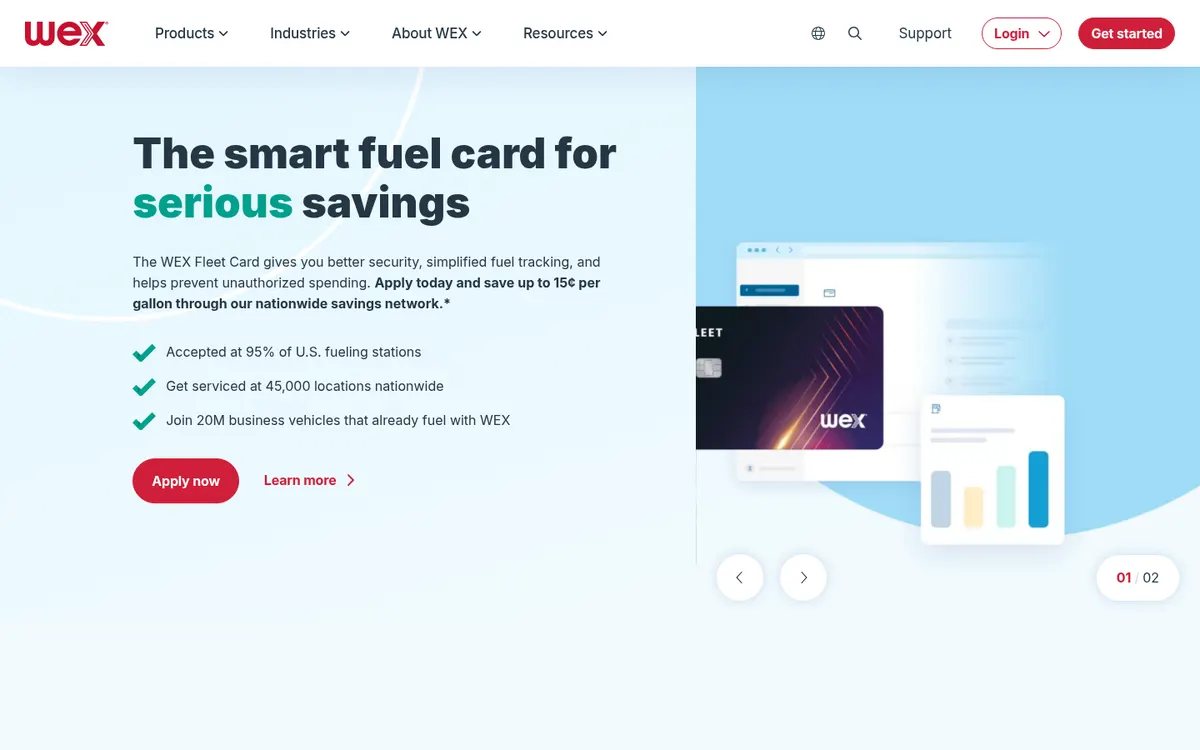
The safest default for a mixed fleet, because near universal acceptance means drivers stop planning around where the card works.
WEX is the widest reaching card here. The company says its card is accepted at roughly 95 percent of US fuel stations, which is the number that matters when a driver is running low on a route with no plan B. One account covers vans and heavy trucks, so a fleet running service vans next to tractors does not need two programs, two sets of controls and two reconciliation routines.
Savings come through a nationwide network with volume and location based rebates and a tiered truck stop rebate structure. That structure rewards gallons, and it also means the headline rebate is not the rebate every transaction earns. Some Tier 1 truck stop sites fall outside certain rebate tiers, so a lane that leans on one chain may earn less than the program summary suggests. Driver level spending controls and transaction reporting sit inside the same account, which keeps administration in one place.
Pricing is on the vendor site and quoted per fleet, with rebates varying by location and gallons. There is no free plan and no trial, and no public pricing sheet. The page fetch during this check returned no text, so the quoted program pricing could not be verified. Request the fee schedule for your specific program, then model it against your top 20 fueling stops before you sign.
Your trucks fuel across many station brands and you want one account for vans and tractors.
You need published pricing to compare vendors before you will even take a call.
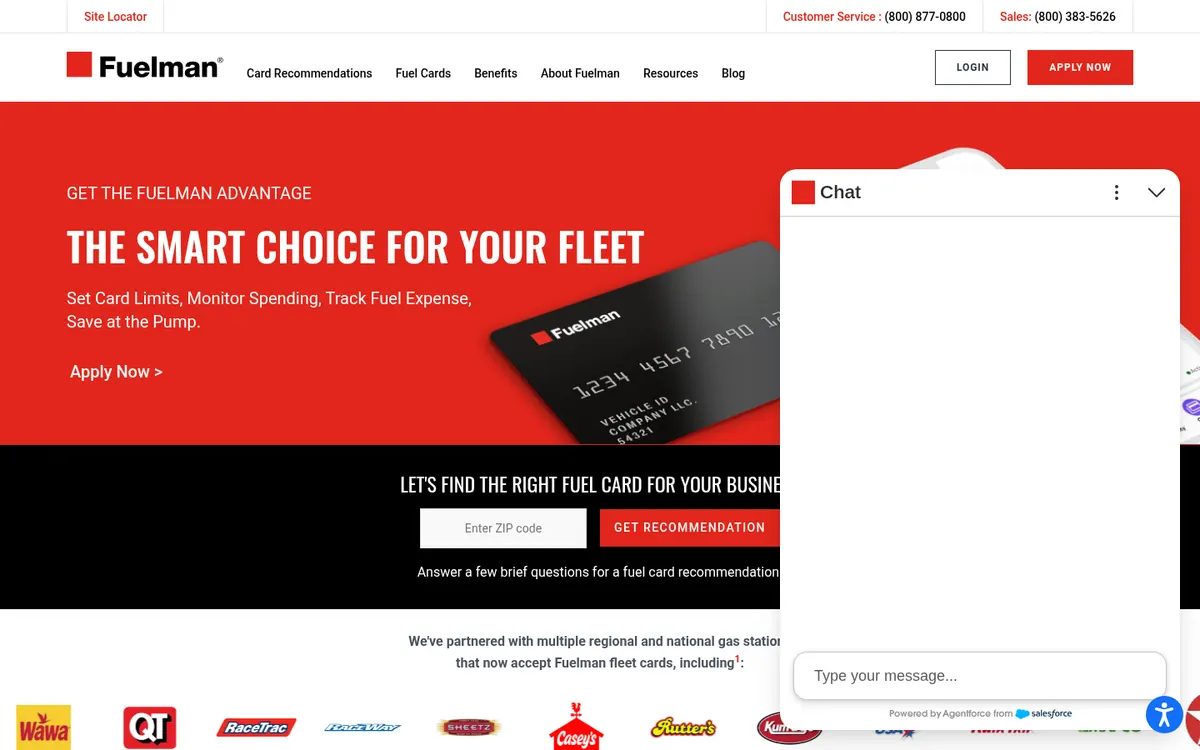
A clean fit for the fleet that still runs gasoline vans and pickups alongside diesel tractors on one account.
Fuelman is built for the fleet that has not gone all diesel. The Mixed Fleet card works across gasoline and diesel vehicles under one account, which matters for operators running cargo vans, pickups and light trucks next to Class 8 tractors. The discount network covers more than 40,000 locations, and the Mixed Fleet card takes 8 cents per gallon off at discount network sites. Billing is the interesting part. The Basic plan is a per month account fee that covers all fuel cards on the account, so cost does not climb with every driver you add. Pricing is on the vendor site, and at the quoted monthly account fee the 8 cent in network rebate needs roughly 490 gallons a month at discount sites to offset that fee on its own. The monthly account fee could not be confirmed on a live pricing page during this check, so verify the current figure with the vendor before you commit. Dashboards, enhanced fraud loss coverage and a maintenance management program sit on higher plans, which means the entry tier is thinner than the marketing suggests. Some locations add an extended network charge, and the discount applies only inside the network. Very small fleets can pay more in the monthly fee than they earn back, and extended network charges at some sites change the break even math again.
Your fleet mixes gasoline vans with diesel trucks and you want one account fee for every card.
You fuel mostly outside the discount network or buy fewer than 490 gallons a month at network sites.
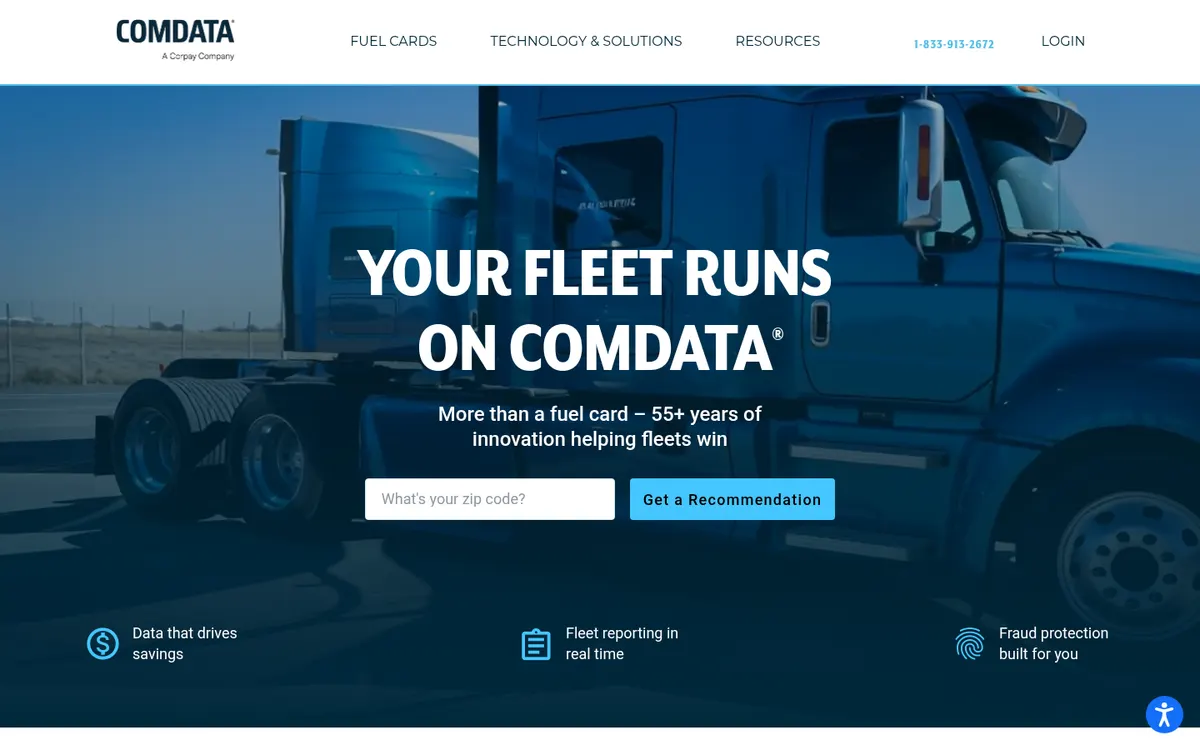
The long-haul diesel play, with the deepest advertised chain discounts and an entry plan that carries no monthly account fee.
Comdata is aimed at the long-haul diesel buyer who fuels at the big chains. Published discounts run up to 25 cents per gallon off diesel at TA and Petro, and up to 8 cents per gallon off at Pilot and Love's. Those are the two numbers most over the road carriers want to compare, because those four chains cover a large share of interstate fueling.
The entry plan is Simple Saver, which carries no monthly account fee and no truck stop fee, so a small fleet can start without a fixed monthly cost. Smart Fleet and Total Advantage tiers widen station coverage for fleets that need more than the big chains. FleetAdvance reporting and OneClick fraud controls give managers transaction visibility and card level restrictions without adding a separate tool.
Two limits matter. The advertised discount levels target smaller fleets, and fleets above 20 trucks may need a custom quote by truck count and lanes. Discounts also depend on paying invoices in full and on time, so a slow month in accounts payable can cost cents per gallon. Pricing is on the vendor site, and the page was empty during this check, so the no fee Simple Saver claim stays unverified. Ask for the conditions attached to the rebate in writing.
Your trucks run interstate lanes and fuel mainly at TA, Petro, Pilot and Love's.
Your drivers fuel at independent stops outside those chains or your payment terms slip.
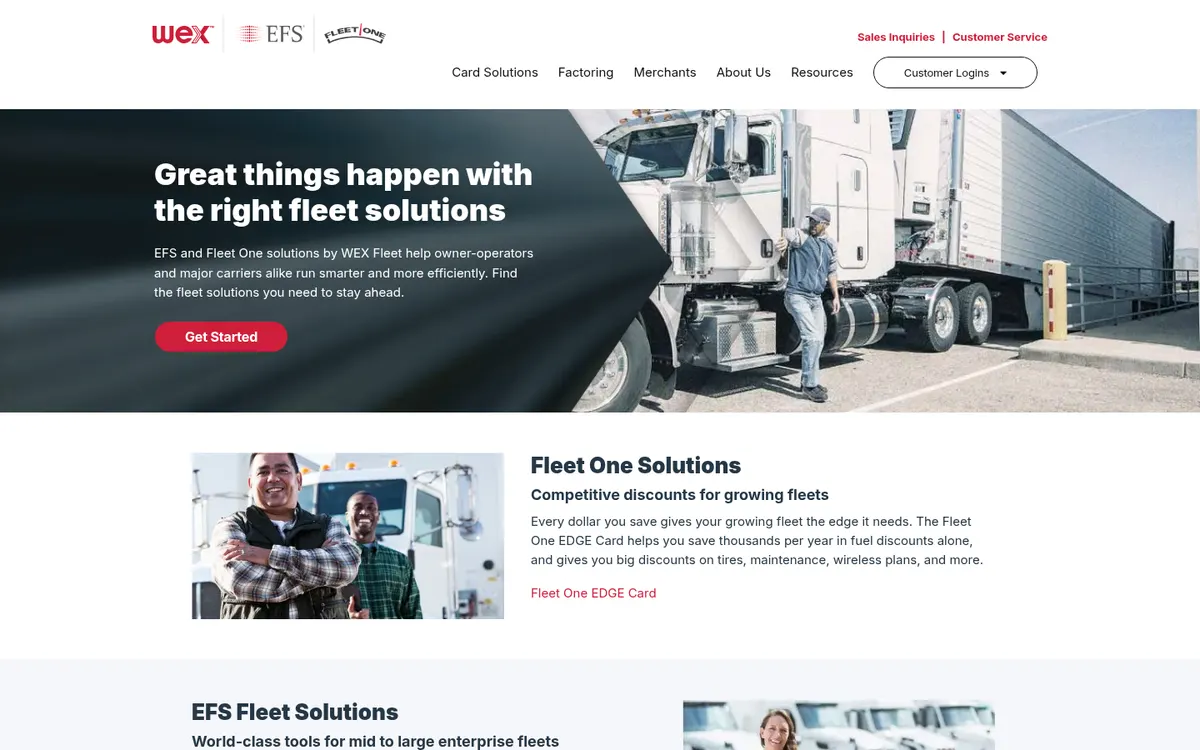
A truck stop card with back office muscle, strongest for small interstate carriers that dread IFTA paperwork.
Fleet One Edge is a truck stop card for small over the road carriers, and it behaves like one. Fueling is priced at the cash price at truck stops, with discounts at network truck stop locations, which is the model owner-operators and small fleets already understand. Spend controls work by driver and vehicle, and transaction reporting comes with the account.
The feature that separates it is back office work. IFTA reports are generated from the card data, cutting the manual preparation that eats a weekend every quarter, and driver settlement and cash access tools suit operations that pay drivers per load. For a carrier running interstate lanes between truck stops, that is a useful bundle rather than a list of extras.
The same focus is the limit. Local routes that fuel at retail stations are a weak fit, out of network fees can apply, and the truck stop orientation leaves little room for mixed use across vans and field spending. Fleet One Edge now operates within WEX, so support and program details come from that side of the business. Pricing is quoted per fleet, with out of network transaction fees possible, and no page text was available to confirm it. Check discount coverage against your actual lanes before committing.
You run interstate truck stop lanes and want IFTA and settlement handled from card data.
Most of your fueling happens at retail stations on local routes.
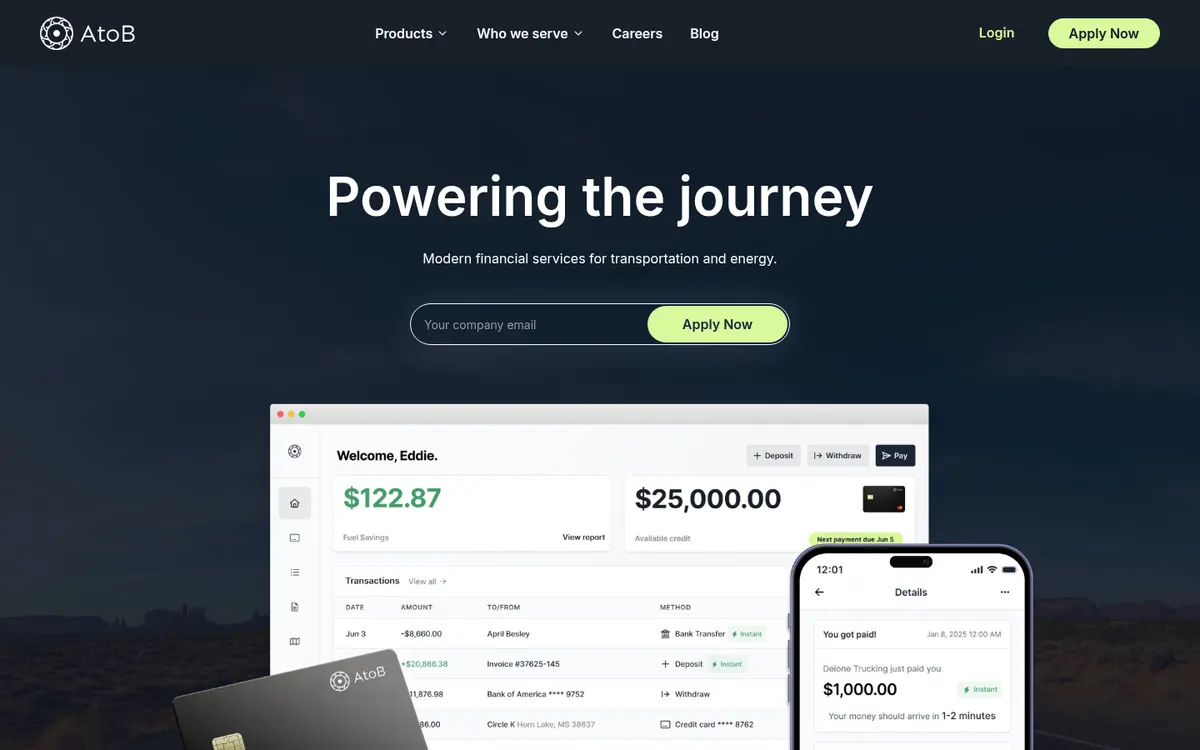
The most modern controls on the list, with telematics checks that catch a bad transaction before it clears.
AtoB is the card for a fleet that wants controls in an app rather than a terminal. It runs on the Mastercard network, so drivers can fuel anywhere Mastercard is accepted, and managers release cards from a mobile app. Limits are set by driver or vehicle, transactions are monitored in real time, and telematics location verification checks that the truck was actually at the pump when the purchase happened.
That telematics layer is the strongest idea here. Fuel fraud usually shows up as a purchase that does not match the vehicle's position or its tank, and AtoB builds the check into the authorization rather than the month end reconciliation. Both prepaid and credit funding options are offered, which lets a carrier start on prepaid and move to credit as volume grows.
Discounts are deepest at partner truck stops and thinner at retail stations, so the card is more universal in acceptance than in savings. Phone based release depends on driver habits and a charged device, a real operational dependency on a long run. Pricing must be quoted, and prepaid and credit variants are quoted separately, so confirm what the fee covers. No page content was available during this check, so the fees remain unchecked.
You want app based card controls and telematics fraud checks across a wandering fleet.
You need published fees or your drivers cannot be relied on to carry a charged phone.
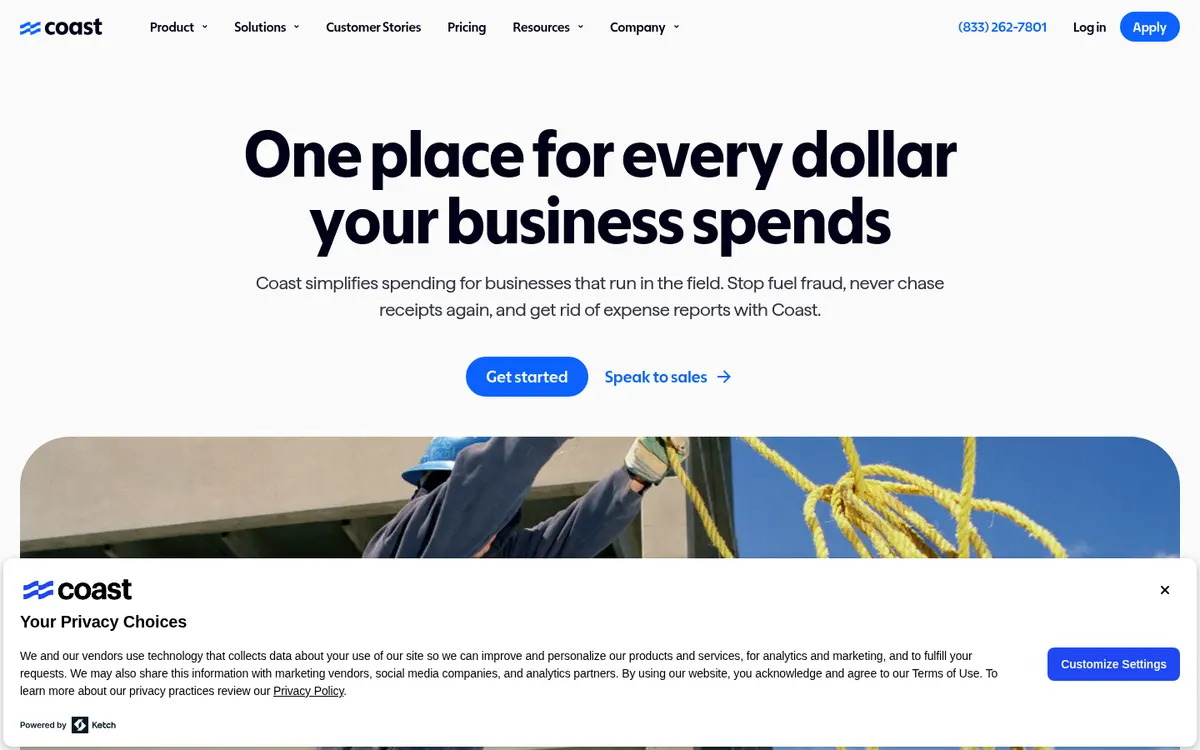
Best when you want Visa reach and one card covering fuel plus field spending, with fraud checks built into approvals.
Coast combines fuel buying with general field spending on one Visa card. Drivers can fuel at stations that take Visa, and the same card covers other purchases, which cuts the number of cards, receipts and reconciliation lines a back office handles. Rules are set by driver and vehicle, and the account connects to accounting tools so transactions land in the books without manual entry.
Fraud detection is the differentiator. Coast checks GPS and fuel tank data on purchases and backs covered fraud losses under a guarantee, so a purchase that does not match the vehicle's location or tank level can be caught rather than discovered at month end. It is the same idea AtoB uses, applied here to a Visa card that also handles non fuel spend.
The trade off is savings. Rebates apply at participating stations only, so a fleet that fuels at non partner truck stops earns nothing extra, and the deepest diesel discounts on this list sit with cards tied to specific chains. Pricing is quoted by fleet size as a per card monthly fee, with no free plan and no trial, and no page text was available to confirm the fee. Check how non fuel purchases are treated before you hand the card to drivers.
You want Visa acceptance, tight spend rules and one card for fuel and field purchases.
Your savings case depends on the deepest truck stop diesel rebates available.
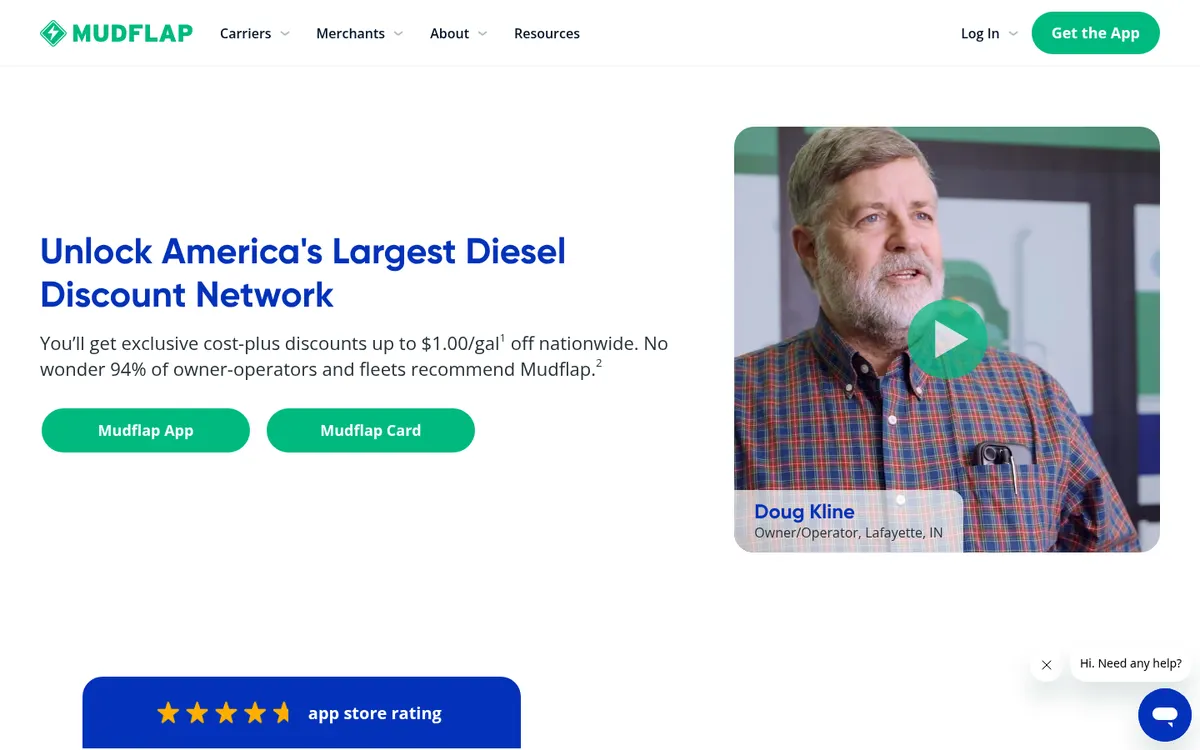
The lowest risk entry point for an owner-operator, because there is no monthly fee to earn back.
Mudflap started as a discount diesel app for independent drivers and later added a Visa fuel card, and the product still shows that history. In network discounts run up to $1.00 per gallon across about 3,600 discount locations, which skew toward independent and regional stops rather than every major chain. Outside the network the card works anywhere Visa is taken, at 2 cents per gallon off.
The fee structure is the reason to look. There are no monthly, setup or transaction fees on the card, so a low volume owner-operator carries no fixed cost and no break even gallons to chase. The mobile app helps drivers find discounted stops along a route, which is the practical part of any network discount: a saving at a station you were never going to pass is not a saving.
Two cautions. The best discounts require fueling inside a limited network of roughly 3,600 sites, far smaller than the station counts the big chains offer. Card issuance is subject to credit approval, though the app itself requires no credit check. Pricing is on the vendor site and the page was empty during this check, so the no fee claim is unverified. It works well as a main card for regional lanes or a second card beside a wider program.
You are an owner-operator or small fleet that wants discounts without a monthly fee.
Your lanes run almost entirely through the big national truck stop chains.
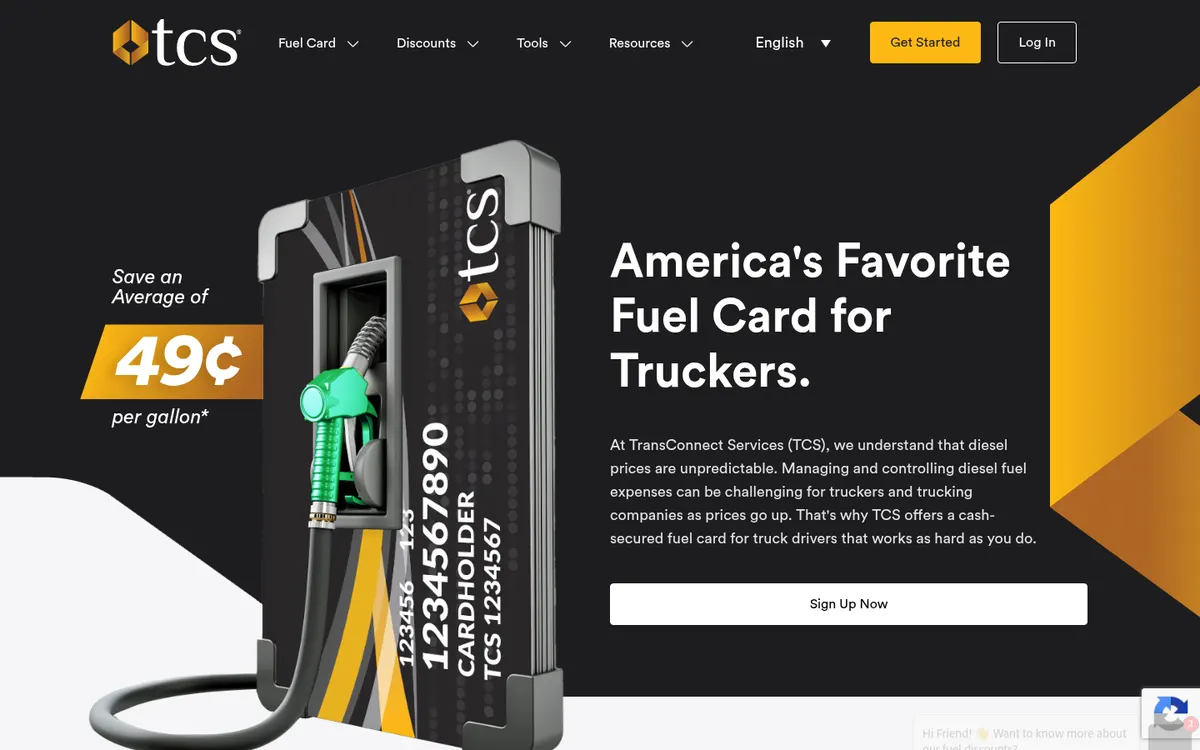
The cash secured option for carriers who want truck stop discounts without a credit line or interest charges.
TCS Fuel is a prepaid, cash secured card, and that single design choice drives everything else. The fleet loads a balance and drivers spend from it, so there is no credit application, no interest and no credit line to manage. For a new carrier or an owner-operator who cannot or will not take a credit product, that removes the biggest barrier to getting a fuel card at all.
Fees are the pitch. There are no activation, monthly or annual fees, and no in network transaction fees, with more than 12,000 accepting locations and about 2,300 in network discount sites. The company reports in network discounts above typical retail card rebates, which is a claim to test against your own lanes rather than accept at face value.
The cost is working capital discipline. Cash must be on hand and balances actively managed, so dispatch has to watch loads on long runs and over weekends to avoid a driver stranded with an empty card. Out of network transaction fees vary by site, and there is no payment float for fleets that rely on 30 day terms. Pricing is on the vendor site, and no page content was available to confirm the no fee structure. Get balance loading rules and out of network charges in writing.
You want truck stop discounts and can fund a prepaid balance without a credit line.
You rely on 30 day terms or cannot monitor driver balances over weekends.
A fuel card is a payment card restricted, or partly restricted, to fuel and vehicle expenses, and it comes with a reporting layer the fleet can use. The card handles the purchase; the account behind it produces transaction data by driver, vehicle, gallons, location and time. That data is what makes fuel cards worth the paperwork: it feeds IFTA reporting, catches fraud, and shows which stops actually deliver savings.
There are two broad designs. A closed or branded card works inside a specific truck stop network and earns negotiated discounts at those sites. An open loop card runs on Visa or Mastercard, so it works almost anywhere but earns meaningful rebates only at partner locations. Many fleets end up carrying one of each, using the branded card for predictable interstate lanes and the open loop card for everything else.
The features that decide value:
The best fuel card for trucking companies is the one that produces the lowest net cost per gallon after fees at the stops your drivers already use. A universal card wins when trucks wander; a truck stop card wins when lanes are predictable. Coverage first, discount second, fee third is the order that usually holds up.
This comparison sits on the Software desk. Readers comparing neighbouring stacks often check our guides to demand forecasting software and glp 1 companies next.
Fuel card pricing rarely arrives as a number. Most vendors quote per fleet, and the quote mixes three things: a monthly or per card fee, a per gallon discount, and transaction charges that appear only at certain sites. Compare net cost per gallon, never the headline rebate.
| Model | How it bills | Typical fit | Example from this list |
|---|---|---|---|
| Flat monthly account fee | One monthly charge covering every card on the account | Small and mid fleets with steady volume | Fuelman, Basic plan per month covering all fuel cards |
| Quoted per fleet program | Vendor quotes by fleet size, gallons and lanes | Larger or mixed fleets | WEX, program pricing quoted per fleet, rebates vary by location and gallons |
| Tiered truck stop rebates | Per gallon discount, sometimes with no monthly account fee | Long-haul diesel buyers | Comdata, Simple Saver with no monthly account fee and no truck stop fee |
| No monthly, setup or transaction fees | Discount per gallon inside a network | Owner-operators and low-volume fleets | Mudflap, no monthly, setup or transaction fees |
| Cash secured prepaid | Fleet loads a balance, no credit line | Carriers without credit | TCS Fuel, no activation, monthly or annual fees |
Every price above was checked on the vendor's own pricing page on November 25, 2026. Where a vendor does not publish a figure we write "See website" instead of guessing. To compare annual and monthly billing quickly, try the free percentage calculator.
Neither wins outright. A truck stop card earns deeper diesel discounts inside its network, so it wins when lanes run predictable interstate routes. A universal Visa or Mastercard card wins when trucks fuel wherever a load ends, because detours cost more than the rebate makes up. Compare both against your top 20 stops by gallons, not against national coverage claims.
Credit based cards do, and prepaid cards usually do not. TCS Fuel is cash secured with no credit application, and Mudflap's app needs no credit check while its Visa card is subject to credit approval. AtoB offers prepaid and credit variants, so ask specifically which version a quote covers if credit is a constraint.
The cash price is the posted price for paying without a credit card at the pump. Fleet One Edge prices fueling at the cash price at truck stops and then applies network discounts on top. Ask any vendor whether its per gallon discount is calculated from the cash price or the credit price, because that difference changes the net number.
It depends on the program, and it is worth asking before you sign. Fleet One Edge generates IFTA reports from card transactions, Comdata's FleetAdvance reporting covers transaction data, and WEX offers transaction reporting and export. Ask for a sample export and confirm that jurisdiction level gallons are included, not just fleet totals.
Yes, several here do. WEX runs one account covering vans and heavy trucks, and Fuelman's Mixed Fleet card handles gasoline and diesel on one account with a flat monthly fee. The catch is discount design: rebate tiers built around diesel truck stops may earn very little on a van filling at a retail station.
Divide the monthly fee by the per gallon discount. Fuelman's quoted account fee, which we could not confirm on a live pricing page, against an 8 cent in network rebate needs roughly 490 gallons a month at discount sites to break even. Then reduce that gallon figure for locations that add extended network charges, and compare it with real volume.
Browse every comparison on the Software desk, with the same rubric and dated prices.